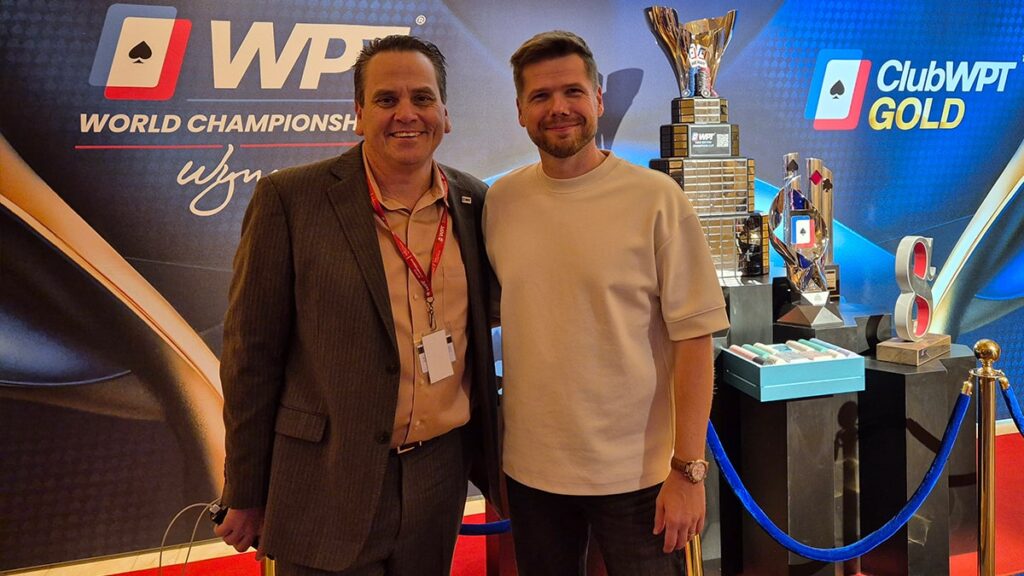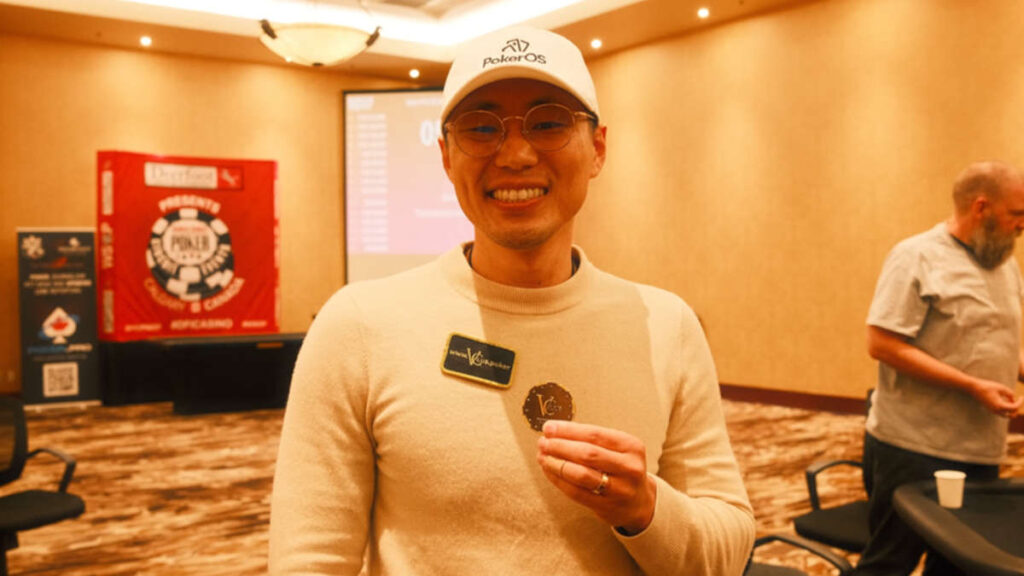
There’s something electric about Victor Li. The Toronto-based entrepreneur turned professional poker player carries himself with a blend of candor, humility, and hunger rarely seen in someone with a résumé as polished as his.
After a decade spent building successful companies, Victor has decided to trade boardrooms for cardrooms. He’s driven not by money, but by a burning determination to see how far he can push himself in one of the most competitive arenas in the world.
His story isn’t just about risk, it’s about reinvention, fear, and the relentless pursuit of mastery. Let’s get to know a man filled with hunger and the promise of more deep runs.
An Entrepreneur’s Journey into Poker
Tell me about your relationship with poker. Where did it start, and where do you see it going?
You’re actually catching me right at the start of my poker career! I first learned to play when I was 10 or 11 from a family friend who insisted we play for real money. I raided my piggy bank for $20, lost it all, and instantly got hooked, mostly because I hated losing.
From there, I read early Harrington books, played for lunch money in high school (sometimes skipping lunch entirely because I lost it all), and kept grinding through college while studying applied mathematics. Eventually, I quit for a while after realizing I was just punting money online.
Years later, during the pandemic, poker came back into my life. Like many of us, I was home and started playing on apps like PokerBros and ClubGG. I did well and decided to take a shot at the World Series of Poker (WSOP) Main Event in 2021. I busted Day 3, but was instantly bitten by the poker bug again.
Since then, I’ve run deep in multiple tournaments, finishing 45th in the 2022 Main Event and earning a few six-figure scores. It’s been a roller coaster. At one point, I was up hundreds of thousands, and another year I lost six figures.
Now, for the first time, my businesses are stable enough for me to truly give poker my full attention. I’ve stepped away to study, travel, and play full-time. It’s terrifying to let go of my entrepreneurial identity and start from scratch, but I’d rather fail at something I love than succeed wondering “what if.” Ultimately, I want to win my first major trophy — not for the money, but for the validation of hard work and to share that moment with my wife and friends.
You just announced on Twitter/X that you’re going pro. How did you reach that decision, and what was it like to go public?
I tried to take the leap in 2023, but my business wasn’t ready. This year, everything finally was. My desire to build companies has cooled compared to my burning desire to build myself as a poker player. The question that keeps me up at night is: Can I be great at this?
Announcing it publicly was terrifying but intentional. I’ve always used accountability as a growth tool. Once I post something, I have to live up to it. If I’m not studying or working hard, I’ll feel that embarrassment publicly, and it drives me to keep going. The response was overwhelmingly positive, which made the leap feel even more right.
You mentioned it feeling “terrifying” to pivot your entire identity from entrepreneur to professional poker player. Can you elaborate?
For ten years, my identity has been tied to entrepreneurship: building, leading, and achieving. Now, I’m entering a field where none of that matters. I’m back at the bottom, with no guarantees. I’ve run well in business and poker, but variance is real.
There’s fear that I won’t live up to my own expectations, or that I’ll have to walk away again. But fear, to me, is a compass. It points toward growth. That’s why I’m here.
You stated people were positive about your news. How so?
Honestly, I was shocked. My mom, an immigrant Chinese parent, texted me her support, which might as well be a standing ovation. Ten years ago, when I left my safe career to start my first company, people questioned me. Now that I’ve built something stable, they trust me.
My family’s pride, especially my wife’s support, means everything. My friends and business peers have also been incredibly supportive.
You’re not walking away from business entirely, though. What are you still involved in?
I founded Onova, an innovation consulting firm that helps major companies like McDonald’s build a culture of innovation through hackathons (competitive events that bring a bunch of smart techy people together to build solutions) and incubators. I’ve stepped away from daily operations but still advise.
Then there’s VClub, a private social club and poker room in Toronto for founders and investors. We just finished renovations for a new space in downtown Toronto. It’s a place that merges networking, learning, and competition, exactly what I love.
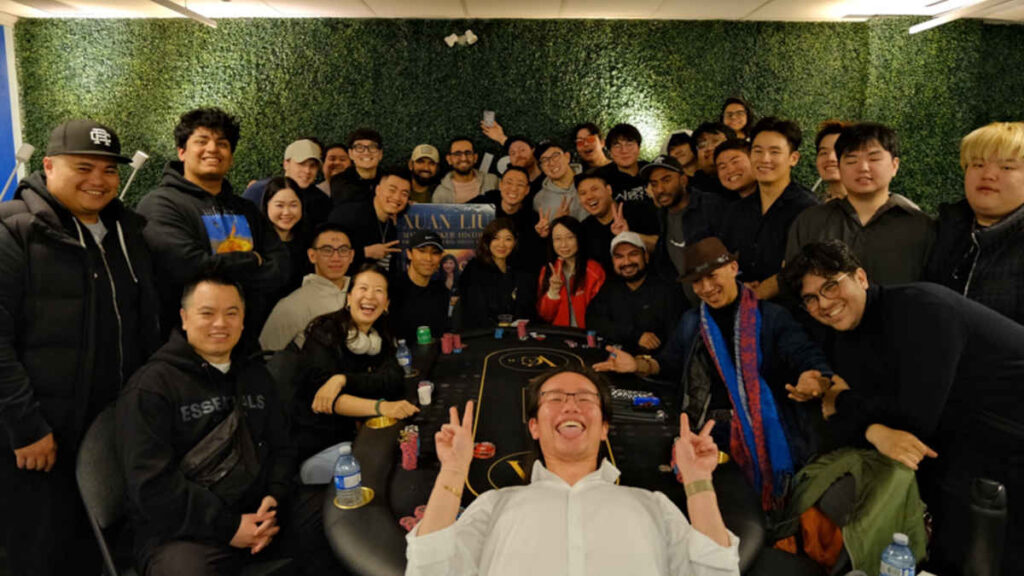
Finally, there’s PokerOS an AI-powered training app that bridges the gap between beginners and intermediate players. Think “Duolingo for poker.” It combines structured learning with GTO drills and natural language explanations. Coaching is expensive; I wanted to make improvement accessible.
How do those businesses fit into your overall vision?
Honestly, I don’t believe in rigid five-year plans. My guiding principle is to do what feels meaningful and fun.
Poker, VClub, and PokerOS all feed into a single vision, namely expanding the poker ecosystem and inspiring the next generation of players. At VClub, 80% of members aren’t poker players when they join.
They’re founders, investors, women, and young professionals, all people discovering the game for the first time. That diverse community of new players is something that I’m deeply proud of.
How has your entrepreneurial background shaped your approach to poker?
Entrepreneurship taught me how to live with ambiguity, adapt to setbacks, and keep my emotions in check. You have to be comfortable being uncomfortable. The startup journey is a constant rollercoaster; every win and setback feels personal. It can be deeply draining. It forces you to build emotional resilience, or you simply won’t last.
In business, I’ve always been a risk-seeker, and that’s translated into my playstyle, sometimes too much. Working with my coach, Andrew Moreno, helped me refine that aggression.
Entrepreneurship also taught me discipline. You can’t control results, only process, and poker is the same.
A Hot Start on the Felt
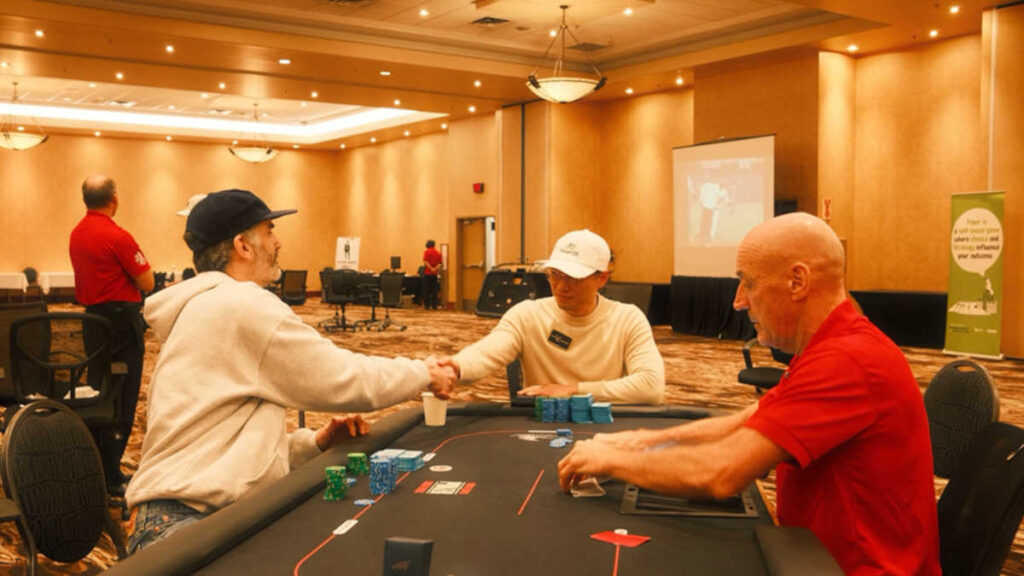
You finished 2nd in the WSOP Circuit Deerfoot Main Event for $208,000 right after publicly announcing you were going pro. What did that mean to you?
It meant everything. I hoped for a good result within six months or a year; it happened within days. It felt surreal.
I held the chip lead for most of the tournament, but there were emotional swings. My kings got cracked by queens on Day 2, and I had to reset fast. My coach helped me with re-centering. Later, I made two big hero calls that kept me alive. Heads up, I made one crucial mistake — calling in a spot where my opponent wasn’t bluffing. It cost me the title, but I like learning from my mistakes. It taught me more than any win could.
Before that, you had tough runs at EPT Barcelona and Triton ONE Jeju. How did you handle those and what was playing in those venues like?
Those trips were incredible life experiences: beautiful venues, great food, and high-level poker, but rough financially. I fired a lot of bullets (approximately 30) and cashed only twice. Still, I learned a lot. The European fields were tough as expected, while the Triton mid-stakes events were surprisingly soft. Getting to play on stream was surreal. Seeing the precision and professionalism of Triton made me want to bring that experience home to VClub.
Mindset, Goals & Growth
You’ve said, “The desire to win burns stronger than anything else.” How do you manage that intensity during downswings?
My wife and my support system keep me grounded. She feels the swings more than I do, because it’s out of her control. We’ve even done therapy to handle it better.
I journal, share openly on social media, and talk through hands with friends and my coach. After tough losses, I analyze, adjust, and use the pain as fuel. Vulnerability keeps me balanced.
What does your study routine look like now?
I have weekly sessions with my coach Andrew, review hands with my community, and use poker tools like GTO Wizard, PokerOS, and GTO Lab daily. Teaching others has been a huge part of learning for me; it forces clarity, among other things.
Moving forward, will you focus exclusively on tournaments?
Yes. I’ll occasionally play cash or appear on streamed games like Hustler, but tournaments are my passion. That’s where the glory and the stories are.
What are your short-term goals?
My first big goal is to win a trophy with a six-figure score attached. I’ve had several six-figure results but never closed one out. Long term, I’d love to break the Top 100 on Canada’s Hendon Mob rankings.
The Personal Side
Do you have a favorite poker hand or memory?
My favorite is 7-9 suited. I’ve cracked aces with it too many times to count.
My favorite memory is bittersweet. During my deep run in the Main Event, I let my ego get the best of me. I tried to play a hand blind for fun, and it backfired spectacularly.
I’m top five in chips with 50 players left, feeling unstoppable. Every bluff’s landing; my ego’s sky-high. I joke at the table about how wild it’d be to play a bomb pot in the Main, and no one bites. So, I blind-raise under the gun.
The woman in the big blind says, “If you’re playing blind, I’m playing blind” and she calls. The flop goes check-check. Then, on the turn, she fires big. I peel my cards, a combo draw to a straight and flush plus a pair, so I shove all-in.
Turns out, she wasn’t playing blind. Her well-timed lie sent me into the worst tilt of my life. I couldn’t shake the shame. Every raise I made got 3-bet. Everyone could smell the tilt. I busted 45th. Back in my hotel room, I collapsed and cried. It was a dream run, but my ego burned it all down.
However, when I got home, my wife surprised me with friends, cake, and T-shirts with my face on them. That reminded me that poker’s beauty lies in its humanity — its highs, its heartbreaks, and the people who share both with you.
What’s your biggest poker pet peeve?
Disrespect at the table. It turns recreational players, especially women, away from the game. We have a zero-tolerance policy for that at VClub.
What separates players who turn pro from those who don’t but wish they could?
Bankroll management, mindset, and support. Variance is brutal in tournaments. You need both discipline and emotional resilience to keep getting up after being knocked down.
I also have the privilege of not relying solely on poker income, which makes it less scary. But at any level, the key is to stay process-oriented.
One piece of advice you have for someone dreaming of going pro?
Invest in your education and your support system. Hire a coach if you can; if you can’t, build a study group. Record hand histories, review your play, and be brutally honest with yourself. Playing poker solo is hard mode. Surround yourself with people who’ll be brutally honest with you when you punt.
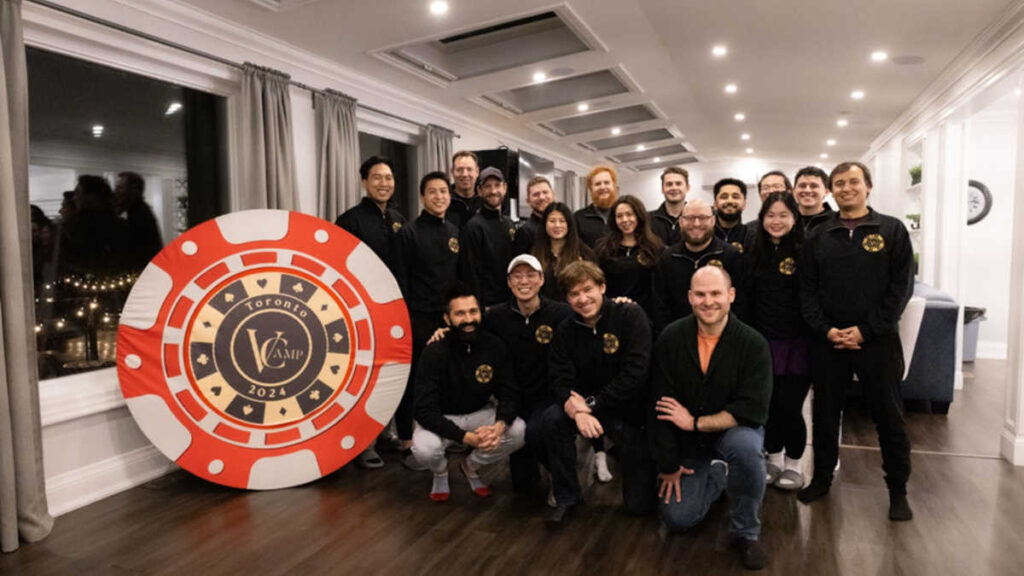
I run a camp every year where we bring ambitious people and elite coaches together under one mansion to study, play poker and sports, engage in yoga and more for 4 days. It’s one of the most fun projects that I run, and it has helped tremendously towards improving my own game.
Closing Thoughts
Victor Li’s story is about much more than cards. It’s about courage, the kind that comes from dismantling a successful identity to chase an uncertain dream. His self-awareness, humility, and unrelenting drive suggest that his story is only beginning.
As Victor puts it, “If I’m scared, it’s probably the right thing to do.” And that’s exactly what makes him an exciting player to watch.