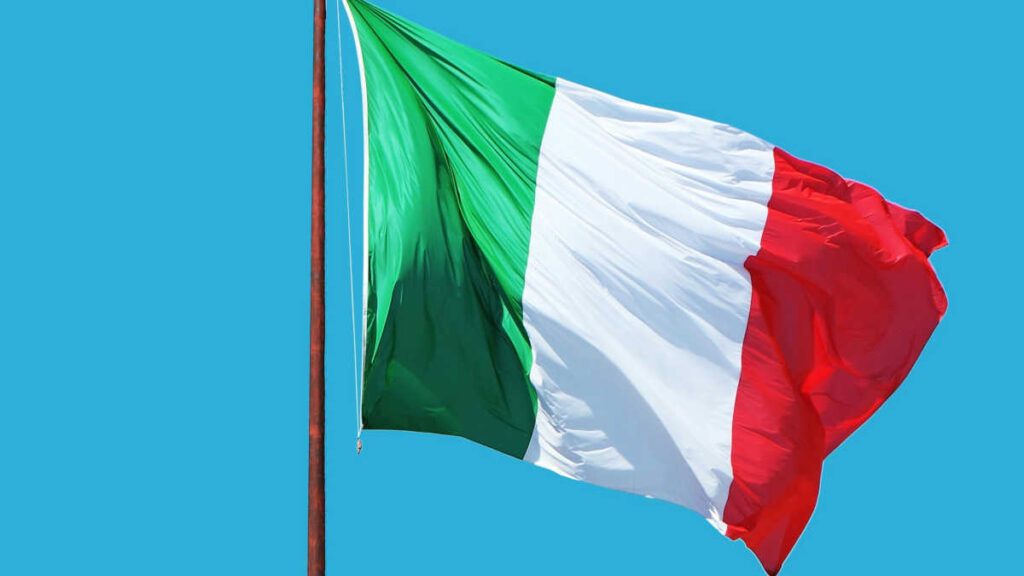
Ask most poker players outside Europe where the serious online action happens, and Italy rarely comes up. That is a strange omission for a country where over20 million adults gamble at leastonce a year, total wagering topped €157 billion in 2024, and gross gaming revenue reached €21.5 billion, making it the largest gambling market on the continent.
The numbers suggest a poker paradise. The reality for anyone who has actually tried to grind poker in Italy online is more nuanced than that. Italy has built one of the most transparent and player-protective regulatory systems in Europe, and for recreational players, it works well.
But for those looking to play serious volume or access a wider range of formats, the structure of the market creates real limitations. Understanding why requires a closer look at how the system was designed and the tradeoffs it involves.
A Market Built on Strict Licensing
Italy’s regulatory push was itself a product of the global poker boom that transformed the game into a mainstream entertainment product in the early 2000s, bringing millions of new players online across Europe and beyond.
Italy’s gambling regulator is the Agenzia delle Dogane e dei Monopoli, the ADM, which took over from the older AAMS branding without changing much about how the system operates.
Every operator that wants to legally serve Italian players needs an ADM concession, and the requirements are substantial: ongoing technical audits, real-time reporting to the regulator, strict player fund segregation, and full compliance with Italian consumer protection rules.
Those standards are genuinely high by European benchmarks. Players on ADM-licensed platforms can be confident their funds are protected, the games are audited for fairness, and there is a clear legal framework in place if something goes wrong.
Poker got its regulatory footing in 2007, when the government classified it as a game of skill under a Finance Act amendment, clearing the path for licensed rooms rather than an outright ban.
Licensed online poker rooms went live from2011 onward, following a decree that pulled casino games, poker, and sports betting under one unified framework. Since then, the ADM has controlled the entire legal supply chain for online poker in Italy.
The Operators That Dominate the Italian Market
That framework has produced a concentrated market. PokerStars, part of Flutter Entertainment through the Sisal acquisition, held around 34% of Italy’s poker cash game market in September 2024, according to Statista.
Behind it sits Lottomatica, which entered 2025 holding a 29% share of the broader Italian online gambling market through a portfolio that includes GoldBet, Betflag, and Planetwin365. Snai, also now under Flutter following a €2.3 billion acquisition, rounds out the top tier. The table below shows the main licensed operators currently active in the market:
| Operator | Parent group | Poker cash market share (2024) | Key formats offered |
| PokerStars | Flutter / Sisal | ~34% | Cash games, MTT, Zoom, Spin & Go |
| Snai | Flutter / Snaitech | ~9% | Cash games, MTT |
| GoldBet / Betflag | Lottomatica | Part of Lottomatica 29% online share | Cash games, MTT, Sit & Go |
| 888poker.it | 888 Holdings | Minor share | Cash games, MTT, fast-fold |
The Liquidity Fence and Why Italian Players Go Elsewhere
The main tradeoff built into the Italian system comes down to liquidity. Every platform operating under an ADM license runs on a closed player pool. Players on .it domains compete exclusively against other Italians, with no access to the international tables running on PokerStars.com or other global networks.
The regulator designed it this way deliberately, with two goals: keeping gambling activity within a supervised jurisdiction and ensuring tax revenue stays in Italy.
From a consumer protection standpoint, that logic is coherent. From a player experience standpoint, especially for anyone above the recreational level, the practical consequences are harder to ignore:
- Fewer tables running at any given stake level, especially above the micros
- Longer waiting times, particularly during off-peak hours
- Reduced game variety compared to international networks
- Tournament prize pools that rarely match what global sites offer at the same buy-in
Recreational players can live with those limitations. Anyone trying to put in serious volume, move up in stakes, or find action in non-NLHE formats hits a wall fast. That is why a meaningful share of Italian players turns to non-ADM poker platforms, primarily operating under MGA or Curaçao licenses; you can find a comparison of the main options available at www.miglioricasinoonline.info. Playing on those sites sits in a legal gray area: the operators run without an Italian concession, but Italian law does not impose criminal liability on players who access them.
The European Liquidity Agreement
Italy did try to address the liquidity problem in part. Through a shared liquidity agreement with France, Spain, and Portugal, players on .it platforms can, in theory, sit at the same tables as players on .fr, .es, and .pt domains, within the networks that have opted into the arrangement. In practice, the results have been underwhelming.
The agreement covers a limited number of operators, applies mainly to cash game tables rather than tournament lobbies, and the combined player base of all four countries still falls well short of what an open market like the UK produces during peak hours. It softened the edges of the problem without resolving it.
What the Dignity Decree Changed for Italian Poker
The Decreto Dignità came into force in July 2018 and delivered one of the most sweeping gambling advertising bans in Europe. From January 2019 onward, operators were prohibited from advertising across every channel: television, radio, digital platforms, print, billboards, sports kit sponsorships, and stadium naming rights.
The intent was clear and the public health concern legitimate: Italy’s problem gambling rates had been rising, and the government wanted to reduce exposure, particularly among younger demographics. That context matters when evaluating the policy. The market effect, however, was a significant consolidation.
Operators already established in 2018 had player databases, organic search traffic, and brand recognition that insulated them from the ban. New entrants had none of that.
The result was that the competitive landscape narrowed substantially, with PokerStars.it, Snai, and the Lottomatica group consolidating their positions. Players who wanted a wider range of options increasingly looked outside the ADM ecosystem to find them.
How Italy Compares to the Rest of Europe
Put the Italian market next to the UK and the gap is immediately obvious. The UK Gambling Commission licenses operators to serve British players on shared international networks, which means deeper liquidity, more formats, larger fields, and genuine competition between platforms for player loyalty.
France is a closer parallel: the ANJ also enforces a closed player pool model, but France has a larger domestic player base and a longer tradition of high-stakes online poker that gives its segregated market more depth.
Spain’s DGOJ mirrors the ADM approach almost exactly, with a ring-fenced pool and advertising restrictions that arrived around the same time as the Decreto Dignità.
Italy, France, and Spain have been running variations of the same regulatory experiment for over a decade, and none of them have produced an online poker ecosystem that genuinely competes with open markets.
The next real opportunity for change in Italy comes with the renewal of ADM concessions under the new framework introduced by Legislative Decree No. 41 of 2024, which awarded 52 new licenses to 46 operators and introduced a single-domain requirement for each licensee.
Whether the regulator uses that process to reconsider the closed liquidity model will determine what poker in Italy actually looks like for the next generation of players.