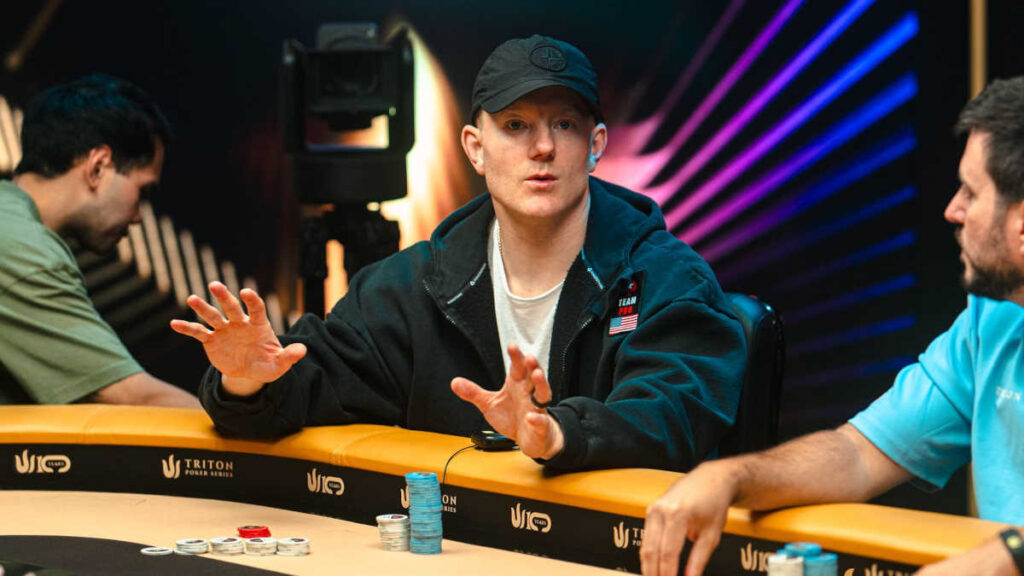
Images courtesy of Triton Poker Series
The West Virginian poker professional Jason Koon has enjoyed a phenomenal recent period in the game of poker. Becoming one of the most successful tournament players in history, he has pushed himself to a dozen Triton Poker titles as he has dominated the high roller circuit in recent years.
I sat down with Jason to discuss how he made it to this level in poker and what he is hoping to achieve in the years to come.
The Elite Poker Pro
In the past decade, Jason Koon has established himself as one of the world’s elite high-stakes players, particularly in Triton Poker events where the competition is arguably at its toughest. I started by asking Jason what he believes separates the very best players from those who are merely excellent, and whether the GTO era has changed that.
Talent in the game is important but is a secondary feature behind persistence, just showing up, consistency, and surrounding yourself with people that make you better, says Jason. Probably most importantly, [you need] a true burning desire to want to win, an unhealthy need to win.
While these are the ingredients for success, Jason admits that the qualities that make a great poker player aren’t in tandem with a natural stability in life.
I don’t necessarily think that makes the most balanced person or is the recipe for happiness, but it’s one thing that’s stood out to me time and time again. The greatest players have a really high aptitude for sure, but winning means so much to them that they do whatever it takes. That generally results in them organizing their lives in a way that sets up success.
Over his decorated career, Jason has competed against some of the best players in the world. When I ask him who the best is, there’s one opponent who Jason says has forced him to rethink his strategy or raise his game more than anyone.
There’s a long list of people that you could mention, but the one that’s always at the front of my mind is Ben Tollerene. He was the first display of what domination and greatness looked like to me. The first intimate look at his preparation and work ethic made it very clear to me that I had a long way to go to get there.
Jason admits to some doubt about whether he ever could attain that level, calling Tollerene “the perfect combination of pure aptitude combined with fierceness and an extreme work ethic.” Jason describes the component parts of his poker idol.
He has the right mental and physiological elements that make a great player. He takes losses extremely well. They bother him and make him want to improve, but they don’t demotivate him. I think that’s a person that’s always going to make you want to step your game up.
The ‘Misconception’ of GTO
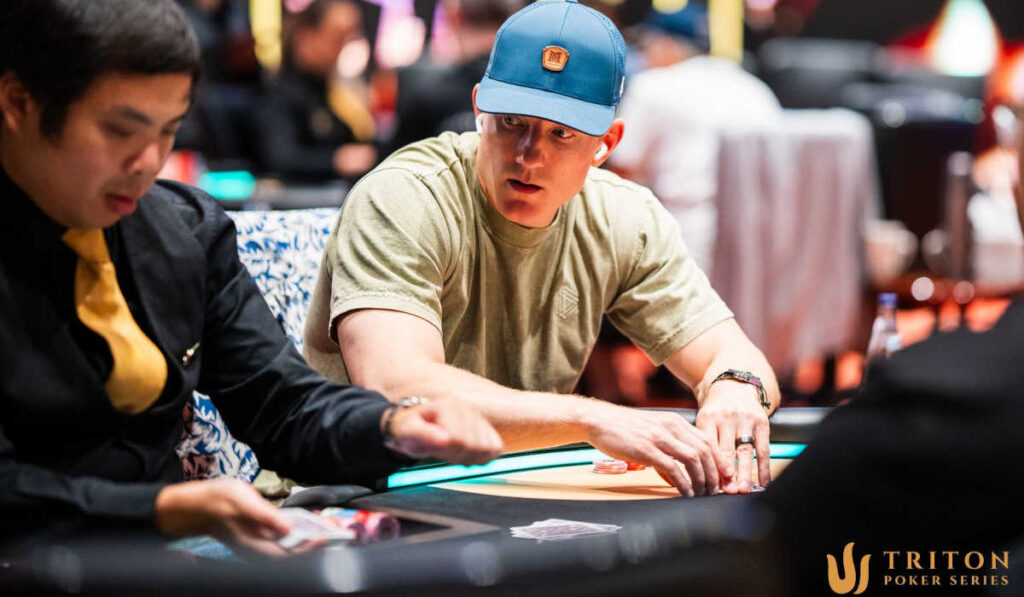
Modern poker is increasingly driven by solvers, game theory, and increasingly sophisticated study methods. Jason still feels that there’s a place for human instinct and intuition in the game.
I think the misconception is thinking that those two areas are separate when in reality the better that you are in theory as a baseline, the more hints that are handed to you when you’re reaching for quick and reliable information at the poker table.
That mix of improving the theoretical side of the game and putting it into practice at the toughest tables in the world makes me feel this is the method of how an elite pro like Jason not only survives in that world but thrives.
The deeper that you know a spot, the more you understand something inside and out, and the more mistakes you see. They’re all leading towards some human bias, so you then get to put yourself on their level and can ask if it was a choice for them to do that and if they are deviating.
As Jason explains, you can then take all that information and find an exploitative way of taking advantage of what you know. He says poker is simple, in that way.
All the art of poker is really pattern recognition and finding inconsistencies, so the deeper you know the way that something is supposed to work as a baseline, the more inconsistencies will become apparent to you.
The Right Place at the Right Time
Developing a bankroll in high-roller tournaments is something that can be very difficult when an emerging professional is rising in the highest levels of poker. Jason credits fortune as a factor in him coming up during a period where it wasn’t as hard to succeed.
I think it’s really hard for kids now and that’s why you see the majority of the nosebleed regs are my age. There’s a bit of a moat for young people unless there’s some kind of intermediary who believes enough to invest in them.
When I was coming up, you didn’t have to be very good to make a lot of money playing online poker, and that’s just not the case anymore. We were really lucky to be there at the right place at the right time.
When Jason was coming through in online poker, if he made money and hung onto it, his profitability was compounded by him being able to take as much action as he needed. He doesn’t think that’s the case anymore.
I don’t really know what the current EVs of online tournaments and cash games are, but there’s no way they’re even close to what they were when I was playing online, he tells me. The younger guys now playing high rollers are more about who they can get to bet on them unless things went really well for them.
Changing Gears
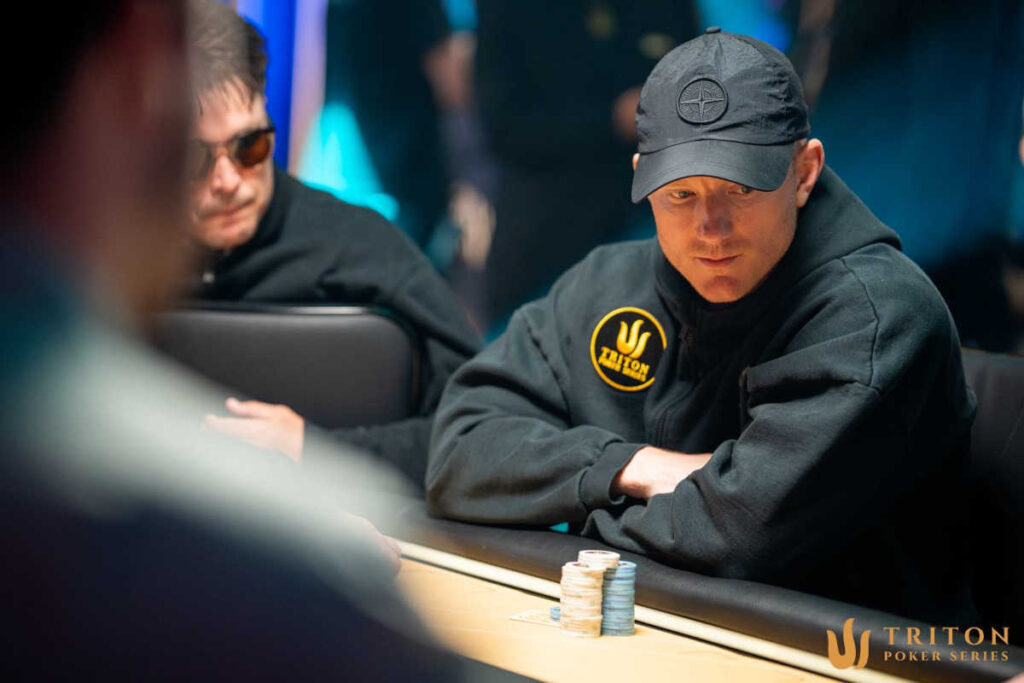
Poker can involve enormous swings, even for top pros who make consistently good decisions like Jason. I once spoke to another elite pro at a Super High Roller event, and he told me that elite pros might make mistakes as often as other levels of players but that they spotted leaks and fixed them quicker.
If they’re at the top for many years, poker players are good at switching gears, and it can just be a testament to your circle. Not only objective to yourself but being around people who see the game in a different light.
There’s no one right way to think about the game. There are plenty of absolutes in poker, but the reason I’ve stuck around and continued to improve is because the talent level of my peers is so, so high.
Jason has also been involved in coaching over the years and has helped many other players improve. Now he’s in the Poker Hall of Fame, I get the strong feeling that he cares deeply about the future of the game and the players who inhabit it.
I do care deeply about people trying to make a living playing poker because I empathize with how hard it is, Jason admits. Poker players are incredibly unique individuals; they’re taking a lot of risk on themselves and have to believe in themselves.
Twitter makes it feel quite toxic, but my experiences as a player have been incredibly positive. There’s so much honor in the game and so many handshake deals I’ve seen honored time and time again.
Being part of an industry Jason says is packed with incredibly good people, he tries to be “the token positivity guy” and is proud to take that role.
Having an optimistic approach is one of the reasons I’m still here. I don’t know what the future holds for mentorship and other contributions, but I’m always open to helping people. I often do that in private and keep a passive eye on the community, but if I see someone needs help, I do my best to reach out.
Stepping Up and Stepping Back
In pushing for a career as an elite poker player, Jason has previously said how draining that can be, both mentally and physically. As he sees it, however, leaving it all on the table in big games is mandatory if you’re playing at nosebleed stakes.
I don’t think stepping back is optimal for a high-stakes poker career, Jason says. There are plenty of people [for whom] poker is their everything, and they’re very likely to be the best players.
This has been Jason, but now is only a part of Jason. As he describes, he’s not likely to be putting in the volume of old in coming years.
For me personally, a goal of mine is always to transcend the game. I love poker, and I’ll always be a poker player. I think about it all the time and study it every day, probably double most people who play. I mentor people, I build stuff. But poker, in a lot of ways, is something I want to consistently downsize.
As Jason explains, a lot of the inspiration to do this comes from the most important role he has in life, that of a father and husband.
There’s a lot of life to live, and having three children, I really want to be there. I also want to push myself, to shapeshift and see if I can be successful at other things.
It’s scary to do, but living in that uncertainty and fear is something that pushes me. It’s a place I don’t like to be, but it pushes me to be better and in a lot of ways, it’s not enjoyable, but there’s nothing I’d rather be doing.
The North Star
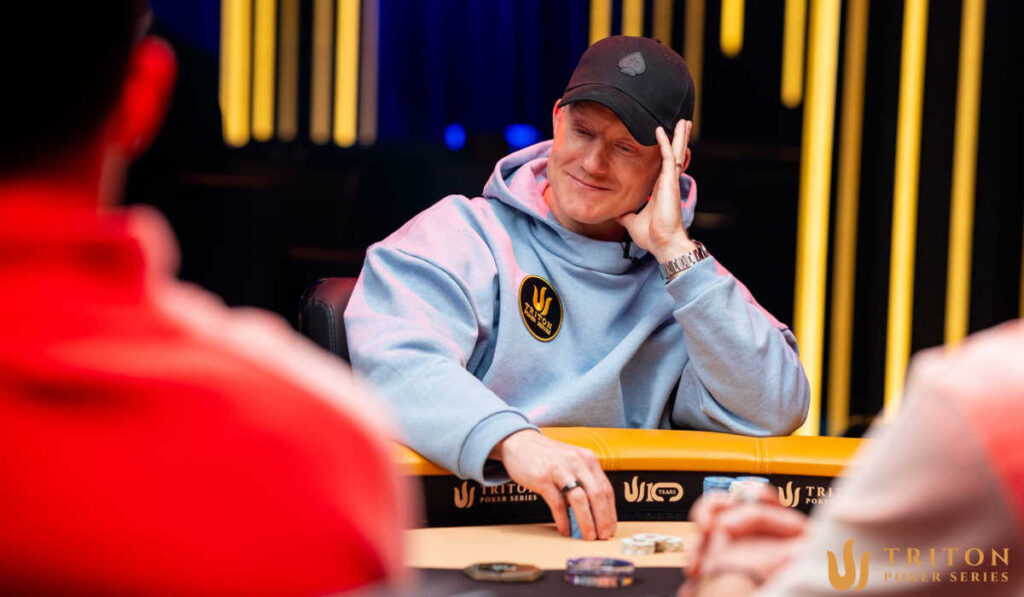
Looking back at his career, Jason identifies a particular period outside of the game that fundamentally changed his approach to poker and life.
Everybody needs a North Star. That North Star for me was my wife, he reveals. It’s a very, very clear indicator that when my career went into full parabolic, straight-up mode was when I got with my wife. I don’t think that’s a coincidence.
Jason was good at poker before he met his wife Bianca, but as he delves deep into his past, he says that everything changed once he became part of what is now a large, loving family home.
I was a good player for 10 years prior to that, but I lacked purpose. I would win money and punt it off or buy dumb things, just living aimlessly. When you have responsibility, it anchors you, and when you have people that rely on you but also believe in you? For me, that was the secret sauce.
Jason’s evolution from solid poker pro to an elite achiever in life all goes back to that pivotal moment he met Bianca. Since that day, his love for life and poker has only grown.
My wife was the biggest force for change, and what keeps me going is I love the game. I absolutely love it. I don’t want it to be my everything. But I didn’t choose poker; it chose me. I found it whenever I got hurt in college, and from the first time I played a hand, it was all I could think about.
That love affair with poker has been burning bright since that moment, and from then on, Jason always wanted to play the game he is now famed for.
I loved to compete at it, and I still study and work really hard. I just have so much experience that big spots don’t feel big to me. I look forward to playing them, but I’m very clear and in the pocket when I play.
I see things the best I can see them, and there’s not a lot of irrationality in front of what I can see. I don’t feel pressure or afraid to look stupid. I’m very confident in myself and happy to sit down and play.
Over the coming years, maybe we’ll see less of Jason Koon at the poker tables of the world as he grows with his family and evolves as a person outside the game too. But when he’s at the felt? You better believe he’s going to give it his all with a work ethic that is second to none.
That habit became routine for Jason Koon a long time ago.