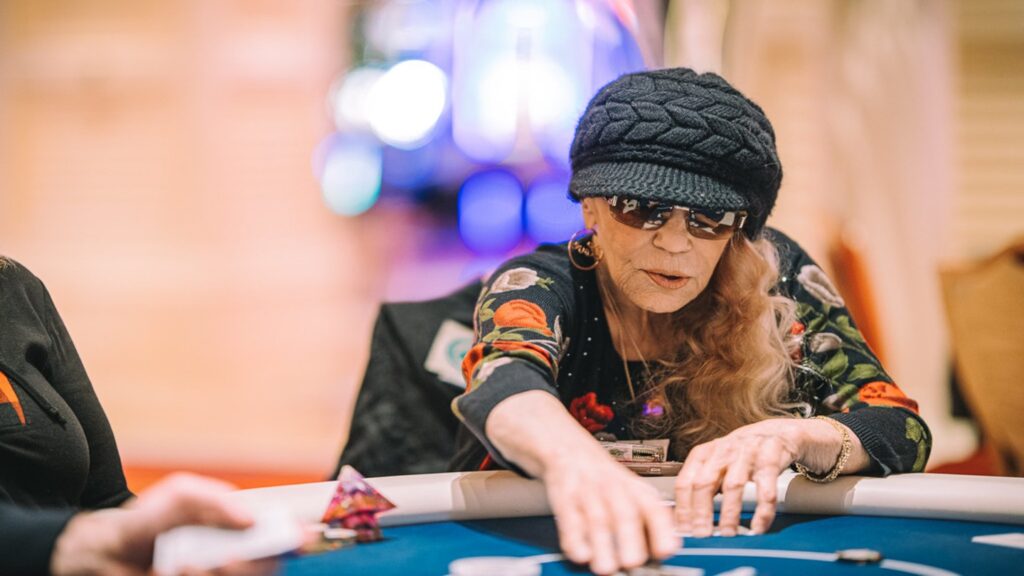
Tournament poker history dates back to the 1970s, the era when Benny Binion formed the World Series of Poker (WSOP) in an attempt to turn poker from a gambler’s game to a form of sport and competition that would appeal to the mainstream.
Back in those days, poker was exclusively a boy’s club, as smoky poker rooms attracted gamblers and businessmen, many of whom wouldn’t think a woman could play cards any better than they could knit a sweater.
It took decades for that to change, and it was female poker pioneers like Barbara Enright who showed the world that women could be fierce poker players and serious competitors at the green felt.
This is the story of how Barbara Enright won her first open event WSOP bracelet in 1996 and set the stage for female poker champions like Vanessa Selbst, Liv Boeree, Anette Oberstad, and Kristen Foxen who would come in the decades to follow.
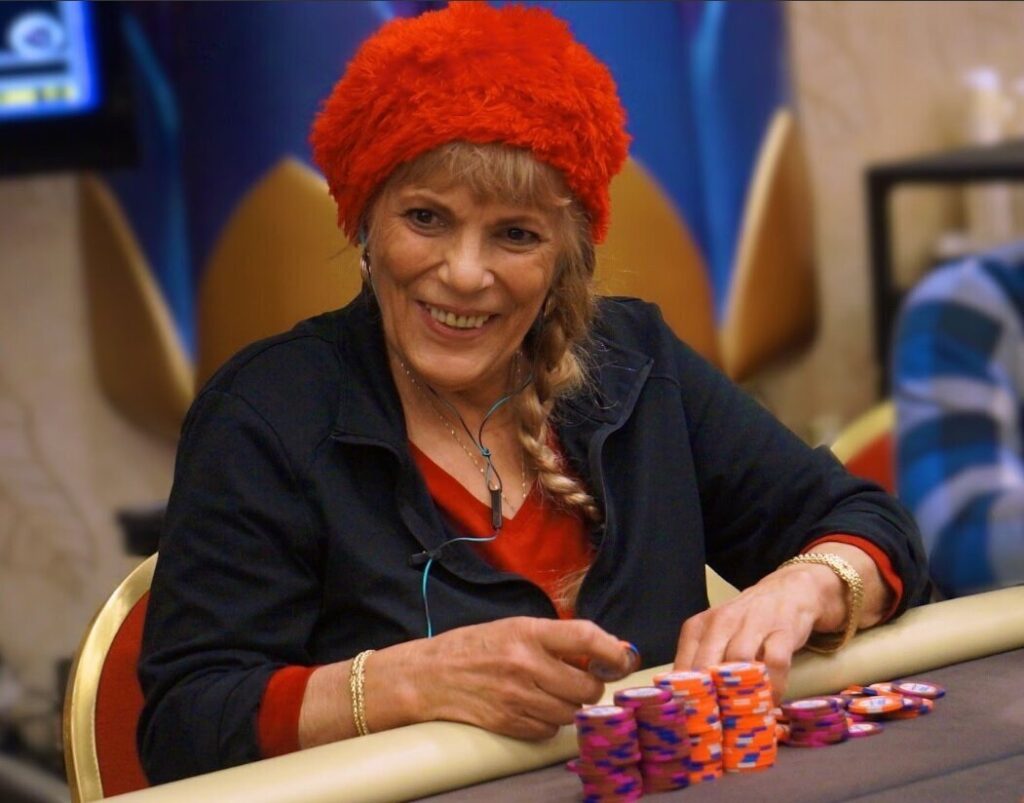
A Cocktail Waitress Becomes a Poker Champion
Barbara Enright came from humble beginnings, and she started playing cards at the age of just 4, when she first learned how to play Five Card Draw from her older brother.
Over the years, she became infatuated by card games, but card games weren’t paying the bills, so she worked as a cocktail waitress, bartender, and hair stylist to support her family.
Barbara started playing poker more seriously in 1976, just a few years after the WSOP first launched, and had some success doing it. In a few years, she quit her other jobs and decided to focus on cards, as she believed she could make more money playing than working.
In 1986, ten years after she first started frequenting card rooms, Barbara finally broke through at the World Series of Poker (WSOP), and won her first bracelet, but it came in a female-only 7-Card Stud event.
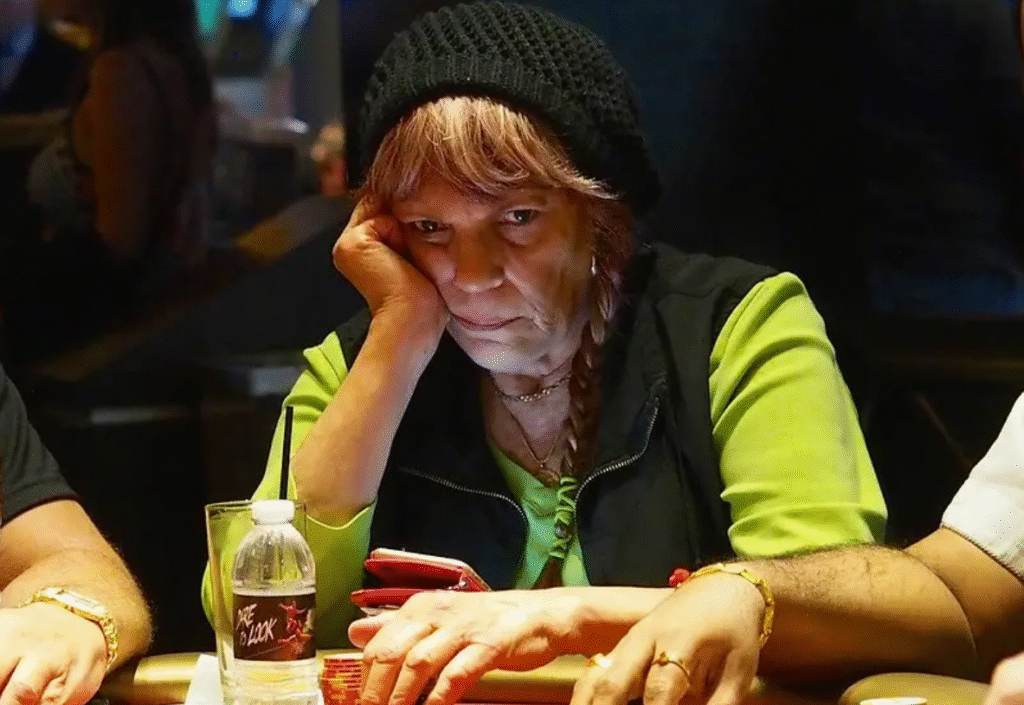
It took another 10 years before she would truly change poker history, when she entered the $2,500 Pot Limit Hold’em event at the 1996 WSOP and triumphed over a final table that also included a young Jennifer Harman, another aspiring female poker player.
Barbara beat Stan Goldstein heads-up for the bracelet at $180,000 in first-place prize money, a massive sum for the time.
More importantly, she won what many believe to be the first-ever WSOP bracelet won by a female player in an open event, which was a feat many believed would never be achieved at the time.
Since then, women in poker have flourished, with the number of active female players growing by the year, and numerous female champions crowned across different poker tours, including the WSOP.
Was Barbara Actually the First Female WSOP Champion?
While Enright’s win in the 1996 $2,500 Pot Limit Hold’em event at the WSOP is widely considered to be the first open event WSOP bracelet won by a woman, a deeper look into poker history books tells us otherwise.
Years earlier, in 1982, Vera Richmond won the $1,000 Limit Ace to Five Draw event at the WSOP for $38,500, and the result is officially recorded in major tournament poker databases.
The daughter of Alfred Neiman, Vera was a rich and fearless recreational player who entered the WSOP with no fear or bankroll concerns. Eventually, this approach led to her winning the Ace to Five event and becoming the first woman to actually achieve this feat.
However, her victory was not widely noted, as few considered her to be a serious poker player, and the event itself was a relatively small affair with only 75 runners and a comparatively small first-place prize.
Barbara’s win, which came over a decade later, resonated much harder with the poker community, likely due to the fact that Barbara was an established poker player with a history of notable results over the years.
Enright’s Achievement Set the Groundwork for a Generation of Female Champions
Barbara Enright was a brave pioneer who played poker with the boys in an era when few other ladies dared to, and she set the tone for generations of players who came after her.
One of those certainly impacted by Enright’s achievements was Kathy Liebert, who was already actively playing tournament poker when Barbara won the Pot Limit Hold’em bracelet in 1996.
Liebert would go on to win well over $7,000,000 playing tournament poker, and she still continues to compete at the highest levels decades later.
A mixed games specialist in her own right, Jennifer Harman was the next to dominate at both cash game and tournament tables, as she won two WSOP bracelets and millions in cash games, according to reliable sources.
The impact of the likes of Enright and Liebert was perhaps best felt decades later, when young Annette Obrestad of Norway dared enter the WSOP Europe Main Event in 2007 at the age of just 18, where she went on to win the bracelet and become the youngest Main Event champion to date.
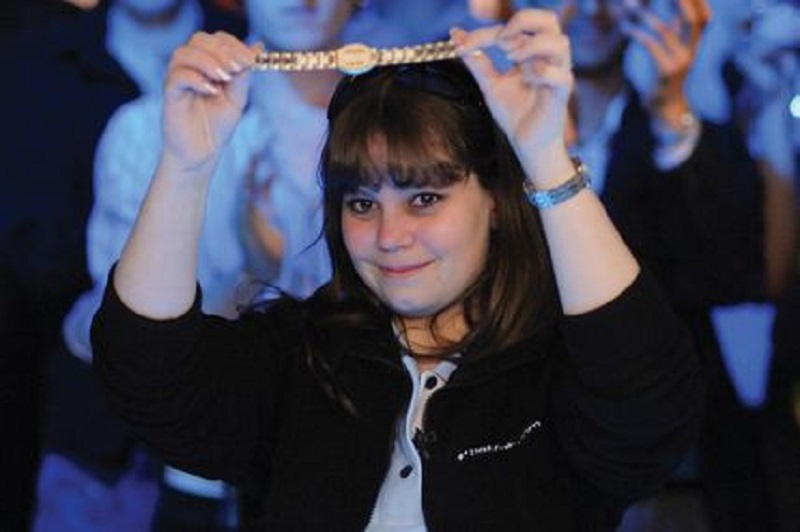
Generations of ladies in poker, including the likes of Maria Ho, Kristen Foxen, Vanessa Selbst, and Shiina Okamoto, would all have likely stayed on the sidelines had players like Barbara Enright not had the courage to go against the grain and challenge the boys in their own game.
Today, poker rooms around the world are filled with a mix of men and women, and while male players still dominate the numbers, you will hardly find a poker event without a decent chunk of girls in the running, playing on par with the best men in the field.