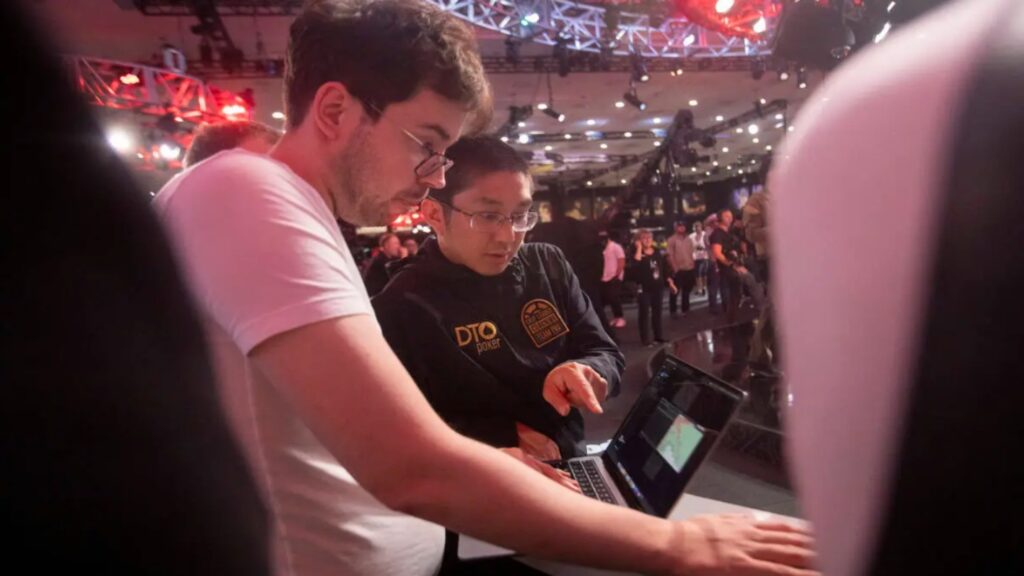
The 2026 World Series of Poker (WSOP) Main Event is entering Day 8, and only 21 players remain of the 9,208 who ponied up $10,000 to play in the most prestigious poker tournament of the year.
The Main Event kicked off with some controversy around streaming, as many players and fans expected to get to watch the entire Main Event for free via YouTube, only to be disappointed to learn that the action is only available via the ESPN+ app, where a subscription is required.
Yet, the streaming controversy was left in the dust yesterday, after WSOP made one of the most unexpected moves in the history of the Series. Seemingly out of the blue, and with no prior announcement, the WSOP introduced shot clocks into the Main Event at the start of Day 7.
Not only were shot clocks introduced, but the overall time given to each player to act on their hand was cut down to severely low levels. As of yesterday, players only have 20 seconds to make every preflop decision, and 30 seconds to make every postflop decision, along with just six 30-second time banks.
This erratic and unexpected move sparked a lot of backlash and response on the social networks, so we dug deeper into the problem to get to the bottom of why the decision was made and whether it serves a greater purpose.
By the way, this is me saying that the Main will be using shot clocks/time banks starting today. https://t.co/qWeEzaTatm
— Jeff Platt (@jeffplatt) July 12, 2026
What Led to the Shot Clock Being Introduced?
Day 6 of this year’s Main Event was marked by an unusual incident, the kind of which we see more and more in poker these days.
With 72 players remaining on Level 29, Loren Klein made a raise for all but her last chip, only to get called by Tyler Gaston in the small blind.
When the board came out A♥7♥6♥ and Gaston moved all-in, Klein had to decide whether or not to put in his final chip. It was at this point that the drama ensued.
The payout for 72nd place was $105k, while a single pay jump to 71st would secure an extra $20k on top. Klein was aware of this, so he took his sweet time before putting in that last chip.
He took over 15 minutes to make her decision. It took a Senior Tournament Director to make a decision, and he finally put the player on a 1-minute clock. Some 17 minutes into the tank, Klein finally made the call, only to discover she wasn’t even drawing dead.

Klein held K♣4♥ to Gaston’s A♣6♦, which meant he could win the pot outright if a heart fell on the turn or the river.
It wasn’t meant to be, as Gaston ended up making a full house on the river. Klein was sent packing without outlasting another player, and eventually cashed for $105k.
Day 6 ended, and Klein’s long tank would have remained just another Main Event anecdote, if it hadn’t led to a complete overhaul of the tournament rules that ensued.
The very next morning, players were informed that the shot clock was now in play, and their decision time was cut down to just seconds per street, a decision that most recreational players in the field took with absolute disbelief.
The Poker Community Reacts to the Shot Clock
As soon as the introduction of the shot clock was announced on Day 7, the poker community started reacting, with big name pros and casual poker fans alike having something to say about it.
One of the most vocal and first to respond was Chris Brewer, a high-stakes tournament legend who immediately expressed his disbelief with WSOP’s decision.
According to Brewer, the decision was detrimental to any recreational players left in the field, but also potentially costly even for the pros, as the time pressure being applied is very high, especially considering the significant amounts of money in play.
Heard they added shot clock to main event with 20 seconds pre…. Completely awful decision and insanely unfair to every recreational still in the field
— Chris Brewer (@Chris_D_Brewer) July 12, 2026
Anecdotally even as someone who plays well above average pace and plays shot clock all the time I find 20 seconds pre daunting. Yesterday in 50k I blundered my bust out spot because I didn’t want to use a time bank pre utg, then jammed a min raise only spot and cost myself about… https://t.co/mnhdPqIHQd
— Chris Brewer (@Chris_D_Brewer) July 12, 2026
Joining Chris’ sentiments was Chance Kornuth, one of the best poker coaches around, who expressed his concern for the amateur players, and added that the move was being made mostly to make the Main Event look better on TV, Put players first, announced Kornuth in his Tweet.
This needs to be reconsidered immediately. This is so unbelievably unfair to the amateur players.
— Chance Kornuth (@ChancesCards) July 12, 2026
Playing for $10mil and adding this in mostly so it looks good on TV is outrageous.
Even the pressure of not having experienced using a shot clock before can be overwhelming.… https://t.co/pCSNEQo7rG
Mike “the Mouth” Matusow also exclaimed his disbelief with the WSOP changing the rules on Day 7, although it has since been revealed that adding a shot clock is within WSOP’s rights in accordance with the tournament rules.
How can the WSOP really change the rules of the Main event on day 7 and add a shot clock? That’s absurd and unfair to rec players who are still in and have never used a shot clock! #fixit #wsop2026
— Mike Matusow(code:Mouth) (@themouthmatusow) July 12, 2026
Contrary to them, Shaud Deeb supported the introduction of the shot clock in the Main, saying he believes the pros abuse time a lot more than recreational players, and that the decision was necessary and overdue, even saying “shot clocks are better for recs!”
Shaun Deeb speaks on the shot clocks on Day 7 of the WSOP Main Event! @shaundeeb pic.twitter.com/he5nRQlxTD
— PokerGO (@PokerGO) July 12, 2026
The discussion continued on X and other networks throughout the day, with opponents and supporters of the shot clock decision taking turns making the case for their side.
Are Shot Clocks Necessary and Is There a Middle Ground?
The argument made by reigning POY Shaun Deeb, and the one that led to shot clocks being introduced, is a valid one. Players do tank and abuse time in the Main Event, whether it be to climb the paytable, to get a better read on their opponents, or to consider every possible strategic implication of their play.
Shot clocks have been a part of tournament poker for a while now, but most experts agree that they are only necessary in pro-heavy tournaments such as those on the Triton Poker Tour or PokerGO Tour.
Tournaments like the WSOP Main Event, which tend to attract many recreational and amateur players, have historically not been timed, as there is a general consensus that amateurs can’t thrive under the immense pressure of a shot clock.
The decision to introduce a shot clock on this occasion was somewhat impulsive and responsive to a particular incident that happened on Day 6, but not necessarily the right one.
For one, adding a shot clock so deep in a massive field tournament seems unfair to the players who busted in the earlier days, as there was no shot clock in play for the many hours leading up to Day 7.

What’s even more, the shot clock was introduced without a proper announcement, and players were given no time to prepare for what’s quite a massive change in a tournament that’s typically played at a very slow pace.
Players were also given only six 30-second time banks per day, for a grand total of three minutes, which is even less than what the pros get in the super high rollers, despite being very used to the format.
Overall, it appears that the WSOP made a decision mostly based on the way tanking looks on TV and how it affects the stream, rather than what’s best for the game and the players.
The Series may yet decide to change the shot clock rules as the tournament progresses, but as things stand now, it appears we will be looking at a much faster-paced tournament, and likely a lot more mistakes made on the part of both pros and amateurs, as they are forced to act in just seconds, instead of minutes.
Who Benefits More? The Pros or the Recs?
The biggest point of contention regarding the shot clock in the Main Event was whether it benefits the professionals or the amateurs more?
Shaun Deeb made a good point, saying that it’s often the pros who take excessive time, tank unnecessarily, or even take their time to make the correct play and get a read on their opponents.
However, he also added that the shot clocks will help amateurs make better decisions, and that’s a point that probably isn’t true for every rec in the field.
In fact, for many recs, especially those who have never played with a shot clock before, being forced to act in just 30 seconds on every postflop decision could be detrimental. 4
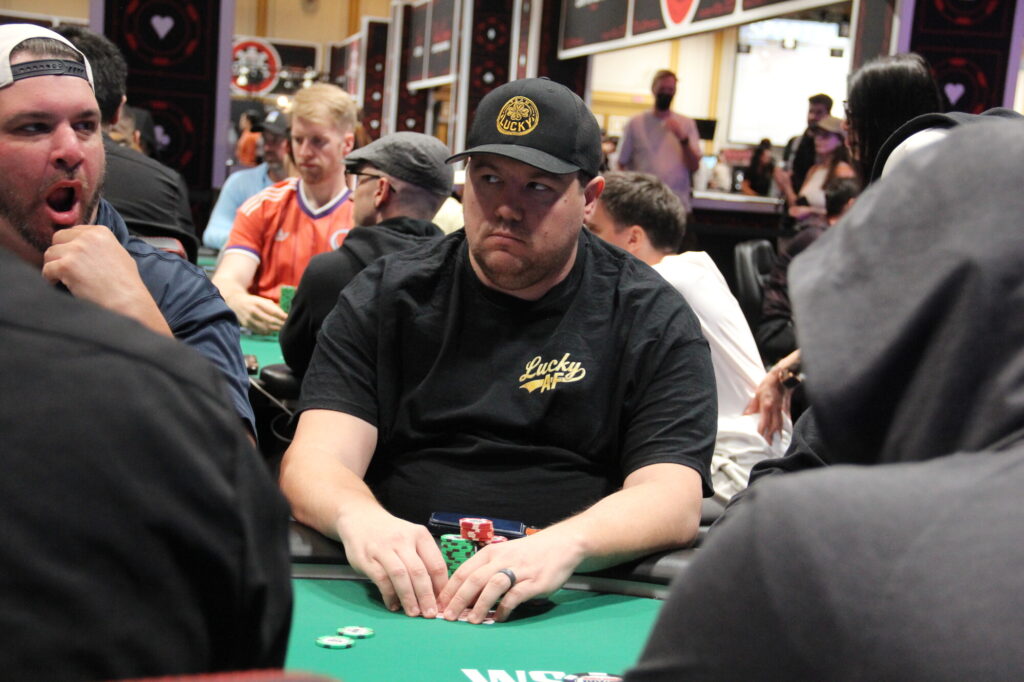
At this stage of the Main Event, even small decisions are worth tens of thousands of dollars, and players with no shot clock experience are guaranteed to be overwhelmed by the pressure.
While the pros will lose some of their edge in not being able to dissect every decision they make, the decisions they make in 30 seconds will be significantly better and more “GTO-approved” than those made by the recs.
Even as the tournament dwindled down to just 21 players, and many of them are household names like Shaun Deeb and Todd Brunson, there are still at least a few players in there who will be feeling the pressure of the shot clock in a very severe way.