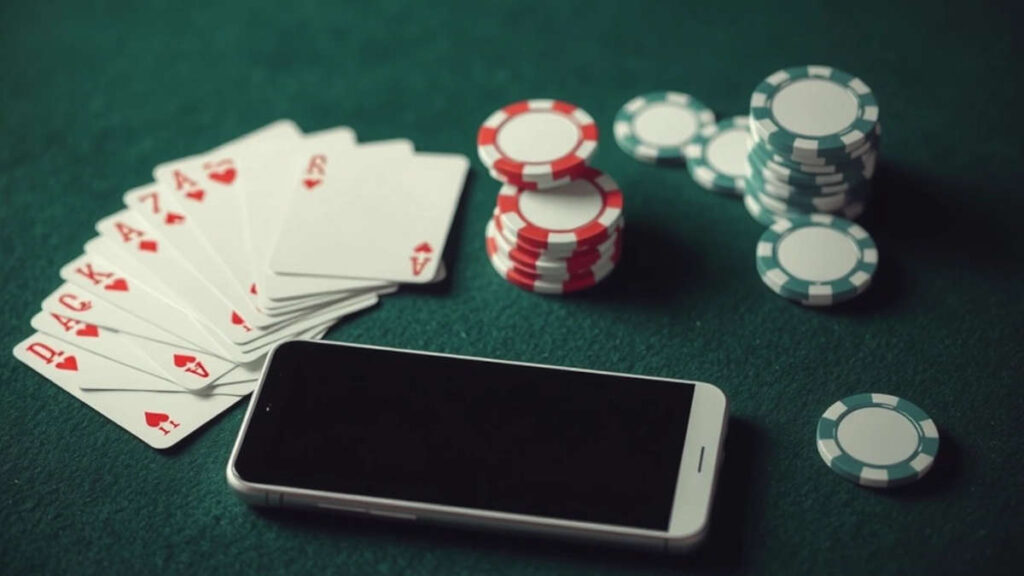
Ask a serious poker player how a session went and you rarely get a straight answer about money. You get a story about decisions. Did the bluff make sense given the range? Was the call plus expected value even when the river bricked? Poker trains people to separate the quality of a choice from the result of a single hand, because variance hides good play and flatters bad play in the short run. That habit is the real skill. The chips are just the scoreboard.
So it should not surprise anyone that a slice of the grinding community keeps drifting toward the one casino table game that rewards the same thinking. Blackjack is not poker, and nobody serious pretends it is. But it is the closest thing on the casino floor to a game with a known, measurable edge that you can actually influence with correct decisions.
A growing number of players are testing that idea on crypto platforms such as Shuffle, whose blackjack online casino tables run on provably-fair software rather than a black box. Before anyone reads that as a pitch, a quick reality check follows below, because the edge story in blackjack is more honest, and more limited, than the marketing usually admits.
This piece is written for people who already speak the language of ranges, position, and expected value. If that is you, the math of blackjack will feel familiar fast. It will also show you exactly where the comparison to poker breaks down.
Why Poker Players Think in Edges, Not Outcomes
The core mental model in poker is that every decision has an expected value, a weighted average of what happens if you repeated the same spot forever. You do not need to win a hand for the decision to be correct. You need the decision to be positive over the long run. Good players internalize this so deeply that they can lose a big pot, shrug, and reload, because they trust that the process pays off across a large sample.
That framing is unusual in gambling. Most casino games give you no meaningful decisions at all. You place a bet, the wheel spins or the reels stop, and the outcome is fixed by odds you cannot touch. There is no skill lever to pull. For a poker player, that is deeply unsatisfying, because the whole appeal of poker is that better decisions produce better results over time.
Blackjack is the rare exception on the pit floor. Your choices, when to hit, stand, double, or split, change the expected value of the hand. Play well, and the house keeps a razor-thin advantage. Play on feel, and that advantage balloons. The gap between those two versions of the same game is entirely about decision quality, which is precisely the axis poker players are trained to care about.
Blackjack Is the Table Game Closest to a Poker Mindset
The similarity is not that blackjack is beatable the way poker is. Against the house rules, it usually is not. The similarity is structural. Both games ask you to act on incomplete information, both punish emotional deviation from a correct baseline, and both reward discipline over hunches.
In poker, the correct baseline is a solver-approved strategy, the kind of raise-first-in and postflop framework that strong players study relentlessly. Pokerati has covered how easily newer players sabotage themselves by drifting from that baseline, in its breakdown of the biggest preflop mistake new players make, which is worth reading precisely because the same failure mode shows up at the blackjack table.
Limping into a pot out of position and standing on a 16 against a dealer ten are cousins. Both feel safe. Both quietly bleed expected value.
Blackjack has its own solver output, and it has existed for decades. It is called basic strategy, a complete chart of the mathematically best action for every combination of your cards and the dealer’s up card. It is not a secret and it is not proprietary. It is simply the blackjack equivalent of a GTO baseline, and departing from it costs you the same way departing from a poker baseline costs you.
What the Edge Actually Means at a Blackjack Table
Here is where poker players need to swallow a hard truth. Even with a flawless basic strategy, blackjack is a negative expected value game against standard house rules. You are not grinding a positive edge the way you might against weak poker opponents. You are minimizing how much edge the house holds.
The good news is that the minimum is small. Reputable analyses commonly put the house edge for a player using correct basic strategy at well under one percent in favorable rule sets, sometimes around a half percent or a touch lower. Compared with most casino games, that is remarkably lean. The bad news is that the same figure climbs quickly when the rules get worse or when a player guesses.
The practical takeaway mirrors poker exactly. Your job is not to win every hand. Your job is to make the lowest-cost decision available in each spot and to avoid the rule sets that quietly tax you. A player who understands variance will not tilt when a correct double loses. They will keep making the correct double, because the point is the long-run rate, not the current hand.
Which Rules and Decisions Move the Edge
The house edge in blackjack is not a single fixed number. It shifts based on table rules and on how well you play. The figures below are widely cited approximations, not guarantees, and they vary by source and specific condition. Treat them as directional, the way you would treat preflop equity estimates rather than exact solver outputs.
| Rule or decision | Poker analogy | Approximate effect on house edge |
| Playing correct basic strategy | Following a solver baseline | Reduces edge to roughly half a percent or under |
| Blackjack pays 6 to 5 instead of 3 to 2 | Getting worse pot odds on your best hands | Adds roughly one and a third percent in the house favor |
| Dealer hits soft 17 vs stands | Opponent playing a slightly wider, stronger range | Adds around a fifth of a percent |
| Fewer decks in the shoe | Cleaner reads, less hidden information | Generally lowers the house edge modestly |
| Guessing instead of using strategy | Playing on feel, ignoring ranges | Can multiply the effective edge several times over |
The single most important row is the payout line. A table that pays 6 to 5 on a natural blackjack instead of the traditional 3 to 2 is one of the worst deals on the floor, and many casual players never notice. A poker player would never accept systematically worse pot odds on premium hands, and this is the same mistake wearing a different outfit.
Where Card Counting Fits, and Where It Does Not
Every poker player who researches blackjack eventually hits the counting question. Yes, card counting is real, and it is the one path to a genuine player edge in live blackjack. By tracking the ratio of high to low cards remaining, a skilled counter raises bets when the deck favors the player and shrinks them when it does not. Wikipedia’s overview of the mathematics of card counting lays out the basic systems and their limits without any casino spin.
The problem is that counting almost never survives contact with the online environment. Software blackjack deals from a shuffled virtual shoe that is typically reset every hand, which erases the memory a counter depends on. Live-dealer streams use real cards, but casinos guard against counting with frequent reshuffles and cut-card placement that limit deck penetration.
For a poker player, the honest summary is this. Basic strategy is available to everyone and simply minimizes the house edge. Counting is a much narrower, harder edge that online formats are designed to neutralize. Anyone who tells you an online blackjack game can be reliably beaten by counting is selling something.
That limitation is not a reason to avoid the game. It is a reason to be clear-eyed. You can play blackjack the way you would play a low-variance poker session, tightly and correctly, without pretending you have flipped the math in your favor.
How Crypto Blackjack Changes the Verification Problem
This is where the crypto angle earns its place, and it has nothing to do with a bigger edge. It has to do with trust. In a traditional online casino, you have to take it on faith that the digital deck is being shuffled fairly. You cannot inspect the software. You are trusting the operator’s word and whatever regulator, if any, stands behind it.
Provably-fair systems, common on crypto platforms, try to solve that specific problem. In simple terms, the game commits to a shuffled outcome in advance using a cryptographic hash, mixes in a value you can influence, and then reveals the seed afterward so you can verify that the result was not altered once you acted.
It does not make you win more. The house edge is unchanged. What it does is let a technically minded player confirm that the shuffle was honest, rather than trusting a sealed box. Poker players, who obsess over game integrity and collusion, tend to appreciate why that matters.
It is worth being precise about scope. Provably-fair verification applies cleanly to software games driven by a random number generator. Live-dealer blackjack, dealt by a human from physical cards on a stream, is a different trust model that leans on cameras, licensing, and studio auditing rather than an on-chain seed. Both exist on crypto sites. They are not the same guarantee, and it helps to know which one you are playing.
Payout Speed and Bankroll Discipline
Poker players are unusually sensitive to one thing casual gamblers ignore: the friction of moving money. Anyone who has waited on a slow cashout knows how it distorts bankroll management. One practical draw of crypto casinos is that on-chain withdrawals can settle faster than traditional banking rails, sometimes within minutes rather than days, depending on the network and the platform’s processing.
Stablecoins add another wrinkle, letting a player hold a balance pegged roughly to a dollar value instead of riding the price swings of a volatile token while they decide to play or cash out.
None of this changes the odds of the game. It changes the operational experience around the game, which is exactly the sort of edge-adjacent detail a bankroll-focused player notices. Faster, more transparent settlement is a workflow benefit, not a mathematical one, and it should be evaluated as such.
A word of caution belongs here. On-chain transactions are generally irreversible. There is no chargeback if you send funds to the wrong address or mistype a wallet. That self-custody responsibility is real, and it is the trade-off for the speed and transparency. Poker players used to protecting their own bankrolls usually adapt to it, but it deserves respect rather than a shrug.
The Grey-Area Reality Every Player Should Understand
Now, the part that marketing skips. Shuffle and similar platforms are crypto-based gaming sites, not domestically licensed United States online casinos. Real-money online casino play in the US is legal in only a small number of states, and California is not one of them.
Most crypto casinos operate offshore, in a legal grey area that varies enormously by jurisdiction. That is not a knock on any single site. It is a factual description of the category, and pretending otherwise would be dishonest.
The practical guidance is simple. Anyone considering real-money play should check the current law in their own state or country before depositing a cent, because the rules shift and enforcement differs. Real-money gambling of this kind is for adults twenty-one and over, where US play is at issue. Read the terms, understand the withdrawal conditions, and treat any bonus offer as a contract rather than free money.
Responsible play matters more than any edge conversation. Blackjack with a correct strategy is one of the lower-cost bets in a casino, but it is still a cost. Set a loss limit before you sit down, size your stakes to a bankroll you can afford to lose, and walk away on a schedule rather than on a feeling. The players who last are the ones who treat this as entertainment with a price tag, not as income.
Same Math, Different Game
The honest conclusion is a split decision. Poker players are right that blackjack rewards the exact discipline they already own. Expected value thinking, respect for variance, and refusal to deviate from a correct baseline all transfer directly, and they make blackjack far less punishing than it is for a player who acts on gut feeling.
Where the comparison ends is edge ownership. In poker, you can be a long-term winner because you are competing against other players and keeping an edge over weaker ones. In house-rules blackjack, you are competing against fixed math that keeps a small but permanent advantage, and no amount of correct basic strategy flips that sign.
The crypto layer adds verification and faster settlement, which are genuine improvements to trust and workflow, but it does not touch the underlying odds. Understand that boundary and blackjack becomes a satisfying, low-friction way to apply a poker brain. Ignore it and you are just another player donating on tilt.
Frequently Asked Questions
Can a strong poker player beat online blackjack the way they beat weak poker tables?
Not against standard house rules. Blackjack with perfect basic strategy still leaves the house a small permanent edge, so it is a negative expected value game over time. A poker player’s discipline minimizes the cost, but it does not create the kind of positive long-run edge you can build against weaker human opponents.
Does card counting work at a crypto blackjack table?
Almost never. Software blackjack usually reshuffles the virtual deck every hand, which destroys the card-tracking memory that counting relies on, and live-dealer tables use frequent reshuffles and shallow penetration to block it. Treat counting as a live, physical-shoe technique that online formats are specifically built to neutralize.
What does provably fair actually guarantee?
It lets you verify that the shuffle or random outcome was not altered after you acted, using a cryptographic hash committed before the hand and a seed revealed afterward. It confirms the honesty of the deal. It does not lower the house edge or improve your odds in any way.
Why would a poker player care about crypto withdrawals?
Bankroll players notice friction. On-chain withdrawals can settle faster than traditional banking, and stablecoins let you hold a balance near a fixed dollar value instead of a volatile token. These are workflow conveniences around the game, not changes to the math of the game itself.
Is playing on an offshore crypto casino legal where I live?
It depends entirely on your jurisdiction, and you should confirm the current law before depositing. US real-money online casino play is legal in only a few states and is restricted to adults twenty-one and over, while most crypto casinos operate offshore in a grey area. The responsibility to check your local rules is yours.