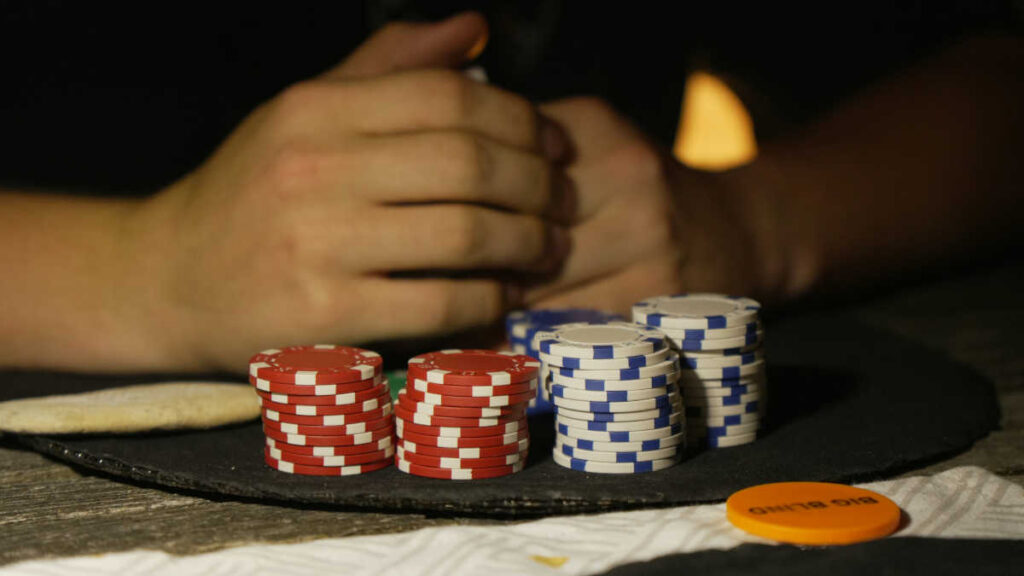
The main blackjack bet is down when the smaller circle beside it catches your eye. One more chip goes forward before the cards come out, giving you another result to watch while the hand plays on. That small decision is the appeal of a side bet, but the idea goes much further than hoping for a lucky pair.
Classic card games survive because their rules are easy to recognize. Blackjack asks you to beat the dealer without passing 21, while baccarat gives you two hands and a clear result. Side bets keep those foundations in place, then give the opening cards a second job. You still care about the main hand, but now there is another question waiting to be answered.
One Deal Can Produce Several Results
Online play makes the extra wager easy to present. The table can show a smaller betting area beside the main stake, with the paytable available before the deal begins. Once the cards arrive, the software settles each wager according to its own rules.
Dealer-led blackjack and baccarat appear in the live casino at Volt Rush Australia. Both begin with a main wager, while any side bets depend on the rules attached to the individual table. The extra wager adds another result while blackjack remains blackjack and baccarat remains baccarat.
The 21+3 blackjack side bet gives us a good example. Your first two cards join the dealer’s exposed card to make a three-card poker hand. A pair may qualify, while stronger combinations receive their own payouts. The blackjack hand then continues according to its usual rules.
Suppose you receive the seven of hearts and eight of hearts, while the dealer shows the nine of hearts. The blackjack total is 15, which leaves you deciding whether to hit or stand. The same cards also make a straight flush for the side wager, so that result can be settled before your blackjack decision is complete.
One deal has produced two separate contests. The second result adds interest because it uses cards already in play; the dealer does not need another deck, and the player does not need to learn an entirely new game.
Extra Rules Create Different Decisions
The best extra decisions begin with something you can understand at a glance. Two matching cards make sense, as does a three-card poker combination. The connection between the cards and the result remains obvious, even when the payout is much larger than the main wager.
Side bets may sit beside the main stake, but they do not all ask the same type of question. Each one selects a small part of the deal and applies its own rules to it.
| Additional Wager | Cards Used | Result Being Tested | Point of Settlement |
| 21+3 | The player’s first two cards and the dealer’s exposed card | Whether the three cards form a qualifying poker hand | Immediately after the opening deal |
| Perfect Pairs | The player’s first two cards | Whether the cards share a rank, with the exact payout determined by their suits and colours | Immediately after the opening deal |
| Player Pair or Banker Pair | The first two cards dealt to the selected baccarat hand | Whether those two cards have the same rank | Once the opening four cards are visible |
| Blackjack Insurance | The dealer’s exposed ace and concealed card | Whether the dealer’s two cards make blackjack | When the dealer checks the concealed card |
Casino-game inventor Geoff Hall found another way to add a decision to blackjack. Hall has an honours degree in mathematics and created Blackjack Switch after playing two hands that would have improved if their top cards were exchanged: “Why not let players play 2 hands and allow them to choose which way around their top cards are dealt,” Hall recalled during a written 2018 interview with casino mathematician Mike Shackleford.
That thought became the Switch decision. A player receives two blackjack hands and may exchange their second cards before continuing. The extra choice does not turn blackjack into another game; it gives you a chance to repair two poor starting hands before returning to the usual decisions.
More Choice Works Until the Menu Gets Crowded
A live table has limited room for extra betting circles, while an online table can place a larger menu around the cards. That freedom creates another design problem: every added choice takes time to read.
Elena Reutskaja of IESE Business School and her co-authors tested sets containing six, 12 and 24 options for a 2018 study published in Nature Human Behaviour. Participants viewed 12 as the right amount, while 24 was considered too large. Brain activity linked to assessing the available choices was also highest with the 12-item sets.
The experiment concerned consumer choices rather than casino games, so 12 is no magic number for a blackjack table. Its useful lesson is simpler: an extra choice earns its place when people can understand it without fighting through a crowded menu.
A player needs four pieces of information before committing another chip:
- The result that activates the wager
- The amount being staked separately
- The payout attached to a winning result
- The point at which the wager settles
Across a VoltRush library containing thousands of games, category navigation helps players reach the type of game they intended to play. The same principle applies inside a live table. Clear labels keep the main hand visible while giving each optional wager enough room to be understood.
The Betting Window Controls the Pace
Side bets happen before the opening cards are dealt, which means the player has to read the options and place each wager within the table’s betting window. A well-presented choice fits naturally into that pause. A cluttered one leaves the player searching for rules while the timer runs down.
Michael Auer of Neccton and Professor Mark D. Griffiths of Nottingham Trent University examined 763,490 online gambling sessions in research published online in 2022. Their sample covered 43,731 players, with activity recorded between 27 November 2020 and 15 April 2021.
The average session lasted 43.58 minutes and contained 145.17 bets. Live blackjack sessions averaged 36 minutes, while each blackjack event took an average of 76 seconds. Slots in the same dataset averaged 6.14 seconds per event, giving each game type a very different rhythm.
Auer and Griffiths found that event frequency was the strongest structural characteristic for predicting the number of games played during a session. Game characteristics alone accounted for 7.7% of the variation in bets placed, while a model combining structural details with session measurements accounted for 26% of the variation in games played.
The Main Hand Still Has to Lead
A good side bet gives you another reason to watch the deal, but the main game remains the reason you chose the table. Blackjack still turns on the dealer’s upcard and your next move. Baccarat still builds towards a Player or Banker result.
That distinction also separates classic tables from other parts of a casino lobby. The game-show category at VoltRush builds play around presenter-led formats, while its progressive-jackpot titles make the growing prize the central attraction. At a blackjack or baccarat table, an additional wager works around rules that card players already know.
The final check is simple: can you explain what wins the side bet before the cards come out? A clear answer gives the extra chip a purpose. Confusion sends attention away from the hand, which defeats the reason for adding the choice in the first place.
Gambling is intended for adults. Outcomes are uncertain, so set personal limits, keep play affordable and treat every wager as entertainment.