Images courtesy of World Poker Tour
This week, players will hit the felt at WSOP Paradise as one of the biggest tours of the poker schedule plays out in The Bahamas.
Atlantis Resort is the home of 15 WSOP bracelet events featuring Triton Poker Invitational for $250,000 and other events for much lower buy-ins. Many of the players hoping to win a gold bracelet and millions of dollars will be amateurs.
Qualifying online for a major poker tournament has never been done better than by Chris Moneymaker. In 2003, the accountant and amateur poker player won an $80 step satellite to the WSOP Main Event on PokerStars.
Sealing the deal by winning the final satellite, he then travelled to Las Vegas and became an overnight poker superhero, winning the WSOP Main Event that year for $2.5 million.
‘The Moneymaker Effect’ was born, and 22 years on, is still the single poker moment that has had the biggest influence on the game we all know and love.
We spoke to Chris about the amateur players coming to The Bahamas this December and how they can turn an online poker ticket into the success they are dreaming of.
Arrival and Preparation
When an inexperienced player touches down in a foreign location, it can be easy for them to be sucked in by the sunshine, the beach, a players’ party, goodie bags, anything that stands out. Chris remembers all too well how it felt arriving in Las Vegas 22 years ago, aged just 27.
It’s funny, I haven’t played a tournament since the [2025] WSOP Main Event, so I feel like this every time I go out. I always approach it like it’s a unique, first-time opportunity. I don’t try to study poker and learn new concepts, new strategies.
There’s a time and place to learn poker theory, but going into the tournament, you need to play your game, what you’re comfortable with.
As Chris explains, many amateurs try to mix up their game unsuccessfully when they play in a major event for the first time. They bluff when they wouldn’t usually. Chris tells us that getting comfortable at the poker table is essential, and for someone new to the game, the mental battle can sometimes fall behind the sheer physical demands.
They’re very, very long days. Very long levels. Be patient, wait for your spots. Surviving the first day or two is paramount. If you have a questionable decision, survival is more important than doubling up
I would veer towards you know, folding and waiting for a better spot. Now that’s for me, because I’m more of a risk taker; I’m going to try to push the edges.
If you’re a guy who is the opposite, and always defaults on the safe side, yeah, maybe you need to call more. But if you’re like me, and you like to push and play hands, if you like to be in the action, you need to step back and be patient and wait.
Patience Is a Virtue
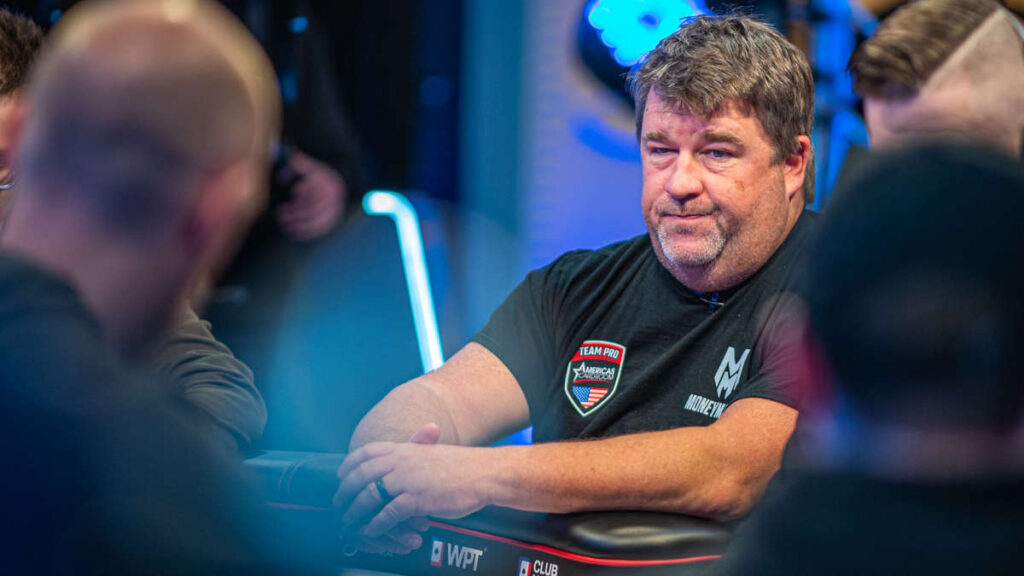
As Chris says, just like in 2003, just like always in poker, there is usually a good spot in a live tournament to get your chips in. Another player will make a mistake, overplay their hand, or bluff out of line, and you can spot it. Chris tells me that he spends most of two hours at the felt sizing up his opponents before playing more frequently.
I’m very good at picking up tells and picking up information on people through watching their betting patterns, watching how they look at their cards and their mannerisms.
So, I spend my time studying the players, watching how they handle their chips, how they look at their cards, and how they bet. What are they doing when big decisions are happening? What do they have at showdown? Then I go backwards to construct what they had and how they reacted on the river, turn, flop, and pre-flop.
All this early work is to build up what Chris calls a ‘player profile’ on each opponent he faces, putting each in a different ‘bubble’ around them, so that when he is put to decisions from there on, he knows who he can bluff more frequently, and who he should only value bet, among other things. As Chris says, a lot of players don’t have this skillset, with GTO strategies more popular.
A lot of players play that way. During the time that you’re being patient, instead of studying, keep your mind fresh.
The Poker Brat and Moneymaker
When it comes to playing tournaments late, Chris advocates for doing whatever helps, however unconventional that approach might be.
Take breaks, shut your eyes, meditate, or do what Phil Hellmuth does – come in eight hours late!, he laughs. People now are smart enough to know why he does it. But back in the day, people used to always say, ‘Why in the world does he come in so late?’
People didn’t understand why he’d show up to a tournament after dinner break. As the tournament goes on, the better your mind is working later in the day and the better chance you’re going to have.
Chris rates Phil Hellmuth very highly and says that his fellow WSOP legend is maybe the best at taking advantage of this edge in poker.
You don’t want to work your mind too much in the early levels and be drained by the end of the day. Hellmuth has always been really aware of himself. He complained about the WSOP days being too long.
He can’t play a 12-hour day. I mean, he’s 60-something years old and, you know, I’m 50, and it’s tough. When you play a 12-hour day, it wears on you, especially when you’re mentally locked in and you’re always focused. Thankfully, I’m still in good enough shape.
While Chris is a confirmed fan of the Poker Brat and still has the stamina to plough through a full day at the felt, he doesn’t have a packed live schedule these days. He also thinks Hellmuth gets it wrong for one particular event – the big one.
In a tough field, it’s definitely advantageous to show up late. I think it’s a very big disadvantage in the Main, though. I don’t know why he does it in the Main Event of the World Series. There are so many bad players in that field that being at the table is a huge advantage.
For Chris, being Hellmuth in every level on Day 1 of the World Championship would be a huge edge.
He’s very good at playing against bad players and recognizing their ranges, Chris says. He’s better than me about picking up tells and using his white magic or blue magic or whatever color he wants to call it this year.
I get why he does it, but I’m also surprised that he doesn’t try to come in earlier and play against the weaker players. But the man sleeps for 16 hours some days.
The Changing Man
Chris says that during his epic WSOP Main Event run in 2003, he used to skip sleep for cash games. He’d play until five in the morning, find out the table draw for the next day, then ask the PokerStars representative in the tournament area what those players were like. He truly lived and breathed poker every day for that glorious run.
I was 27 years old. I was full of energy; I could play 24 hours a day. I loved the game, and it was easy. Now that I’m 50, I go and play one full day, it’s a dream. So, when I get done, I immediately go back, take some melatonin, get in bed and sleep.
While he needs his sleep mid-tournament, Chris still makes time every morning to head to the gym and eat a full meal.
Even if it’s for 15 or 20 minutes, I have to get into the gym and get my blood flowing. I found that that’s what really makes my mind sharp. I’ll wake up, eat a big meal quick, and then I’ll go to the gym, get my mind sharp, and then I’ll just basically snack all day. On dinner break, one of the worst things you can do is eat a big meal; you’ll come back sluggish.
As you move through a long event, Chris says that it will always catch up with you.
Day three or four of a tournament where you don’t have breaks, I don’t care who you are, you’re going to be miserable. It’s going to be a long, hard journey, and getting into the routine of going to bed early, getting up, getting your blood flowing.
A long time ago, I’d just roll in at noon straight out of bed and think I’m doing better by getting a ton of sleep. That wasn’t it for me. It was getting my day going and coming in.
Take Your Time
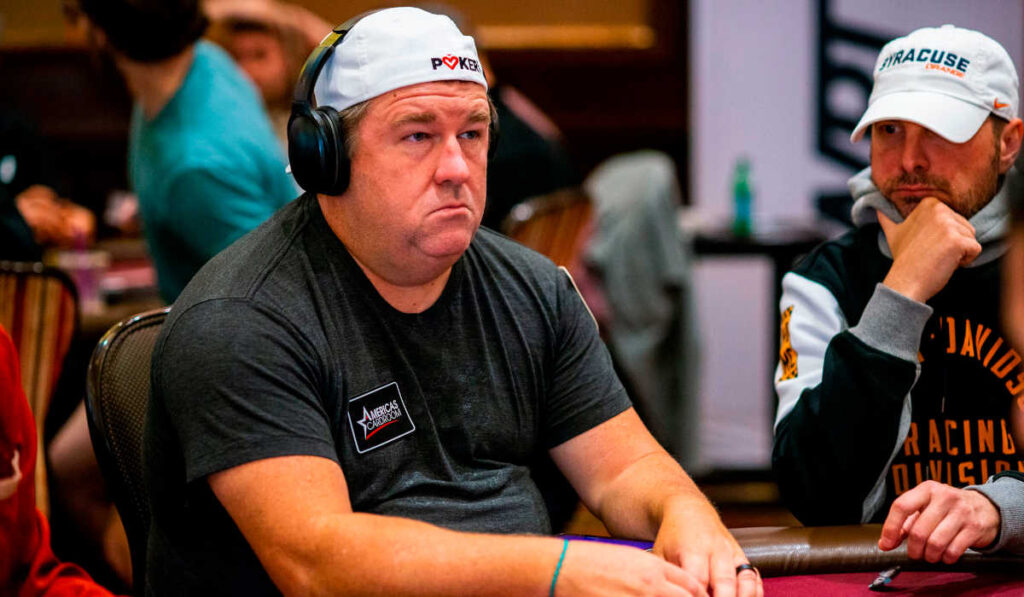
Many players make rushed decisions when they have no experience. They can risk it all or punt on a flop without giving their brain a chance to catch up. Chris thinks this is really common with recreational players.
In 2003, I had a rule. I had to count to five seconds in my head before I made any decision at the poker table. I was worried about timing tells. I was worried about acting too fast and people picking that up. And I was worried about rash reactions to acting on emotion and not thinking through my decisions.
Tiredness affects a lot of players. Playing your A-game for eight hours is no good if you then torch all the chips you’ve earned in the last couple of hours at the end of the day.
I have a tell that I know when I’m playing well or when I’m playing bad. Over 22 years, it happens every time. When the cards are dealt, if I catch myself looking at my cards out of turn, right when I get them. That means I’m generally not playing very well. I’m impatient and not in my element.
By the same token, if Chris is in the zone, then he’ll be patient, looking at each of his opponents and how they react to the flop, turn or river. Studying the players is paramount, and missing information is a weakness Chris does everything he can to avoid when he’s playing his best.
I’ve worked with mental coaches like Elliot Roe. I’ve looked at myself and tried to figure out where my deficiencies are. I always feel like I’m one of the better players at the table, and if I’m playing my A game, then I’m not really worried about anybody else.
But 15 years ago, Greg Raymer and I were doing a seminar together at a poker camp. One of the campers asked Greg, ‘Who is the better player, you or Chris?’ Greg said, ‘If we’re both playing our A games, Chris is a better player than me. But I play an A, B, and a C game. Chris plays an L, M, N, O, and P game.”
This is a big confession to make, but Chris confirms it. He spews, he does crazy stuff. He gets tired. But from 2003, when he says his game was ‘all over the place’, he’s improved a lot since becoming world champion. Fossilman’s answer stayed with him for many years.
Trying to cut off that L, M, N, O, P game and play good poker myself and not make mistakes has been kind of what drives me, he says. I don’t study a whole lot of poker, but I study how I can be better with my decisions and my peak performance. Poker’s pretty easy; it’s just being mentally ready and prepared to play.
Carpe Diem
Looking back at his career, Chris says that many times, his successes have followed moments where he was able to seize an opportunity, most of which were based on his ability to read situations and players.
Sometimes, it’s about looking for opportunities to play cards that I shouldn’t be playing. I don’t ever get upset with bad beats. I’m human, I get upset, of course, but not so much in the fact that, like, I can’t believe that happened or that I’m really unfortunate.
I get upset when I make a bad play that’s lazy, or when I miss something. It happened to me during a recent ACR tournament. I was actually streaming it. I had kings, and from the flop, I was like ‘This guy’s got aces’. I should fold, but I didn’t.
I ended up calling all the way to the river, and lucky for me, I hit a king on the river. But sure enough, he had aces. I was still mad at myself because I knew what he had, and I wasn’t good enough to lay it down.”
Seizing the moment doesn’t only mean an aggressive play or direct action. It can help with that important hero fold, or simply with picking up information on an opponent in a key hand by watching all the way to the river. Chris says that keeping it real is crucial, especially in poker tournaments.
You’re going to bust 85% of the time and cash 15% of the time over your lifetime. If you’re going to bust anyway, you might as well go out playing your game, being aggressive and trying to win. You can’t be afraid to bust with the worst hand. You can’t be afraid of bad beats. The best players, Phil Hellmuth, would win every tournament if it were all skill.
The same is true at the tail-end of tournaments. Chris has won a Triton high roller and three Moneymaker Tour events in recent years, and he loves the latter end of the events, where the biggest pay jumps are painful if you come out on the wrong side of them.
When you’re on a final table, and the pressure is on? I don’t really feel like the pressure’s on because I’m a realist – I’m not even supposed to be here. 85% of the time I’m gone. This is when it gets fun and exciting. I don’t ever get nervous when I’m playing for big money.
Chris also says he never deals for exactly the same reason.
I just never chop. I always want to play it out because you don’t get those opportunities very often. You learn from those experiences, and you get to enjoy those experiences. That’s the fun time, when you’re playing four-handed. Four or five-handed, and now it’s all ‘chop it up and go home.’ No, this is the fun part! Let’s play poker. We’ve got to this part, now let’s have some fun.
There is still the thrill of feeling like an amateur in the way Chris Moneymaker speaks about poker. The game that gave him an epic moment is one he still loves, and over the years, perhaps the best ambassador the game has ever had for the recreational poker hero has given even more back.