
Long-time debates among poker players have focused on the issue of what really wins the long battle: intuition or data.
Body language, the movement of the eyes, and tone of voice are still sworn by in real-life poker rooms. There are heads-up displays (HUDs), analytics, and cold, hard numbers on the web.
The two worlds have developed in parallel to each other, and with poker becoming more digital, the distinction between human intuition and computer analysis is becoming more unclear by the day.
The Magic of Live Tells
Something is undoubtedly exciting about reading in real time about another person. The jerk of an eyebrow, a fidgety laugh, a quick glance at chips: these are the clues on which legends are founded.
Professional poker players such as Daniel Negreanu have made their career on soul-reading, which is the ability to detect minor behavioral anomalies that would not be noticed by the general population. Live tell is an art, not merely based on intuition, but a matter of pattern recognition on a very human level.
But live tells are subject to another problem — subjectivity. What may seem like nervousness in one player may be confidence in another. The threat is that of confirmation bias: having formed an opinion about somebody, your brain seeks to find the evidence to support that opinion, rather than the truth.
This is why, even in real-life poker, outstanding players will never underestimate the importance of balancing instinct and situational intelligence — math of the moment.
The Rise of the HUD Era
Live reads in online poker are substituted with something colder yet perhaps more credible — data. HUDs (Heads-Up Displays) follow all actions of your opponents: the frequency of their preflop raises, how often they continuation bet, the scope of the 3-betting range, and so on.
These statistics are a vital tool, especially to grinders who play thousands of hands per week.
HUDs cut through emotion. They make a measure of tendencies, which can only be guessed at by the live players. There is also a price to that precision, though, and that is, you lose the human factor.
Numbers can provide answers to what, but not why. The stat line can indicate that your opponent folds to aggression 68% of the time, but it will not indicate whether he or she lost half of their stack in the previous hand.
Bridging the Two Worlds
The greatest contemporary poker players do not choose a side; they combine the two worlds. On the internet, they listen to tells of timing, size of bets, and chat habits.
They apply probability and combinatorial techniques to verify the suspicions of their gut in live games. The actual competitive advantage is in hybrid thinking, i.e., math-supported emotional intelligence.
That blend has also shaped how the game evolves on crypto poker sites. These platforms attract players with an international aspect, and they provide privacy, fast transactions, and the safety of anonymity.
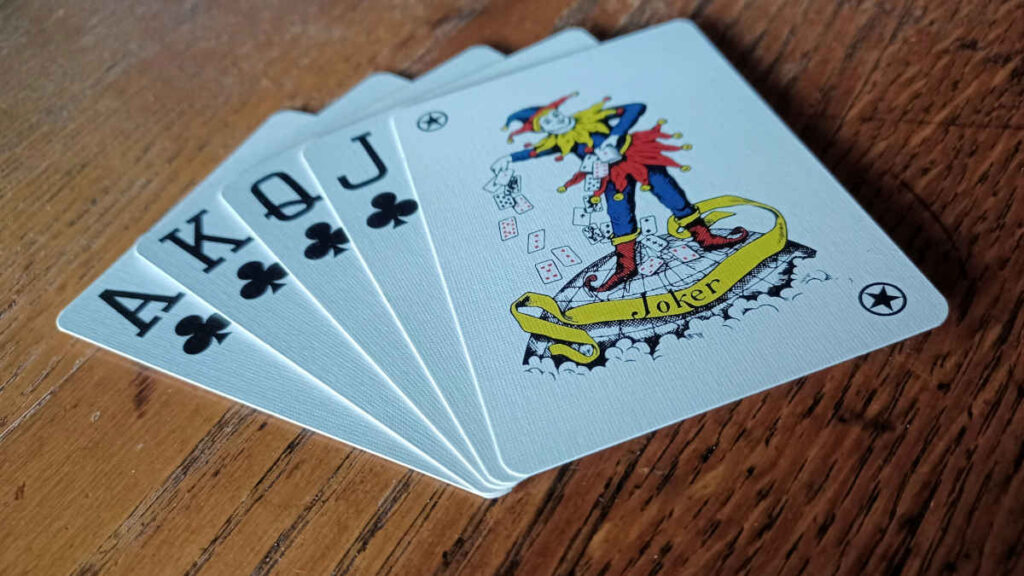
The use of crypto tables is particularly tricky without national limitations or the traditional names, which means that you cannot count on visual clues, and HUDs are not always functional.
Rather, you should read digital patterns — timing, rhythm, and bet flow. It is said that this causes poker to be purer, as all reads are made on the basis of the game, as opposed to reputation or looks.
That is what makes Bitcoin and blockchain-based tables so appealing to many people: it reminds them of the psychology of poker in a more technology-driven version of the game.
What the Data Really Says
According to insights discussed on CCN, poker’s evolution mirrors broader shifts in online behavior. Poker players find themselves in an analytic gut situation just as traders do when markets are behaving erratically, even though they are using the algorithmic data. The best idea is to perceive tells and statistics as complementary to one another.
For example, when you look at your HUD and realize that an opponent never bluffs on the river, it becomes a clearer choice. However, you then realize that he or she has been bluffing in spots where he or she never bluffed before.
It is then that a digital tell pops up, and it is your consciousness, rather than the numbers, that wins the hand.
Conversely, your intuition may be crying that the player is bluffing, but then again, without statistical evidence, you are just flying by gut. The combination of the two will help avoid an emotional overstep as well as provide structure to your choices.
Beyond the Cards — The Art of Reflection
Poker is not what you have at the end of the day, but rather what you take out of it. Reflections sharpen live reading and analysis of data. Tools like a Poker Hands Quiz encourage players to test their understanding of ranges, position, and equity across various scenarios.
You will notice that your reads were not really correct, or you were missing on lucrative bluffs due to the failure of the statistics to tell the whole story. Frequent use of quizzes, simulations, and review of the sessions will shift the sporadic observations to actual improvements.
The Human Factor Still Wins
Poker is still an art and not just a science, even in 2025. The ranges can be simulated by artificial intelligence more than by any human being, but even AI cannot predict how emotional it can get.
It is why live tells, bad as they are, are still important. People are emotional beings, and poker takes advantage of that instability. A shaky hand, a thrust of impulse, or an unaccounted pause tells us more than a thousand data points ever could.
However, it is equally ridiculous to refute the role of data. Poker without HUDs is Formula 1 without telemetry. Balance is key: believe the math, and your intuition. Missing one of them leaves you in half the game.
Final Thoughts
Live tells or HUD stats, what are the real needle movers? The reality is in the middle of it. Your reads provide insights; your stats help you out. Coupled, they form the entire poker player — thoughtful, but flexible.
You can learn the behavior of people at a casino table or in front of a computer, but never forget that poker has always been about adaptation. Technology can alter the way we read the game, but not the reasons why we play it: to know risk, human emotion, and self.