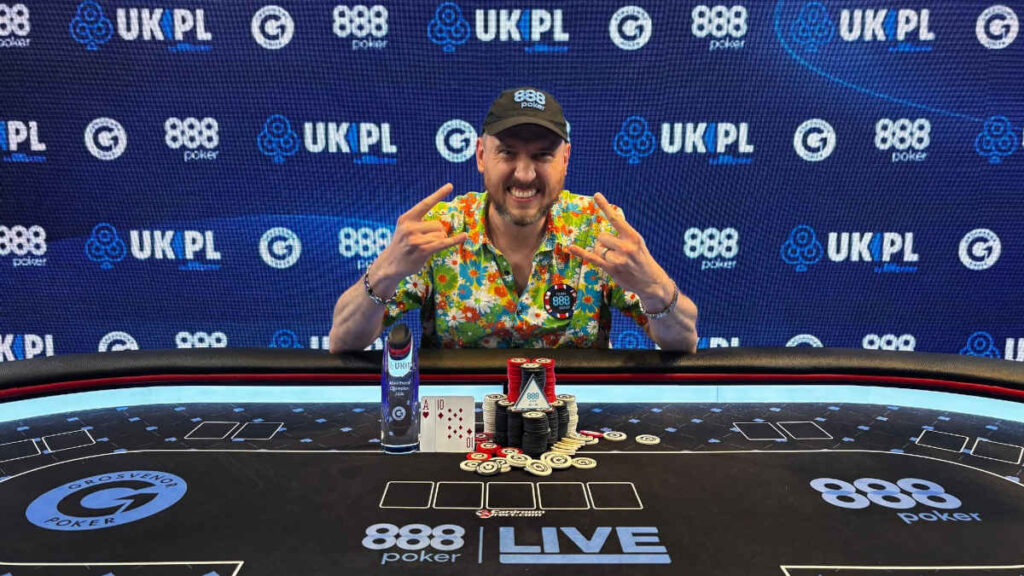
For many years, Ian Simpson has been a winning player in tournaments both online and live. Just last week, Ian enjoyed a thrilling weekend, winning the £1,100-entry High Rollerand the £560 buy-in Main Event for a collective score of $73,127.
Winning two tournaments in short succession is obviously some positive variance right there, as well as a tremendous return on those buy-ins. We caught up with the 888 Poker Pro to find out how he deals with the ups and downs of what has, so far, been a swingy but successful 2026.
Keeping It Local
Two big wins in one weekend is always going to feel sweet. As I spoke to Ian about his planning and preparation for such a tour where he is one of the most experienced players in the room, he told me it differed quite a lot compared to his trip to the WSOP this summer past.
In Las Vegas over the summer, I’ll do like $30,000-$40,000 in buy-ins. In the months preceding that, I’ll put in a lot of study so that I’m as sharp as possible for such a huge set of buy-ins, says Ian.
These more local tournaments, it’s a bit more relaxed because it’s not $40k worth of buy-ins, and it’s a little more focused on content creation, promoting the tour. I’m playing to the best of my ability, but also making sure I’m on socials and promoting it too.
While poker is a skill game, the difference between playing cards for a living and other mind sports like chess and backgammon is, in some ways, the mindset.
Whenever I go to a poker festival, obviously I want to win. But in poker you can’t plan to win. Magnus Carlsen might go to a chess tournament planning to win, but poker is a different game. The deck can just deal you out. So when a win happens, it’s rather pleasant.
Confidence and Correction
I put it to Ian that he comes across like a confident player at the felt and that he might have grown that assurance between events. I’m quickly corrected on the first assumption.
We all struggle with confidence. I would bet money that Stephen Chidwick struggles. I single him out because he’s the most stoic, great player, but everyone has that voice in the back of their head hindering their confidence. We all have downswings.
After he won the High Roller event for $22,251, Ian tells me that his first thought after celebrating was caution, as he was hopping directly into the Main Event.
You’ve got to be careful because of positive tilt; you can feel indestructible. That can mean your bluffing frequencies go up because you feel like you can’t lose. You might value bet too thinly because you’re feeling too confident and fancy play syndrome sneaks into your play.
While Ian says that the process is the opposite of when you’re on a losing run, he still needs to exercise discipline.
You’ve got to keep on top of your mindset in the opposite way. If you’re on a downswing, you’re trying to believe in yourself and the process. It’s the opposite after a win; you’ve got to realize that you’re not any better of a poker player just because you won one. You’re just as good as you were 10 minutes ago.
I suggest that Ian’s ace-king had a tiny bit of luck along the way in the high roller, overcoming pocket kings. Ian shakes his head in mock-refusal to accept any fortune… before he dissolves into laughter.
There was bad play against Josh [Manley], he admits. He four-bet, and I stuck in my ace-king when in reality, the ace-king was a fold. You’ve got to try to process as much as you can in-game, in battle. It’s easy when you’re outside watching; the right play is much easier to find. It’s like when you review hands online, you can see mistakes of your own.
As Ian says, applying things in the moment rather than outside the table when you’re studying is a whole other skill. He made a mistake and got there, but that’s the game everyone plays.
Switching It Up
While the High Roller event Ian won only had 49 entries, the Main Event was much busier with a total field of 345. Fairly obviously, there’s a certain amount of adjustment Ian had to make in order to switch mindsets from one event to the other.
It can be very strange. If I hadn’t won the high roller, if I’d come sixth, the blinds are 25,000/50,000, and you’re in an ICM-heavy situation; then you finish that tournament and go to the next tournament, and the blinds are 200/400, and it’s a brand-new table with players you don’t know.
That’s a big adjustment in your head, especially live when you’re one-tabling everything, going from the end of the tournament to the start of another. Especially if the tournament you bust. In this example, I went from the best result I could get, and I was more than happy to jump in and play more cards.
When Ian made it to the Main Event final table too, he had more recent experience of a final table than any of his opponents, but he was watching out for one player in particular.
Lewis Spencer, he plays $100,000 events, explains Ian. It’s a different kettle of fish, [playing] a player of that caliber, you have to take a second and approach the hands a little differently to the average player.
Ian made it to heads-up, where he faced British poker regular, Ali Mallu. Known as an aggressive player at the felt and a gregarious personality away from it, he was a unique opponent.
Ali Mallu is something else. He’s a wild card; it’s a completely different battle. Obviously, Lewis is an outstanding player; facing him heads-up would have been a lot more challenging. You’re not in the game trees you’ve studied against Ali. It’s not a place that’s studied, like GTO Wizard; you have to use your intuition and experience.
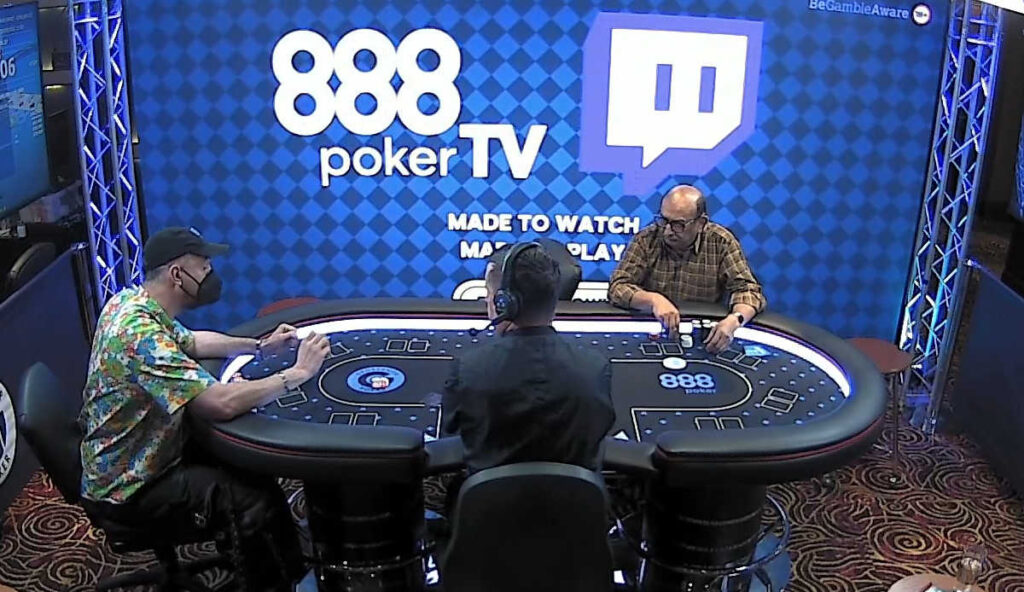
The 888poker tour and others like it are peppered with players like Ali Mallu, Yucel Eminoglu, a.k.a. The Mad Turk, or the ‘Honey Monster’ himself, Albert Sapiano, so named because he amassed his fortune selling the sweet nectar made by bees.
Players like that can, as a collective, provide quite a difficult challenge. Not, like you say, maybe not GTO, maybe not in any kind of studied way, but in that random, chaotic way that takes out a lot of people’s weekends.
I’ve seen good players play badly against players who are playing wild. They always throw a spanner in the works.
Losing in Las Vegas.
Ian had success in Manchester, but his summer in Las Vegas was anything but, from both a time and money perspective. Losing much of a $30,000 bankroll in Sin City while missing his wife and daughter hit him hard.
I think I got two min-cashes, so it was a bit of a disaster this time, says Ian about the series and quickly identifies his biggest issue. I never want to leave the house. The morning comes for any of these events, and it doesn’t matter whether it’s for three days in Manchester or three weeks in Vegas – I don’t want to go.
This emotional hurdle has knocked Ian over during many a work trip to play in some of the biggest tournaments in his yearly schedule. The other problem is that he really does love the game he’s about to go and play.
I love poker, I get there and have a great time, but the day I leave, I don’t want to get on the train or airplane. But when you get there, see friendly faces and start playing poker, it’s great. It’s a wonderful thing, but I remember the year Emma found out she was pregnant with Adeline; she told me the night before I flew to Las Vegas.
As Ian says, that wasn’t a fun flight across the Atlantic. Ian and his wife Emma work on very different schedules, with Emma a senior teacher in the U.K. Her hours might be seven in the morning until seven in the evening, and with Ian’s evening of events online starting at 3 pm his time, the couple often don’t get to talk to each other about their weeks, let alone days. On the fateful night in question, Emma sat down with the pregnancy test and said, ‘It’s finally positive.’
She realized that the only time she could tell me was right that minute. I was in the middle of an online session. I’m clicking buttons, and she hands me the thing. That Vegas was particularly hard. I wanted to be at home with my pregnant wife! Then, with Adeline in my life, it became increasingly difficult.
Ian did some work on himself and has managed to master these difficult emotions during recent trips.
The last two or three years have been better. I still don’t want to leave, but once I’m there, I’m more equipped to deal with it emotionally to keep my head in the game. I basically remind myself I’m doing it for them.
Poker and Social Media
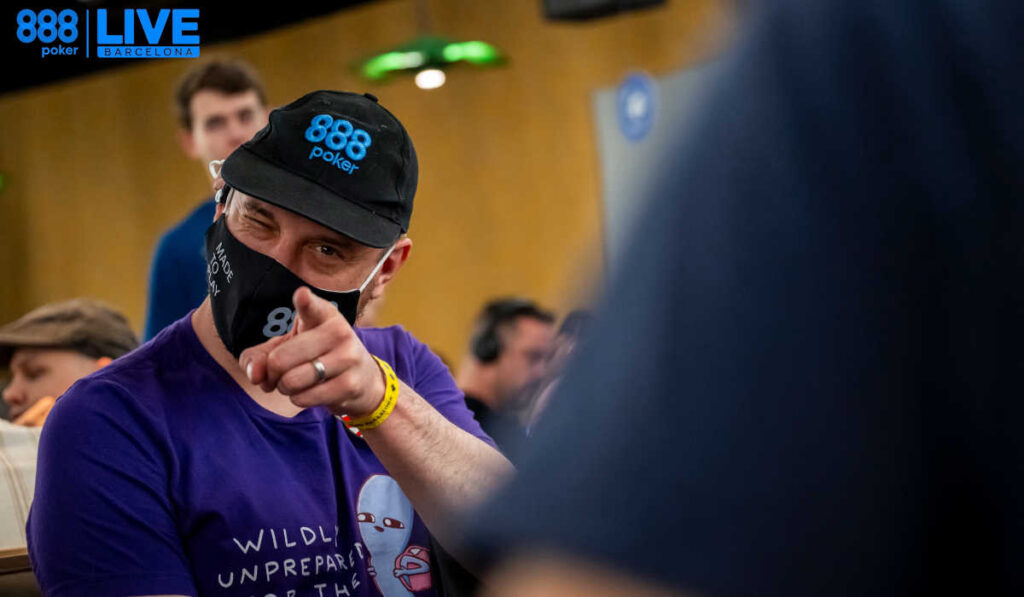
The world of poker has been brought to life by what players still term ‘Poker Twitter’ despite the popular social media site now changing its name to X. To say Ian isn’t a fan of social media would be accurate, and he dislikes this element of reporting the game due to what has made sites like X so well used.
What travels on social media are negative emotions; controversy, anger, drama, all of that travels, and not just in poker. It sets the algorithms off. There is a lot of poker content that is fueled by animosity. Honestly, it’s boring; I don’t give it any time at all, I scroll right past that drama. It’s so cheap.
Ian remembers getting access to the internet as a teenager and enjoying the “tether of connection” he was given to friends he’d left behind at University. But he now believes that social media has turned into “something awful”.
You’ve got to curate your feed so carefully. Poker Twitter in particular is awful. If you stick up for a minority, you get inundated with hateful comments. I did it in the summer when Aubrey Williams got to the final of the Ladies Event, and I did it a week ago when Caitlin Comeskey was getting an avalanche of bullshit.
My notifications are littered with hate because I said a nice thing about a trans woman and a nice thing about a woman.
Ian says he urges people to remind themselves that social media isn’t real. All the hate is likely loads of bots, or one “sad sack” with loads of accounts. It seems like there are more people hating than there actually is.
Add to that the generation of poker players who have been playing the game for decades and see sites like Instagram and X as irrelevant, and it might skew public perception when petty squabbles make news reports.
The Gender Gap
Ian works with female pros at 888 such as Vivian Saliba and Lucia Navarro and has occasionally found himself in the situation where he has helped them out with abuse at the felt or off it.
They can handle themselves very well, but the world is very different for men and women, he says. We had an event in Bucharest. I loved it. I had a very positive experience. They didn’t feel the same. They had the exact opposite emotion about the experience. It might not be the city; it can be other individuals’ experiences of that city.
Ian’s take on Bucharest differed from that of Vivian and Lucia’s due to safety concerns.
The world is very different, especially when traveling. Women are rightly very cautious. I’ve walked home on my own without any consequences. Women never walk anywhere alone. It just didn’t come into my understanding until I was a traveling poker player. It’s a bit horrifying, really.
This ‘gender gap’ at live poker tournaments extends to the poker table in Ian’s experience.
If a woman plays a poker tournament, she’ll likely play at three or four poker tables, so she’ll likely encounter anywhere between eight and 50 men. More than one in 50 men are dickheads.
Ask a woman who has played poker to tell them a bad experience they’ve had. They’ll horrify you. Pretty much every woman has had an experience that makes you question humanity.
When I ask Ian what can be done about that situation and how operators might be able to improve the number of women playing poker tournaments from 5% to 50%, he is unequivocal.
I think you’d have to ask a lady that question, he says. They’d have a better perception of a way forward than me. To my mind, harsher penalties for any sort of bad behavior. It’s tricky, though.
The dealer is running the game at the table, but they aren’t necessarily trained in conflict. They’ve learned how to pitch cards and split pots. When misconduct happens, who is the onus on to deal with conflict?
As Ian says, that dealer might not want to get involved because the person instigating conflict could be a psychopath. So what is the solution to conflict at the poker felt?
Poker is wonderful, and it brings people together, but it also brings anyone who has money. There are bad people with money, and you might not want to confront this bad person because they might be one of the worst people out there. It’s harsh to expect the dealer to confront them because they have to worry about their own safety.
The other players at the table are having the same thought, of course. They don’t want to deal with misogyny and didn’t buy into the tournament to do that. They want a game of cards and a laugh.
It’s hard to speak up. That feeling of ‘I have to speak up’, it takes a bit extra to get the words out of your mouth. The lady might not want you to get involved; they might want to handle it themselves.
Then you ask yourself, ‘Is this person a psychopath?’ or ‘How is this going to go?’ You’ve got to be brave as a person at the table and do it. I get that it’s hard, but I think it should be on the players to call the floor.
Looking to the Future
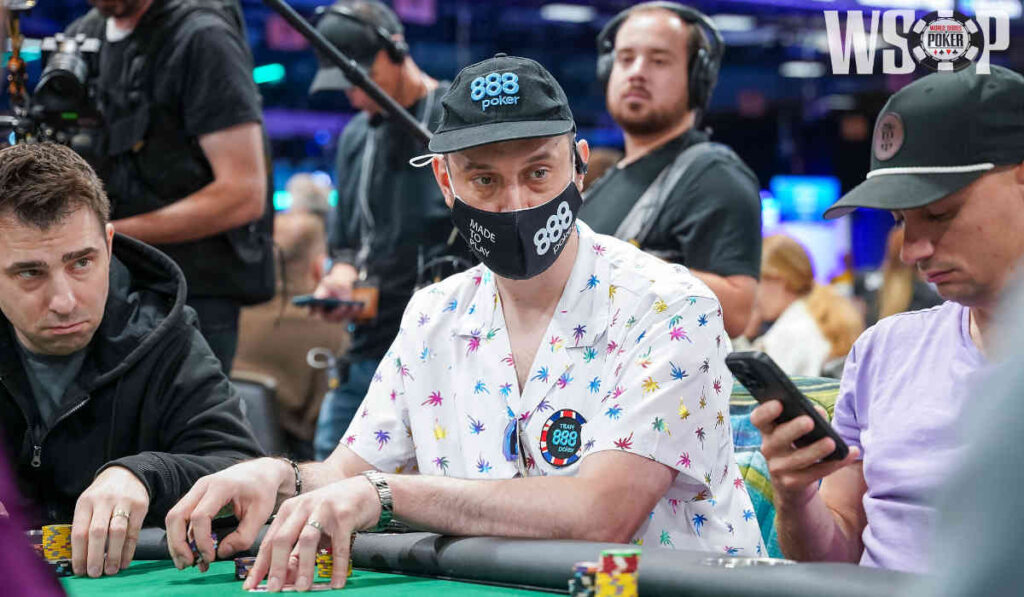
Everyone’s financial situation is unique, so when you get a windfall as a professional, you do an assessment based on what you’ve just won. Should you dedicate that money to a ‘real world’ treat, or pad out the bankroll and fund extra trips? Ian is realistic about what he should do with the £50,000 ($66,000) he just earned in three days.
There won’t be any extra trips this year. In December, there are the big festivals competing with each other, but I skip them all. Playing online is great when great players aren’t at the online tables. I have a six-year-old and December is magic for a six-year-old. In the New Year, I’ve now got the freedom to play a little bigger if you want to.
If being the operative word. Ian will appraise every trip on its merits but don’t expect him to be firing in $1,000 online entry events any time soon.
I’ll still pick what I think is the best value I can find. Game selection is really important. There have been times in my career when I’ve looked around and thought, ‘I’m at this table with absolute sharks’. Table draws can mean good players with game selection can clash.
On that note, it’s back to another online session. For Ian Simpson, the next 888poker trip is never far away, and while he’ll miss his family, this is a family man putting it all on the line for them every time he tries to win big. Now he has; it’s all about what comes next.