
These days, it seems like you can’t have a conversation about anything without the topic of artificial intelligence popping up, and that’s true when it comes to poker as well, as poker and AI have had plenty of encounters.
For decades, computer programmers and engineers have been using computer programs, and more recently modern AI models, to try to solve games like chess and checkers, which rely heavily or entirely on information that’s on full display.
Poker, on the other hand, has remained a mystery for a long time, as any potential player, including a computer program, would have to deal with a variety of unknown variables and guesswork, which is not something computers generally excel at.
Yet, in 2017, an AI algorithm developed by Carnegie Mellon University took on several top poker professionals in heads-up No Limit Hold’em, and the results were astonishing.
While AI programs have lost similar matches in the past, Libratus was far better than any of its predecessors, and far better than the opponents it faced as well.
Over a 20-day experiment, Libratus proved that heads-up poker was a game that could be solved, and it found ways to adapt to its opponents and completely dominate them beyond any reasonable doubt.
This is the story of how Libratus defeated a conglomerate of top poker pros for $1.7 million worth of play money chips, despite each of the players doing their best to beat the computer and win real money rewards that were offered for their participation.
Four Top Pros Take on the Modern AI
Hosted at the Rivers Casino in Pittsburgh in 2017, the match between Liberatus and humans was the ultimate test of how far the AI had come.
While similar computer programs have had great success with games of complete information like chess, where they could easily calculate many moves ahead, poker was always elusive, as there was no clear way to predict the way human players would play in each given spot.
This is a problem the Liberatus team had been working on for months, and when the match finally came, they were confident that the algorithm would be able to apply GTO principles while also adjusting to real players to crush any living opposition.
To test the theory, a team of four professional poker players was brought in. Jason Les, Dong Kim, Jimmy Chuo, and Daniel McAulay were the four chosen players, and they had plenty of incentive to play well, as a $200,000 prize fund was reserved for them to be distributed based on how well they performed against the AI.
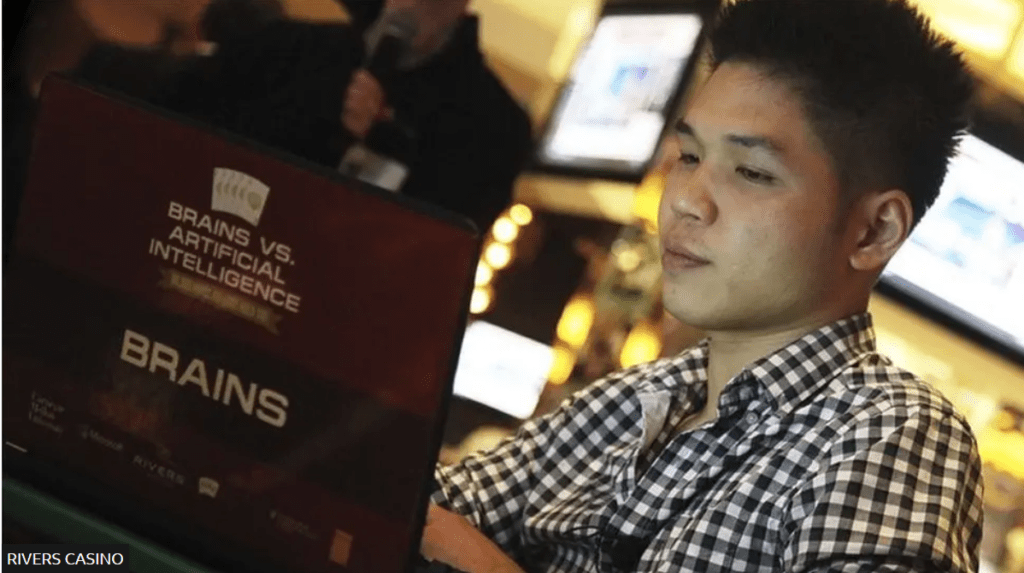
The experiment was building on the previous work of a team behind Claudico, a similar AI platform that had quite a few flaws and was unable to beat human players in 2015.
This time around, the AI was perfected even further, especially in terms of balancing its ranges, and this proved to be the critical change.
Unlike Claudico, Liberatus proved to be a much bigger challenge to the live players, who reported that the program was actively adapting to their play and making balanced and smart decisions across the board.
All four players quickly found out that Liberatus was a much tougher opponent than they had originally thought, which made beating it over a 120,000-hand sample a mountain to climb.
Liberatus Exerts Dominance Over Live Players
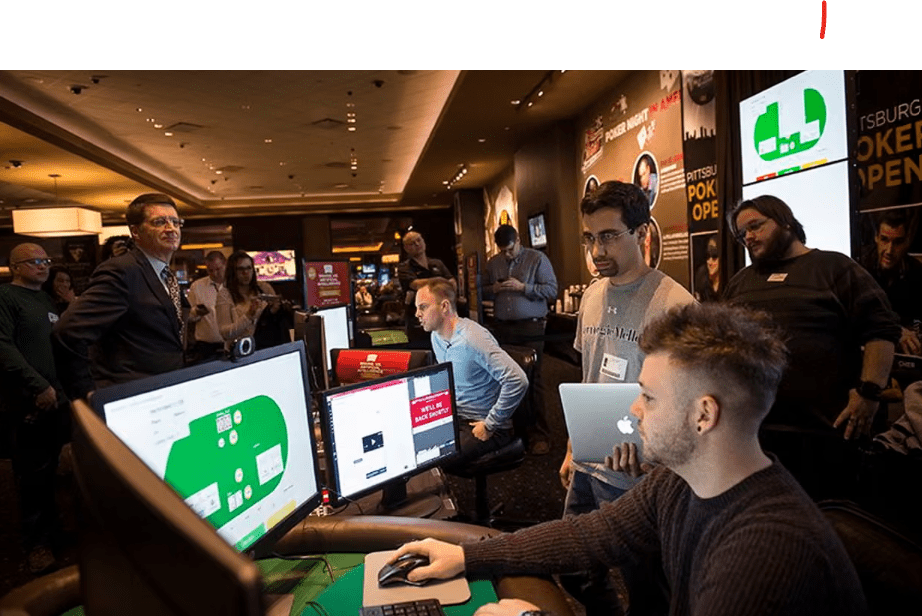
To ensure full transparency, the Liberatus team ensured that the entirety of their challenge was streamed in real time via Twitch, and that all hands were recorded as they were played.
Over 20 days, the four players spent dozens of hours playing the bot. It didn’t take too long for them to realize they were outmatched, with each of the pros proving the AI was much tougher to play against than they had originally expected.
In fact, Liberatus’ advantage over the pros was so significant that they ended up losing about $1.7 million in chips to the bot over the course of the experiment, which thankfully wasn’t real money.
Some of the same players faced Claudico a couple of years before and already thought that AI was tough to play against. Liberatus, in comparison, was an absolute beast, and it proved once and for all that heads-up No Limit Texas Hold’em is a game that can be beaten through pure math and logic, with no live tells required.
What Does This Mean for the Future of Poker?
It’s been many years since Liberatus beat the pros at heads-up NLH, and yet, the game of poker is still alive and well, and perhaps even healthier than ever.
While Liberatus was able to win in a heads-up scenario, winning in ring games or tournaments has proven a lot more difficult thus far, simply because of the number of scenarios that can go down in every hand.
What’s more, the use of AI tools and similar programs is completely prohibited while playing online poker, which means players can’t use such a tool to gain an unfair advantage over their opponents.
Yet, the developments in the field of AI and automation do threaten to challenge the existence of poker as a competitive game, as a fully solved game becomes hard to enjoy for many players.
The hope is that ring games will remain unsolved for many years, while players looking for solid heads-up action can look to the live arena to battle it out with no assistance or bots at their disposal.

Can Humans Replicate the Computer to Achieve Excellence
Replicating the results of a top-notch computer program in real time is something we dream of in many fields, as it would make quite a few jobs a lot easier.
When it comes to playing poker, many players these days are looking to replicate AI and solver outputs to play as close to perfect as possible. Unfortunately for them, playing the game like a computer is nearly impossible.
In fact, the AI often makes decisions that are so counterintuitive that they defy logic, and most human players would never spot them while playing.
With the help of programs like Libertus, the best players will be spending hundreds of hours in the lab in search of ways to mimic the algorithm and play in a way that can’t be beat in the long run.
If you are looking to play heads-up NLH yourself, make sure to practice against the AI first, as it will prove to be one of the most aggressive and difficult opponents to beat in the world.