
Image courtesy of the PokerGO Tour
Over the last year, I’ve spent over 500 hours playing low-stakes live No Limit Hold’em cash games (mostly $1/$3), mostly at Wynn and a few other places.
All those hands helped me create a brand new Complete Cash Game System course, powered by PeakGTO and featuring many drills and exercises to help you improve your results at the tables.
But over that time, I also noticed quite a few mistakes that many players tend to repeat over and over. In this article, we’ll go over the five biggest ones and how you can utilize them to improve your win rate in low-stakes Texas Hold’em cash games.
#1 Playing Poorly Against Limpers Before the Flop
Open limping is generally a bad strategy. When you raise, you make it harder for your opponents to realize their equity; by limping, you allow them to see the flop cheaply with all sorts of hands.
Plus, there is rake taken out of every pot, and, at small stakes, it is often disproportionately high, especially when there is also a promo like a bad beat jackpot happening.
Still, there are many players who continue to open-limp in low-stakes cash games, and, from what I’ve witnessed, there aren’t that many players who know how to adjust their strategy to actually punish these limpers.
The first thing to understand is that, when people limp before the flop, it narrows their range, allowing you to raise with a good, strong range and make a profit, especially when playing in position.
In most cases, limpers will have hands that are kind of in the middle that they want to see a cheap flop with. With that knowledge, you can take advantage of their capped range and attack them, having the range advantage and the position on them.
You should raise with strong and medium pairs and big cards that prefer to play heads up. There is also nothing wrong with limping behind (which is much different from open limping) with hands that don’t play so well if you raise and get called: small pairs, weak suited aces, as well as lower connectors, and gappers.
Most players who open limp tend to play a rather straightforward strategy. So, if you raise, and then they come out 3-betting, you can comfortably fold all but the best of your hands.
Let’s look at an example of playing on the button, facing a limp from the lojack:
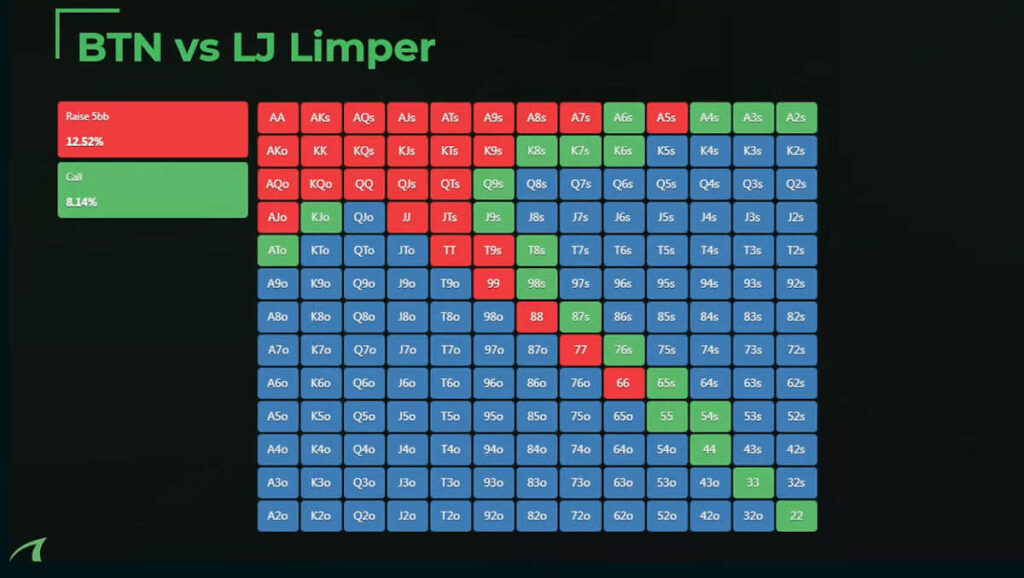
As you can see, the range we should be raising with includes 66+, A7s, AJo+, KQo+, QTs+. This is a somewhat arbitrary and generic range, and you can adjust it based on your opponent’s particular tendencies.
If you know they limp with a wider range, you can raise more; if their limping range is tighter, you can also tighten your selection of raising hands.
Hands marked in green are the ones that we prefer to limp behind with. These hands can play well on the flop, but they won’t be in a great shape if we raise and get called.
Facing Limpers OOP
What happens when we are out of position and facing a limper? Let’s look at an example of playing from the SB facing a LJ limp:
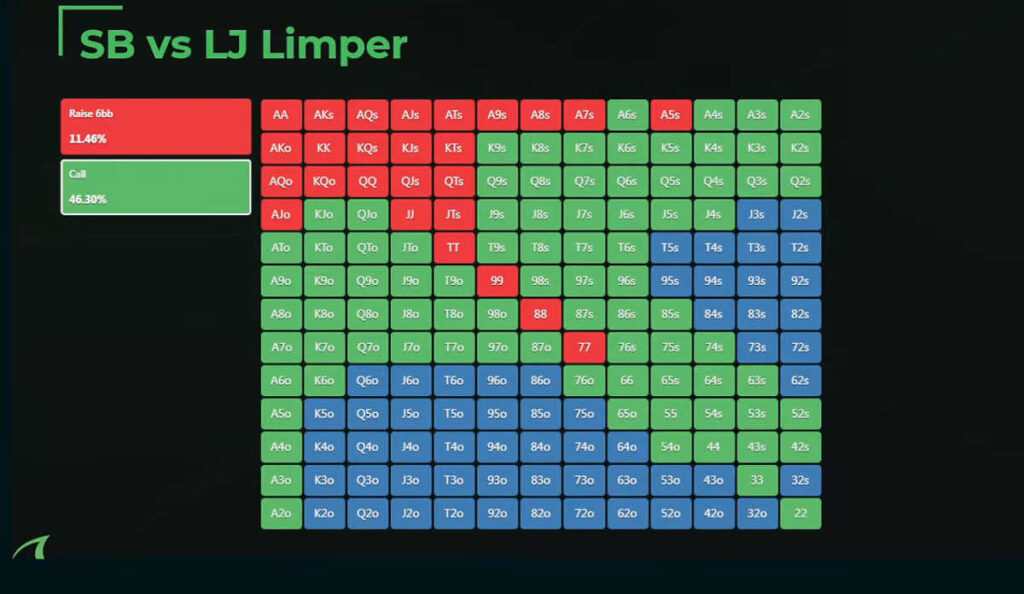
We are raising with a strong linear range that does well against the opponent. Our raising range doesn’t change that much compared to our in-position strategy.
However, we get to limp behind with a much wider range because we only have to put in an extra half the big blind.
Let’s underline once more that you should never open limp, i.e., limp in when there is no action in front of you. However, if there is already one or more limpers in front, it is perfectly fine and advisable to limp along with a selection of hands that play well multi-way.
When it comes to sizing your raises, you should be making it about five big blinds against one limper when in position, and six big blinds out of position. If there are multiple limpers, add an extra blind for each one. It is also a good idea to tighten your range a bit against multiple limpers, as there is a good chance you’ll end up playing a multi-way pot.
#2 Playing Bad Against Limpers After the Flop
Many players also play poorly against the limpers after the flop, and one of the biggest mistakes is continuation betting almost every single time.
You should be betting on the boards that are good for you and checking on the flops that smash your opponents’ ranges.
Let’s look at an example.
LJ limps, we raise it to five big blinds on the button with K♣Q♦, playing 100 big blinds deep; the opponent calls, and the flop comes 8♠3♥2♥.
While we don’t connect very well with this board, neither does our opponent. We have all the overpairs in our range, so we have a range advantage, but not the nut advantage, as they can easily have all the sets, especially deuces and threes.
So, this is the spot where we bet small and often; in this instance, we make it 3.4bb.
The opponent calls, and the turn comes the 9♥. We definitely have some strong flushes in our range here, as none of the strongest ones are blocked by the board.
Our specific hand missed completely, but playing in position, we do get to have some junky bluffs, and the solver likes this one, betting over 80% of the time. We bet for 11bb, they fold, and we win the pot.
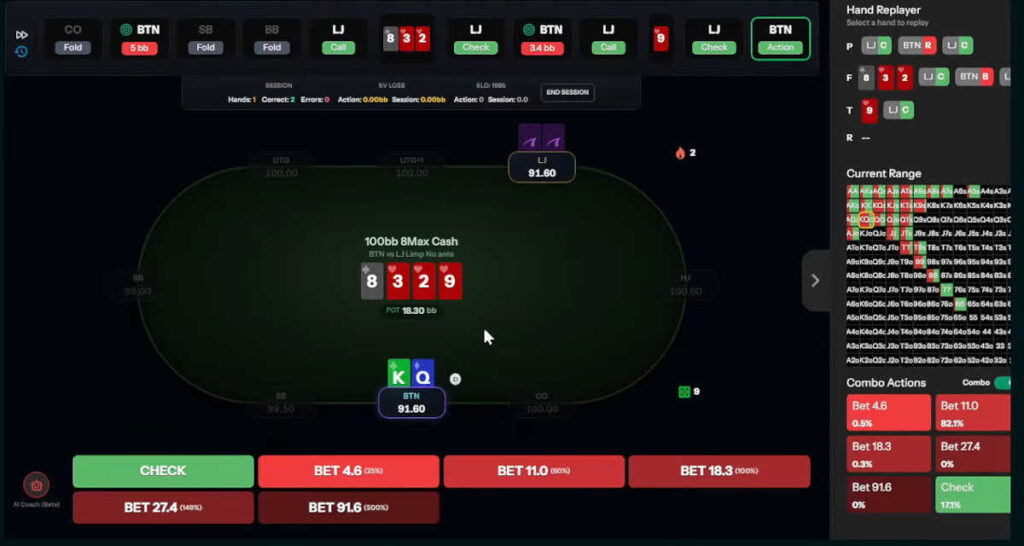
This is just one example, but you can get in there and drill these spots yourself with PeakGTO as much as you like, and there are also a few more examples in the embedded video.
#3 Playing Poorly in Multiway Pots
Many players at lower stakes struggle with multi-way pots in general. These are the spots where you should focus on three things:
- Nut advantage and the nut potential.
- Re-categorizing your hands and worrying more about denying equity than getting value.
- Position becomes even more important, to the point where we’ll often check with our entire range when playing out of position.
You’ll rarely have a large range advantage in these situations, because someone is likely to have something decent. There will be some high card boards, but these are pretty rare.
Since you don’t have the range advantage, the nut advantage becomes increasingly more important. Drawing to what will often be the second-best hand and overplaying top-pair hands isn’t a recipe for success in these situations.
If you do have the nut advantage, you’ll want to be aggressive to get value from worse hands, deny equity, and play to the nut potential on future rounds.
Re-Categorizing Your Hands
When building your betting strategy on the flop, a good way to go about it is by re-categorizing your hands in this manner:
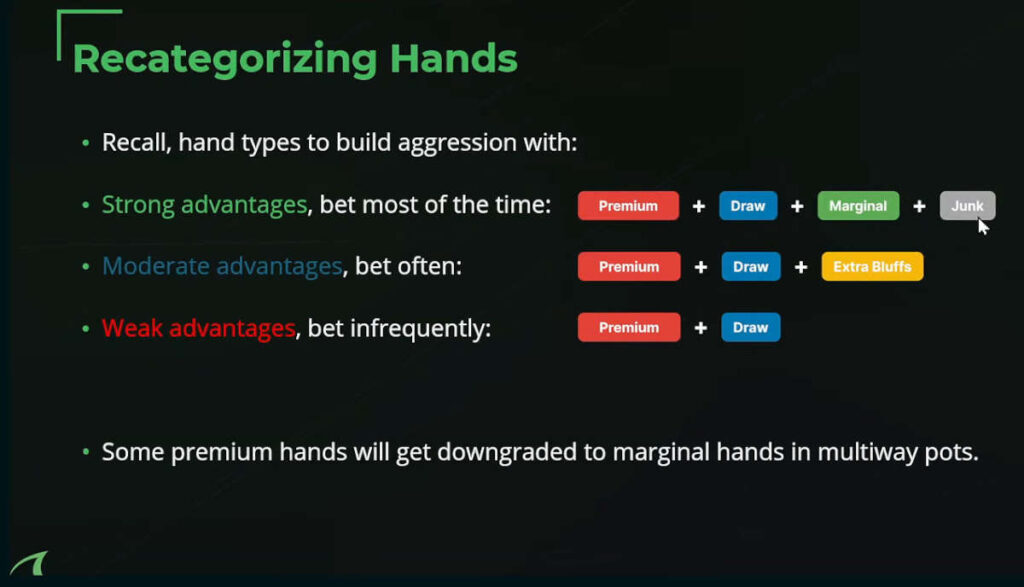
In multi-way pots, you are not just betting your range advantage. You are often betting and raising to deny equity.
Because of this, betting with weak draws isn’t a great idea, especially when you are drawing to what could easily become the second-best hand, i.e., low flushes running into bigger ones.
With your marginal hands, you can easily bet and fold to a raise. You are betting to deny equity, but you don’t want to get overly invested with questionable holdings.
Importance of Position Increases
Being in position in multi-way pots allows you to squeeze players who will be out of position against your opponents.
When you bet, a player in the middle has to be concerned about the players behind raising and denying them equity.
This gives the largest advantage to the player with global position, who is last to act on all streets. The second-best spot is the player who has the position on the other OOP players.
When you bet and there are three players remaining, the first two have to worry about what the third one will do when the action gets to them.
#4 Failing to Adjust to Different Player Types
Adjusting to certain player types is very important, and it should begin before the flop, where many players are simply too passive. This allows you to raise with a wider range, knowing you won’t get re-raised a lot.
With that knowledge, when you do get re-raised and you have a hand like AK, you don’t want to start just ripping it in.
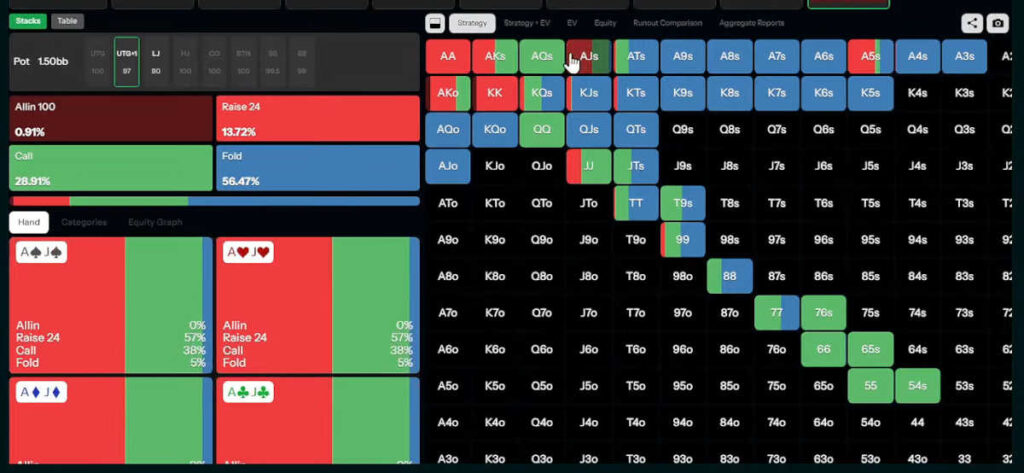
As you can see, we are not 4-betting every time in these spots, and that’s provided we are against an opponent who is playing a GTO strategy. Most players simply don’t, and they don’t re-raise nearly often enough.
This means that their re-raising range is usually quite strong, which is not great for you, so you don’t want to bluff or overvalue hands like AK, AJs, etc.
Another common mistake, which we’ve already touched on, is that certain players will c-bet every single flop. This is a big mistake, especially out of position, and you can attack this player type and punish them on the boards that are good for you.
#5 Not Exploiting Enough on the River
The final mistake we’ll cover in this article is not exploiting enough on the river. It happens all the time that a player makes the call on the river, knowing that they’re behind, and, sure enough, they are shown the nuts.
You don’t have to call if the opponent gives you an excellent reason to fold, like when they bet huge or you know they never bluff on the river.
Pot odds exist, and you need to have a certain amount of equity to call a bet. If they bet 25% of the pot, you only need to have 17% equity, which is quite often the case. But even then, against some opponents who’ll only bet small with the nuts, you can find a fold.
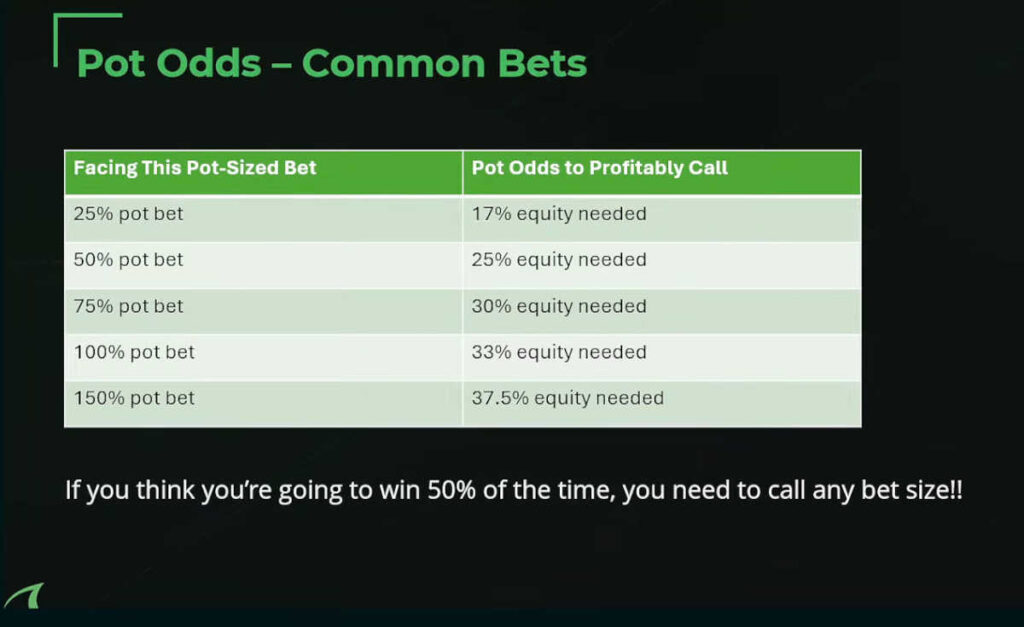
If you think you’ll win 50% of the time or more, you should mathematically call a bet of any size. If there is just $100 in the pot and they bet a million, if you expect to win half the time or more, it is still a correct mathematical call.
By the same virtue, if they bet on the river in the spot where you need them to bluff 33% to make a call, and you somehow know that they are only bluffing 25%, you should fold every single time with all of your bluff-catchers.
Of course, you don’t usually have this level of precise information, but generally speaking, most opponents drastically under-bluff rivers at small stakes, so factor that into your decision-making.