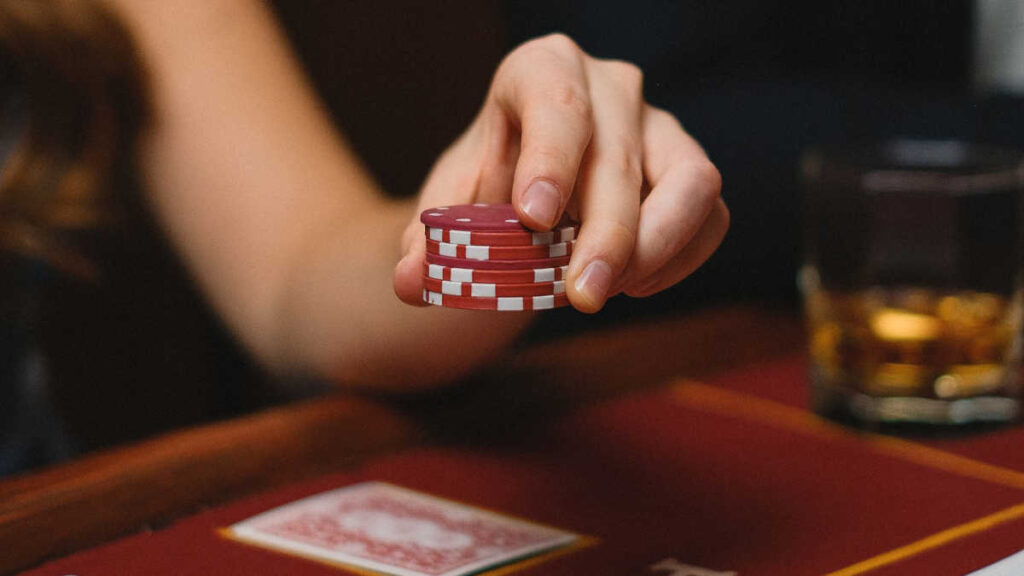
At a poker table, you know what the pot will pay and how much you must risk to contest it. Step onto a casino floor and “payout” can refer to the prize for a hand, a game’s long-run return, or the wait for your money. Read the wrong number and even a familiar game can surprise you.
You win a $200 pot and stack the chips. The result is visible, although the room may have taken a rake before the pot reached you. Later, a machine flashes a $200 win. Its screen tells you what happened on that play, but little about what repeated plays would cost.
That distinction is easy to miss when the casino game uses cards. You recognize the hands. You can still make decisions. The crucial change is whom you are playing against and how the payment for each result has been set.
Poker Teaches You to Account for the Cost
A cash-game player can make good decisions and still struggle to profit if the rake takes too much from each contested pot. Even a preflop choice feels different when you account for it: raising instead of limping can win the blinds without a raked showdown. You may disagree with a particular strategy, but you know the room’s charge belongs in the calculation.
House games ask you to inspect a different figure. Return to player, or RTP, is the proportion of stakes a game is designed to return over a very large number of plays. If a game lists 96% RTP, staking $100 does not entitle you to $96 back tonight. You could leave with nothing or hit a prize far beyond your stake.
The term “payout” can also mean how quickly a withdrawal reaches you. Once you have checked a game’s return, the cashier deserves the same attention. In Canada, Casino.org’s guide to best payout online casinos compares listed win rates with withdrawal times and examines the games and banking options behind them.
Its leading entry shows a 98.44% win rate with withdrawals listed at zero to three days; another lists 98.38% with instant payouts. Your preference depends on whether you care more about the listed rate or how soon you can access your money.
Familiar Cards Can Carry Unfamiliar Prices
You might expect four of a kind to be worth the same wherever the hand appears. It does not work that way. In Four Card Poker, your Ante and Play wagers are settled against the dealer, but an optional Aces Up wager pays from its own table. The side bet can win even when the dealer wins the main contest.
That gives one deal two possible answers to “Did I win?” The Aces Up table in the game guide pays 50 to 1 for four of a kind and 1 to 1 for a pair of aces. Those prices describe awards for particular hands. They do not tell you the game’s overall return, because you must also account for how often each result occurs and what it costs to place each wager.
Video poker requires similar attention to the pay table. A full house paying nine credits rather than eight changes the return even though the cards and machine title may look familiar. Your discard decisions count, but skill cannot recover a payment the selected version of the game does not offer.
There is a reason to inspect the detail behind a quoted percentage. Under Ontario’s rules for OLG’s online games, the theoretical payout must be provided for each game. The rules also require disclosure of how progressive awards contribute to that percentage.
They apply to OLG’s iGaming activities, so check the applicable rules when looking at another operator. A large jackpot may account for some of a game’s theoretical return even if you never see it during a visit.
The Crowd’s Return Is Not Your Session
A published return draws on a vast number of wagers. Your evening supplies only a small handful of them. That gap is why a game’s theoretical percentage can be accurate even when your own results look nothing like it.
The volume involved is striking. During the 2024–25 fiscal year, iGaming Ontario recorded C$69.6 billion in casino wagers, compared with C$1.7 billion in peer-to-peer poker wagers. Its figures are unaudited and describe activity across operators, rather than the return earned by any one player. They also count wagers, not unique dollars: money won on one play can be staked again.
You already know from poker that one handsome pot cannot settle whether a session was profitable. Take that skepticism with you onto the casino floor. Ask what a winning hand pays, what the game returns over many plays, and what happens when you request your balance. Each answer earns its place before you commit another stake.