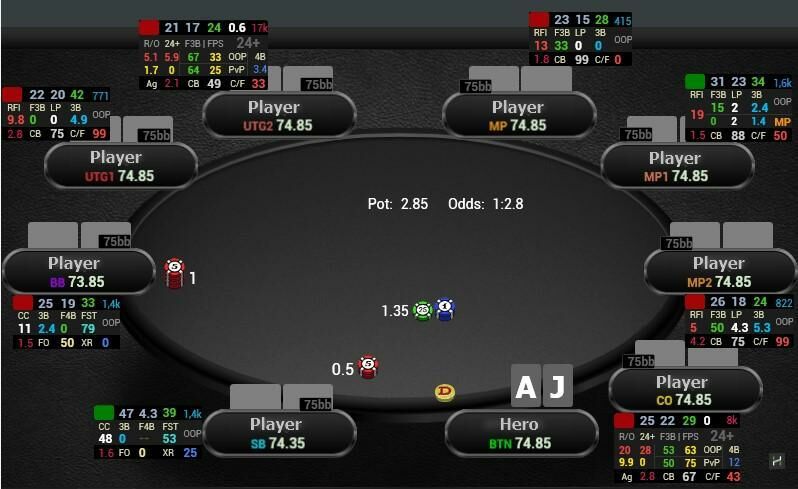
Poker has evolved far beyond instinct and intuition. In today’s games, especially in online poker, players rely heavily on data to gain an edge.
This is where poker stats come into play. They provide a measurable way to understand how players behave, how often they take certain actions, and where their tendencies can be exploited.
In this guide, we’ll break down poker stats in a clear and practical way, helping you understand what they mean and how to actually use them at the table.
What Are Poker Stats and Why Do They Matter?
Poker stats are numerical indicators that track player tendencies over time. They are most commonly used in online poker through tracking software, but the same concepts apply in live games if you pay close attention.
Instead of relying purely on memory or guesswork, poker stats give you objective insight into how players behave. They reveal patterns that would otherwise take hours of observation to detect.
For example, instead of guessing whether an opponent is aggressive, stats like PFR and AF can show exactly how often they bet or raise. Over time, this allows you to make more precise decisions and avoid costly mistakes.
Ultimately, poker stats help turn poker into a more analytical and strategic game, where decisions are based on evidence rather than assumptions.
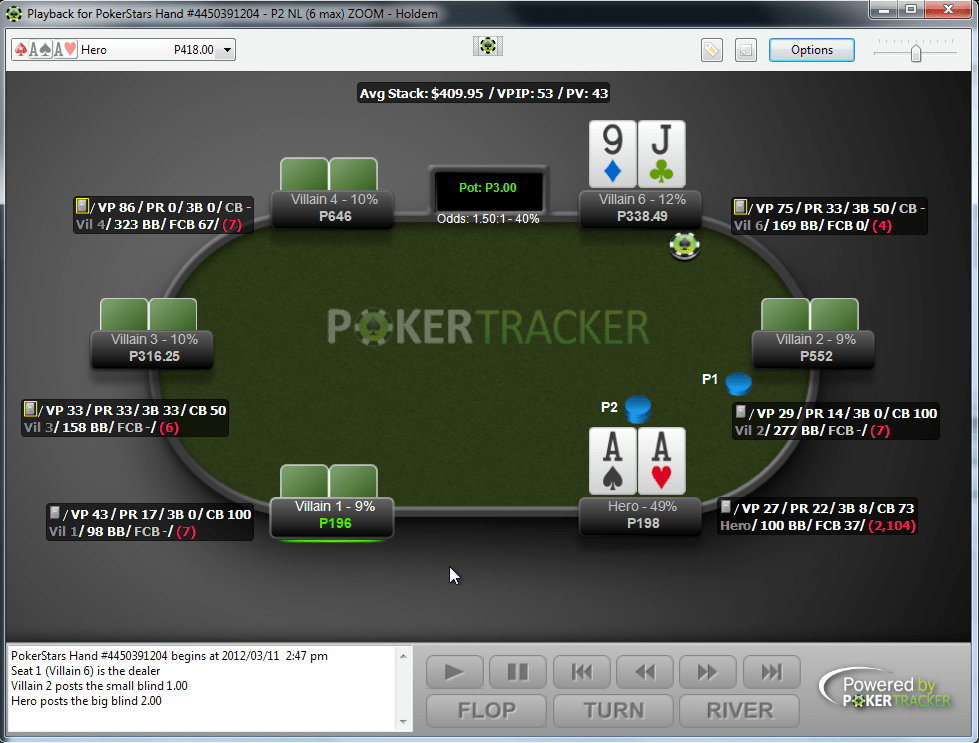
The Most Important Poker Stats Explained
While there are dozens of poker stats available, most players only need to focus on a core group to see major improvements. Below are the most important poker stats you will see in popular heads-up displays (HUDs) like Poker Tracker, along with examples of what strong professional players typically achieve.
VPIP (Voluntarily Put Money In Pot)
VPIP measures how often a player voluntarily enters a pot pre-flop, excluding forced bets like blinds. It is one of the quickest ways to identify whether a player is tight or loose.
A high VPIP suggests a loose player who plays many hands, while a low VPIP indicates a tight player who is more selective.
- Cash games: Strong players typically fall between 20%–28% VPIP depending on table size and position awareness. Six-max games tend to be on the higher end, while full-ring games trend lower.
- Tournaments: VPIP is usually slightly tighter early on, around 18%–25%, but can increase significantly in later stages when blinds rise, and aggression becomes necessary.
A player with a VPIP above 35% is generally too loose, while someone below 15% may be overly tight and miss profitable opportunities.
PFR (Pre-Flop Raise)
PFR tracks how often a player raises before the flop. This stat helps determine how aggressive a player is in entering pots.
When compared with VPIP, PFR reveals whether a player is passive (calling too much) or aggressive (raising frequently).
- Cash games: Good players usually have a PFR between 17%–24%, staying relatively close to their VPIP.
- Tournaments: Early stages often show 15%–22% PFR, but this can rise to 25%+ in later stages as players open up their ranges.
The closer a player’s PFR is to their VPIP, the more aggressive and fundamentally sound their strategy tends to be.
VPIP vs PFR Gap
The gap between VPIP and PFR is a critical indicator of playing style. It shows how often a player is calling instead of raising.
A large gap suggests a passive approach, while a small gap indicates aggression.
- Cash games: Strong players usually maintain a gap of 3%–6%. For example, a 24% VPIP and 20% PFR is a healthy, aggressive profile.
- Tournaments: The gap can be slightly wider early on (5%–8%) due to more cautious play, but strong players still aim to minimize unnecessary calling.
If the gap exceeds 10%, it often signals a player who is calling too much and not applying enough pressure.
Aggression Factor (AF)
Aggression Factor measures how often a player bets or raises compared to how often they call after the flop. It provides insight into post-flop playing style.
Players with high aggression tend to apply pressure and force opponents into difficult decisions, while passive players tend to check and call more frequently.
- Cash games: A solid aggression factor is typically between 2.5 and 4.0, indicating balanced but assertive play.
- Tournaments: AF can vary more widely depending on stack sizes, but strong players often fall between 2.0 and 3.5, increasing aggression in late stages.
An extremely low AF (below 1.5) often indicates passivity, while an excessively high AF may suggest overly aggressive or reckless play.
Continuation Bet (C-Bet)
The continuation bet stat shows how often a player bets on the flop after raising pre-flop. This is a key indicator of how consistently a player applies pressure on the flop by firing a continuation bet.
A high C-bet percentage means the player frequently follows through, even without a strong hand.
- Cash games: Good players typically C-bet around 55%–70% of the time, balancing value bets and bluffs.
- Tournaments: C-bet frequencies are often slightly lower, around 50%–65%, due to stack depth considerations and risk management.
Players who C-bet too frequently can be exploited by raises, while those who rarely C-bet become predictable.
Fold to C-Bet
This stat measures how often a player folds when facing a continuation bet. It is one of the most exploitable tendencies in poker.
If a player folds too often, they can be targeted with frequent bluffs. If they rarely fold, they should be value-bet more aggressively.
- Cash games: Strong players usually fall between 45%–60%, maintaining a balanced defense.
- Tournaments: This stat often ranges from 40%–55%, as players are more cautious about risking their tournament life.
A fold-to-C-bet above 65% signals a player who is likely over-folding, while below 40% suggests a very sticky opponent.
3-Bet Percentage
The 3-bet stat shows how often a player re-raises pre-flop. It reflects a player’s willingness to apply pressure before the flop by 3-betting their hands.
A higher 3-bet percentage usually indicates a more aggressive and advanced strategy that includes bluffing ranges.
- Cash games: Strong players typically 3-bet around 6%–10%, depending on position and opponent tendencies.
- Tournaments: 3-bet percentages are usually slightly lower, around 5%–9%, due to increased risk and stack preservation.
Players with very low 3-bet stats are often too predictable, while extremely high numbers can indicate over-aggression.
How to Interpret Poker Stats
No single stat tells the full story. The real strength of poker stats lies in how they work together to form a complete picture of a player’s tendencies.
For example, a player with a high VPIP, low PFR, and low aggression factor is typically a passive player who calls too often. These players are rarely bluffing and are best exploited through value betting.
On the other hand, a player with balanced VPIP and PFR, along with a strong aggression factor, is likely experienced and capable of applying pressure in multiple situations.
Learning to connect these stats allows you to move beyond surface-level reads and truly understand how your opponents approach the game.

Poker Stats in Cash Games vs Tournaments
Poker stats behave differently depending on whether you’re playing cash games or tournaments.
In cash games, stacks remain relatively stable, and players can reload at any time. This leads to more consistent behavior, making stats more reliable over time.
In poker tournaments, however, changing blind levels and stack sizes create constantly shifting dynamics. A player’s stats may change depending on whether they are short-stacked, deep-stacked, or nearing the money bubble.
Because of this, tournament players must interpret stats within context rather than relying on them blindly.
Common Mistakes When Using Poker Stats
One of the biggest mistakes players make is relying on stats with too small a sample size. Without enough hands, the numbers can be misleading and lead to incorrect assumptions.
Another common issue is focusing on too many stats at once. This can overwhelm decision-making and slow down gameplay. It’s far more effective to master a core group of stats before expanding.
Players also sometimes rely too heavily on stats and ignore real-time factors such as table dynamics, player emotions, and recent hands. Poker is still a human game, and stats should support your judgment, rather than replace it. Learning how to play poker using other poker tools is also key, rather than just relying on poker stats.
How to Use Poker Stats to Improve Your Game
To truly benefit from poker stats, you need to apply them actively. Start by categorizing opponents based on their tendencies, then adjust your strategy accordingly.
Against passive players, focus on value betting. Against aggressive players, look for opportunities to trap or call down lighter.
You should also analyze your own stats regularly. If your VPIP is too high, you may be playing too many weak hands. If your aggression is too low, you may be missing opportunities to win pots without a showdown.
Over time, this feedback loop helps refine your strategy and eliminate costly mistakes.