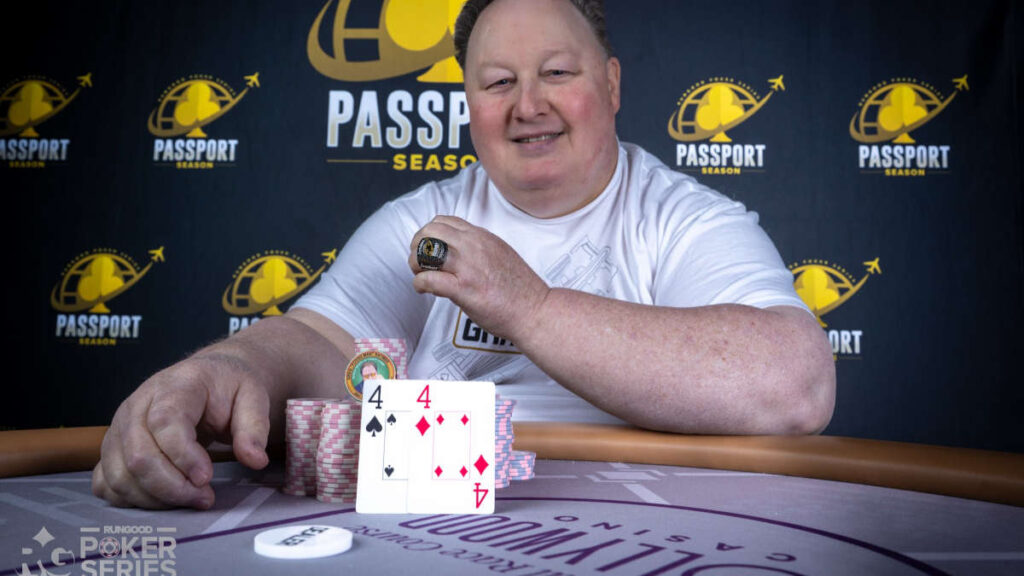
Image courtesy of RunGood Poker Series (Joe Garrett)
Over the past 20 years, few WSOP Main Event champions have consistently won the hearts and minds of players they meet more than Greg ‘Fossilman’ Raymer. Back in 2004, Raymer won the World Championship one year after Chris Moneymaker.
Taking down the tournament for $5 million, Raymer’s win was worth double that of Moneymaker just 12 months earlier. While, like Moneymaker, he has never won a second WSOP bracelet in the years since, the Fossilman has carved out a superb career and won over $8.3 million at the live felt alone.
Was The Moneymaker Effect One Year Early?
Since Chris Moneymaker’s victory in 2003, poker observers have consistently referred to the effect of the former accountant’s victory on the ensuing ‘Poker Boom’. One year on from Moneymaker’s win, however, Greg Raymer outlasted three times as many players to win $5,000,000.
So if Moneymaker hadn’t won in 2003, would we have been talking about ‘The Fossilman Effect’ from 2004 onwards? We had to ask the former world champion, and it turns out Greg Raymer is a confirmed fan of the man who set things in motion one year before he became a Main Event winner.
I think Chris winning was huge for poker, says Greg. The advent of poker on TV with hole cards, combined with the worldwide availability of online poker sites, was transformative for the game.
Poker on TV created the huge upswing in interest, and online poker, from the lowest to highest stakes, made playing the game accessible to everyone.
While Greg agrees that poker was going to boom no matter who won in 2003, he says that Moneymaker specifically winning had a much bigger effect on the game than if someone else had kicked off the interest in poker.
I honestly believe that Chris winning, with his ‘everyman’ feel, and especially his last name, caused the boom to be 10-20% bigger than it would have been. However, I do not give myself the same credit.
Poker was booming, and that boom would continue. I don’t think my winning in 2004 increased the boom any more than if David Williams had won. Chris was a unicorn, a rare and perfect set of circumstances that is unlikely to repeat in poker, or anywhere else for that matter.
Taking on Tough Opponents
In 2004, Greg took on two of the most entertaining opponents he could have run into when three-handed for the World Championship. Josh Arieh, who came third, has gone on to become a six-time WSOP bracelet winner, as has the man Greg beat to win the title, former Magic the Gathering player David Williams.
Two decades on from their infamous battle, Greg has huge respect for the men he faced across the felt in Las Vegas in that epic summer of 2004.
They are both exceptional players. I didn’t ever play against David until the unofficial final table of 10, and I didn’t really play directly against him much at all until we got heads-up.
People often ask Greg when he knew he was going to win in 2004, but pre-destined results don’t come to mind.
I always say it was when David was all-in and tabled a hand I could beat, and not a second sooner. When we started heads-up play, I had almost 70% of the chips. I did not expect to win. I expected to win about 75-80% of the time, and that isn’t putting David down. It just reflects the fact that I had a lot more experience than him.
Greg has won dozens of tournaments by that point in his career, “almost all of which are not on The Hendon Mob”, as they were daily events at the Oceanside Card Club and Foxwoods. He had plenty of experience playing heads-up, but his toughest opponent that year was the man he busted in third place, Josh Arieh, whom Greg had encountered on several occasions before they clashed three-handed.
I did spend a lot of time sitting next to Josh during the prior couple of days of competition, Greg reveals. He is a tough guy to play against at all times, and in all games. That is why, after winning the flip to eliminate him, I told him he was my toughest opponent. I had to work harder and get luckier to win his chips than anybody else throughout the tournament.
Just a few months after his WSOP Main Event victory, Greg was threatened with violence by two men in the corridor of The Bellagio. He now looks back on the experience as “strange” but told me of the oddly composed state he found himself in as he processed the situation.
I was only thinking about what I should do to minimize my chances of getting killed. I didn’t fight them off because I’m a tough guy and thought I could win. I did it because they were clearly trying to force me into my room, presumably to tie me up and rob me, and I had seen their faces already.
Greg was worried that if he submitted to their demands and went back into his room, then he would be tied up, putting himself in even greater peril.
Then they [might] decide they have to kill me so I can’t identify them. If they choose to kill me after I’m tied up, it is probably 99% certain I get murdered, whereas if I fight them in the hallway, even if they shoot me, they will likely run away, and my chances of surviving are a lot higher than letting them tie me up.
When researching for our interview with Greg, one supposed ‘fact’ we read was that he fought them off with a karate chop, an element he now refutes as wrong, saying that he has “no idea who inserted that little piece of bulls**t, but it is totally fake”. The wider question of whether players – and certainly high-profile world champions – could be better protected is something Greg rejects.
It is just a risk we have to take, or stick to cash games, so at least you aren’t attracting robbers due to your ‘fame’. I’m not a trained fighter in any sense. I did shove the bigger of the two guys on his ass, but that was it. I’m just glad I didn’t get hurt, nor did they manage to rob me.
Coping with Stardom Across the Ages
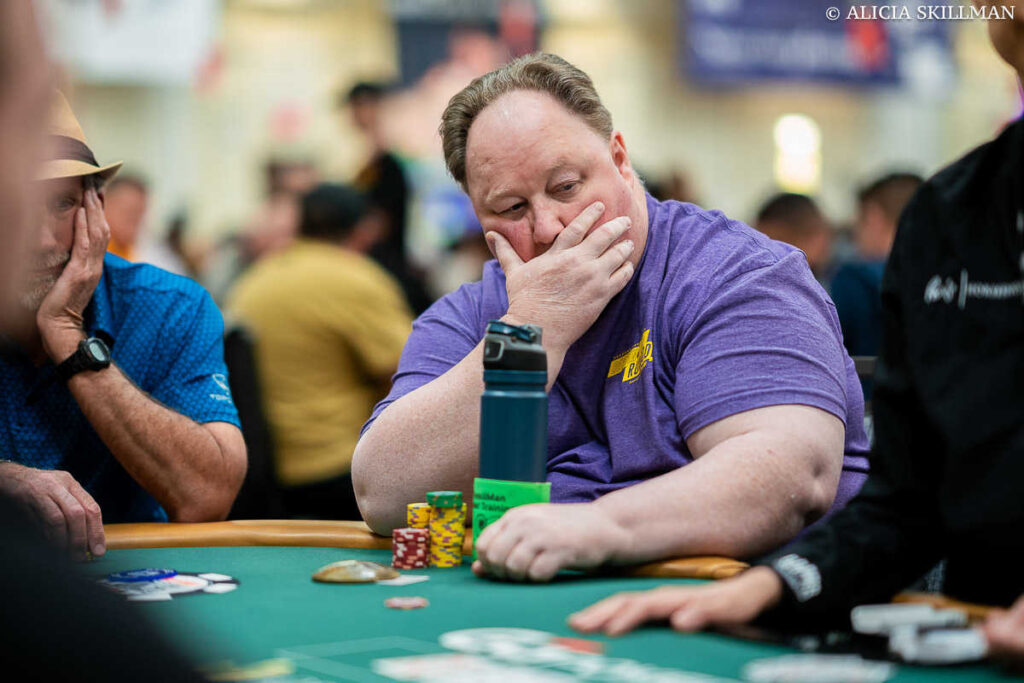
Back in the heights of the poker boom, Greg could hardly sit down at the felt without attracting attention from poker fans wanting his autograph or a photograph with him. You might think that his star has faded in that sense, but we can confirm the opposite.
The last time we were in Las Vegas and spoke with Fossilman – so named for his fossil card-protector he carries everywhere – he was still being accosted by autograph hunters and selfie-requesting fans at all corners.
I was almost 40 years old. I am married, don’t party, don’t drink, and don’t do drugs. The stardom element was never a burden to me, Greg says.
I have always had a very positive opinion of myself. As such, a sudden surge of praise wasn’t going to go to my head. I knew I wasn’t a better player the day after winning that tournament than I was the day before it began.
Greg says it was a strange experience to suddenly have “random people approach me in public” to shake his hand, say a few words, or grab an autograph, but he quickly got used to it.
We always took our daughter to Disney World every year. After the win was televised, I would have at least 100 fan interactions every day we were in the parks. It annoyed my wife and daughter a little bit, but it never bothered me. 99.9% of these interactions were positive and friendly, so I enjoyed them.
Far from wishing it wasn’t the case, Greg might not seek out the fame his World Series of Poker win provided, but still enjoys interacting with poker fans to this day.
It has never been a bother. I tell people all the time that they should feel free to say ‘Hi’ any time I don’t have live cards in front of me. However, I do admit that trying to get through the crowds at the Rio on a bathroom break could be a challenge. I would interact with every fan I could, but I learned to never stop walking until I got to the back of the line for the toilet!
The Optimizing Champion
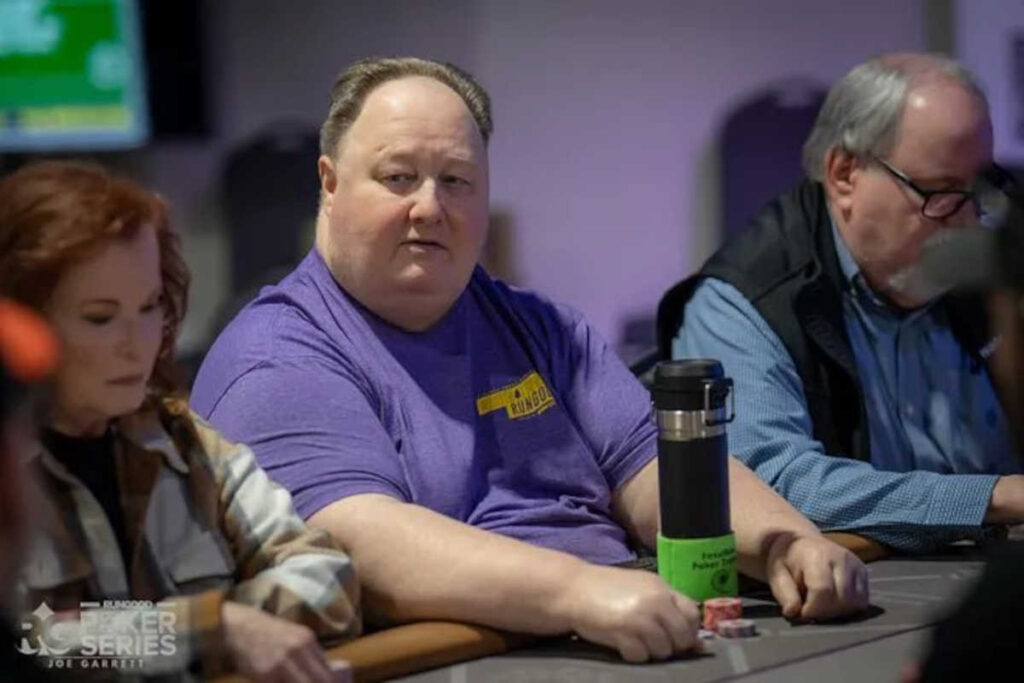
Speak to other world champions, and it’s often the case that they identify other WSOP Main Event winners who they compare themselves with, often modestly. When we ask Greg which champions past – or other players – he’d rather watch or play against, his answer is as honest as it is amusing.
I actually don’t watch much poker, only as an educational tool, or to sweat a friend at a final table, he tells us. My preference is a table full of donks who are highly likely to lose their chips to me. So any name that you would recognize is almost certainly somebody I don’t want at my table.
In addition to being weak opponents, it is also nice if they are friendly, don’t engage in any asshole behaviors, and don’t play slow. Let’s keep the game moving. If you’re a winning player, then the more hands you play, the bigger your edge.
It’s a continuing trend in talking to Greg, how often he breaks decisions down in his life and career to percentages and maximizing his chances of success. A year after he won the 2004 Main Event, Greg defended his title better than almost all of the former world champions. Out of 5,619 entrants, Greg came 25th, getting so close to repeating what has proven since 1988 to be the impossible achievement – retaining the title of world champion.
Honestly, that is a very polarizing tournament to look back on. I am proud to have gone so deep the next year, yet the hand that crippled me is massively painful to recall.
The hand in question was when Greg was dealt pocket aces only to lose to Aaron Kanter’s seven-eight of hearts as running cards came to damage Greg’s stack beyond all repair.
If he doesn’t make his runner-runner flush to beat me, I would have had more than 10% of all the chips in play with 24 players left. I think I would have had as high as a 15% chance of winning [the Main Event] at that point.
If I do manage to win again in those two years, I am asking PokerStars for a percentage of the company to continue representing them, a company they later sold for $5 billion. I estimate that runner-runner beat cost me about $40 million in equity. The silver lining is no other beat ever since can really cause me too much pain; that beat immunized me for the most part.
The Hall of Fame and a Second World Title
The Poker Hall of Fame has often been a contentious issue in poker. Greg is one of a number of former world champions never to have been inducted, but while he could take that affront personally, he’s far more concerned about the sheer number of players who are yet to make it into the club.
I believe that a lot more people need to get in. One per year is a laughably low number. Even two per year is way too low. It should have been at least three or four all these years. To get through the backlog, we should be inducting at least six per year for the next 10 or more years. It just isn’t fair to the dozens of players who deserve to be in there.
Now in his sixties, Greg has won five Heartland Poker Tour Main Events to go with the 2004 WSOP Main Event he conquered in 2004. His ambition is as clear and straight as the man himself.
I am trying to win the WSOP Main Event every year until I finally succumb to old age… and every other tournament I enter. That is clearly an unrealistic goal, but why would I ever enter any tournament if I wasn’t going to give it my best and try to win?
Greg’s determination is still as alive as it ever was back in 2004, and he admits to still loving the game that has given him so much joy.
I still enjoy playing, so I still travel around and play at various series around the country. I still try to book my poker seminars at card rooms and poker clubs; I love to teach almost as much as I love to play. I don’t see any of that changing any time soon.
In 2004, no one had heard of the gentle giant that is Greg Raymer. Now, his story seems as old as the WSOP Main Event itself. With the same drive as ever, ‘Fossilman’ is the World Series of Poker champion of the world, who might be around forever.