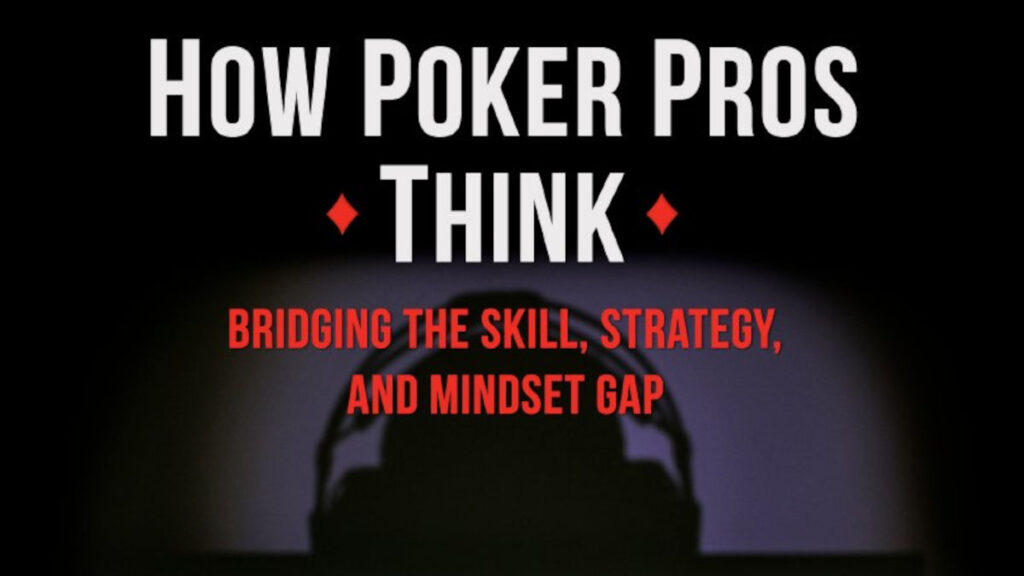
This week, the seventh poker book came out from authors Dara O’Kearney and Barry Carter. Titled How Poker Pros Think, it promises to help amateur players bridge the gap between skillsets, use the strategy of a professional, and employ the mindset of someone earning their living through the game of poker.
With the book appealing directly to recreational players, I wanted Dara and Barry to break down why they have the experience and knowledge to help players make this leap, and more importantly, stick the landing.
Mental Game Improvements
Any amateur has to make a mental adjustment from playing the game for fun to earning an hourly rate by the same pursuit. That’s a big shift in mentality, and I started by asking each man what they would consider the biggest adjustment an amateur needs to make when moving from playing recreationally to taking poker seriously?
Dara: It differs from person to person, but in general I would say it’s around the idea of variance. Most players start off with little or no idea about variance, and it’s particularly hard for recreational players to get a good understanding of it because they rarely have a meaningful sample size lifetime.
Barry: Yeah, I would say the number one thing amateurs need to do differently is to increase their volume, which essentially is a way of respecting variance. Amateur players tend to be time-poor compared to professional poker players, but at a minimum, they can certainly look to increase the amount of tables they play online, for example.
Plenty of amateurs understand that they should study more, but don’t necessarily know where to start. So if that hypothetical amateur both men speak of wanted to dedicate five hours a week to improving their game at an hour a day, how would they spend that time?
Dara: Identify the areas you’re weak in. Not specific hands, but general spots like “3-bet pots as the caller”. Spend at least 30 and no more than 50 minutes studying the spot with solvers, and the rest of the hour drilling the spot.
Barry: In addition to that, asking questions of superior players gets you a lot of bang for your buck. Every time I run a hand past Dara, it sticks a little bit more, perhaps because it’s quite uncomfortable to humbly admit that you don’t know something.
Balancing the Bankroll
Investing more time in the game as an amateur is exactly that – an investment. So how does a recreational player step up the volume but maintain good bankroll management? Well, there are tools that can help players of all levels, according to the poker professional at the table.
Dara: Ignoring staking, which can obviously change the calculation, use a variance calculator like the one at Primedope to estimate what bankroll you need to have less than a 50% risk of ruin. You can move up to that stake level at that point. However, you don’t actually risk ruin. If your bankroll shrinks back to the point where you have a 50% risk of ruin at the stake level you moved up from, you move back down. Also note that you shouldn’t necessarily move up just because you have the required bankroll.
So, by moving up, we might be making a bad bankroll decision if we’re not at the level mentally, even if we are financially?
Dara: For it to be the best financial decision, you need not only to be winning at the higher level, but more than at the lower level. If you’re beating $10 tournaments by 50% but $20 tournaments by 20%, you should be playing $10 tournaments. All this is from the perspective of someone motivated by financial considerations primarily and with a finite bankroll, but many recreationals don’t fit this description.
They’re playing for fun, and they have a budget (an amount they’re happy to lose for their fun) rather than a bankroll. The biggest warning sign you’ve jumped up too soon is when the plays that worked at lower levels don’t any more, and you constantly feel unsure or even owned.
Drilling into that aspect of increasing volume, I’m keen to find out how much volume could be too much in terms of multi-tabling online or perhaps playing live events – even at local casinos – five or six times a week compared to a couple.
Dara: There’s a trade-off. You should play the highest volume you can handle without feeling you have to rush decisions. And when you move up levels, reduce your tables for a while.
Barry: I would say the ideal amount of tables to play is enough that you concentrate on every decision, but don’t immediately know which of the tables is your biggest buy-in tournament. You won’t put too much emphasis on the bigger table and hopefully be a bit more objective about your decisions.
Dealing with Downswings
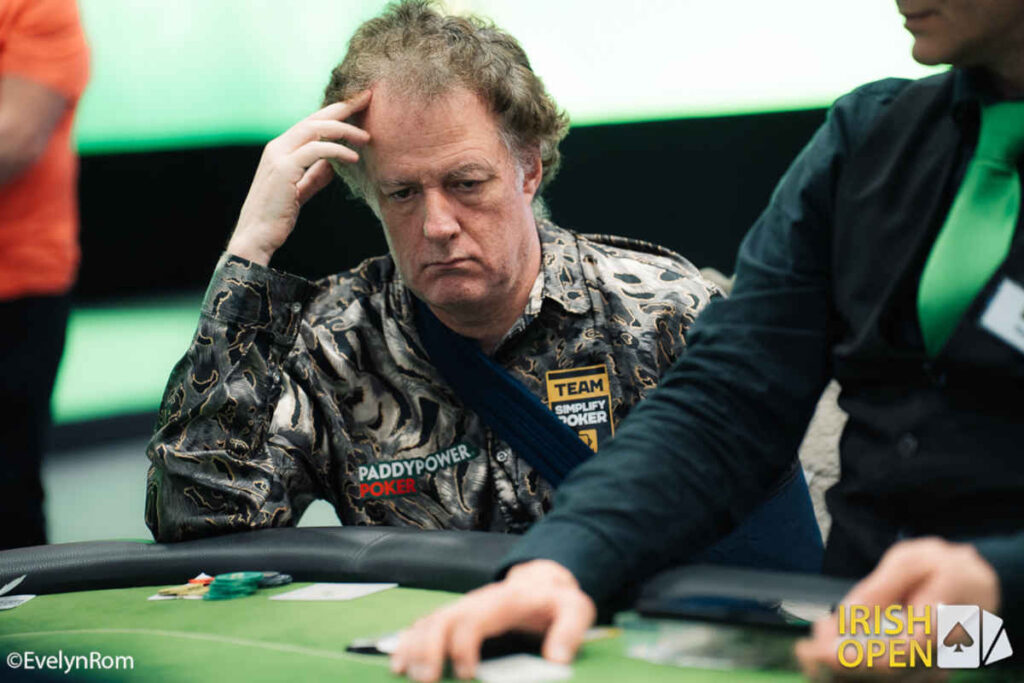
One of the biggest challenges for amateurs stepping up is learning to deal with the inevitable swings that variance provides. But how do amateurs distinguish between a genuine problem with their game and simply running badly? Irish poker legend Dara O’Kearney has a simple answer for that one.
Dara: Constant hand reviews with trusted peers or a coach. I actually think the biggest positive of our Simplify Academy for members is the forum where they can run hands by other members, who they know are serious about the game.
Barry: Again, volume is probably the greatest antidote to variance. I had a trip to hell this year when I played in the Irish Open. Everything went as comically bad as it could get. In previous years, it would have been enough for me to not want to play live poker for some time, but on the way back home, I realised it was the equivalent of the first 20 minutes of an online session.
Let’s look at that online session, because I am one of a number of amateur players who only play “when they can”. There are millions like me, so what changes to approach should an amateur consider necessary to step up?
Dara: It’s vital for pros or anyone looking to maximise their results. As my friend, poker mindset coach Dr. Tricia Cardner says, the healthiest approach to life isn’t difficult to figure out (Sleep, Eat, Exercise), but most of us struggle to implement it.
Barry: In the last two years, I’ve really sorted my sleep out via Andrew Huberman supplements. That has been an absolute game changer for me personally. I would always be exhausted the day after a big online or live session, but that isn’t the case anymore.
Battling the Amateur Ego
Many recreational players have a fairly inflated opinion of their own abilities. Assessing one’s own failings in our daily jobs might be doable, but taking that approach to a game we’ve considered a fun hobby can be tough to ask people to do. Both Dara and Barry advocate outsourcing some of this mental work to trusted friends and supporters.
Dara: I use trusted peer groups or coaches. AI coaches are also rapidly improving, including one I am involved in the development of, EdgeCore. These are great for people who can’t find a peer group or afford a good coach. A lot of my early development was accelerated by running hands past peers I knew were looking to tear my hands asunder, and I still take that approach.
As I write this, the words of my former student and study partner these days, Paulina Loeliger, a.k.a. ‘Pokerbunny,’ about how much she hated a line I ran by her yesterday and the exact reasons why my line sucked ass are still ringing in my ears. Seek out your best critics, not your biggest fans. Be happy when you or someone else finds a mistake you made: it’s a chance to improve going forward.
Barry: One of the most useful things I have done and continue to do now and then is film my online sessions for Dara to then look over. The reason this is useful is because he will pick up on things that I didn’t even think were a leak on one of the tables. A hand that I felt was pretty standard might actually have been a missed opportunity.
Before both men depart to continue work on the next poker book – and their individual games – I ask each of them for a single piece of advice to give to the next amateur who has enjoyed some success, is hungry to improve, and asks how they can take their poker to the next level.
Dara: Be careful who you trust for advice, or whose content you consume. When I started, there wasn’t much strategy content out there, and most of what was there was terrible. Now there’s more content than anyone could ever consume in one lifetime, but most of it is still terrible. Ask someone you trust to recommend what they think is good.
Barry: It sucks to say this to someone who’s enjoyed some success, but it’s probably useful to assume a starting point that you just ran really well. Dara has a student called Ray who made the Irish Open Main Event final table but came to Dara and said he felt he was still a fish.
Ray got coaching despite his success, and he is now one of the most respected non-professionals in Ireland. Poker is full of tragic stories of people who went broke after one big result; I think Ray’s attitude is a much healthier one to adopt.
These are great pieces of advice, but I’m now thinking about the amateurs I know and how they might make more mistakes than great plays. Plugging one of their leaks might affect their bottom line better than adding in a new skill. Both men have a good example of easy mistakes to cut out for amateurs reading this.
Dara: Don’t be overly dogmatic. I’ve seen many players after they discover solvers try to become GTO bots. When you’re playing against humans, you should be trying to figure out their mistakes and take advantage of them, not replicate what a solver playing against a perfect opponent does.
Barry: I’ll continue to beat this dead horse – I think the biggest mistake is low volume. When you increase your volume, you expose yourself to your errors more quickly, so you know what to work on. You gain experience, so you improve. And crucially, you get a much better barometer for recognising good and bad variance.
No one could accuse either Dara O’Kearney or Barry Carter of resting on any laurels. Between them, they have won poker awards for podcasts, books and social media content.
Their latest book, How Poker Pros Think, is bound for great things, and certain not to be their last.