Image courtesy of RunGood Poker Series (Rachel Kay Miller)
Modern poker media reflects the game of poker we enjoy today. Broadcasting across social media, subscription channels, and television outlets, the action is spread across various means of entertainment. You are just as likely to watch poker on your phone at the felt as you are to watch your big screen TV at home in 2026.
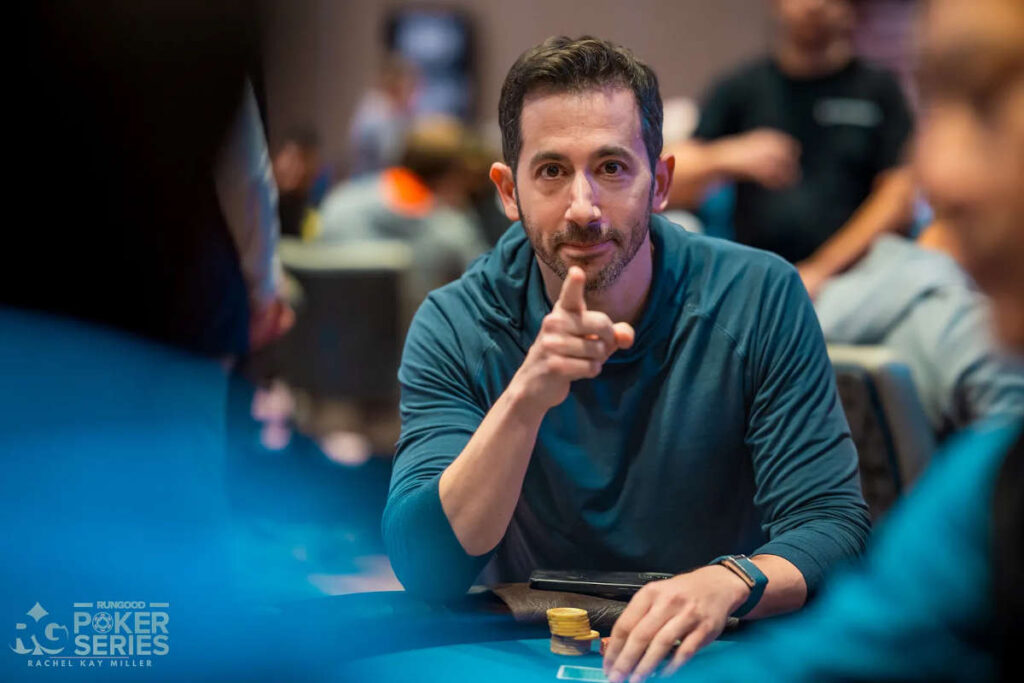
One man you’re very likely to see in either location is Jeff Platt. An award-winning and presenting-broadcaster with PokerGO, Jeff is equally happy at the felt himself, where he has won over $888,000 in tournament poker alone, including an MSPT Main Event for $100,000 and a fourth-place finish in the 2021 WSOP Double Stack event, which earned him $160,000.
We caught up with Jeff between broadcasting gigs and poker events to find out what his unique perspective on poker offers him, the challenges it creates, and where the future of the game we all love might be heading… on screen and off.
Persistence is Key
While it would be easy to look at Jeff’s recent Global Poker Award-winning presenting skills and skyrocketing poker results first, I wanted to wind the clock back on Jeff’s poker career to the origins of his love of the game. It turns out that Jeff entered the poker industry, as many do, from a slightly sideways angle.
I worked in sports broadcasting for a good ten years. I was a sports reporter for a local TV station in San Antonio, which is a big basketball city because of the San Antonio Spurs in the NBA. But I’d always kept an interest in poker, he says.
I played poker on the side and always came out to Vegas once or twice during the World Series to take my shot at living the poker player’s dream.
After making two “semi-deep runs” in the WSOP Main Event, Jeff met Dan Gati, who was producing the WSOP broadcast for what was called Poker Productions back in the day. Poker Productions eventually became PokerGO.
Dan was Mori Eskandani’s right-hand man. That led me to basically annoy Dan every six months or so. I had this lightbulb moment: I was passionate about broadcasting and poker; how about we just merged those two together? That would be the dream, right?
Every six months, Jeff would email Dan Gati, and as PokerGO started to grow, Jeff told a white lie to get in front of the decision makers for his dream job.
I told Dan that I had a Vegas trip coming up, which I didn’t. I wanted to audition for it and get in the door. He said come out here and audition, and since my contract at San Antonio was running out, I reached out to Dan asking if they had anything. He said ‘maybe.’ It was March of 2018, so I moved to Las Vegas.
Jeff arrived in Sin City and immediately reached out to a poker professional on the broadcasting side who would become a close friend and colleague.
I emailed Sarah Herring, who was at PokerNews at the time, says Jeff. We chatted, clicked immediately, and I co-hosted a podcast with her. I did a couple of play-by-play gigs for Poker Productions, which turned into PokerGO, and that led me to some more PokerGO gigs, and here I am now.
The Tone of Presenting on PokerGO
The recent PGT Championship saw Chad Eveslage win the $500,000 top prize and was brought to life by the regular hosting team of Jeff and his colleague, Brent Hanks, on PokerGO.
With other hit shows like No Gamble No Future, the Celebrity Poker Tour, and the WSOP Main Event, I wanted to find out how much work goes into setting the tone for so many very different broadcasts behind the scenes.
The WSOP Main is undoubtedly the biggest tournament of the year. It’s what everybody’s eyes are always on, The Main, The Main, the Main. You have to just lock in. Every moment really counts, and you have to take each moment seriously. That’s what the players, the producers, and the audience all deserve.
Jeff’s influences in the Main Event are many and varied, with his heroes over the years including one he has worked with for some time, Kara Scott.
Kara’s somebody I’ve looked up to for years, and one of the reasons why is how she went about finding the narrative, says Jeff. It’s very easy to sit back and watch the broadcast and pluck your narratives from that. It’s difficult to think big picture as far as the tournament goes and the storylines it creates.
At the beginning, 99% of what you see is likely to be outside of that storyline. The players you see at the tables on Day 1, 2, or 3 are not going to be around [at the end]. What I pride myself on and what I’ve seen Kara do time and time again is walk around. You pick up so much just walking round.
It would be very easy for Jeff to sit at his desk, watching the PokerGO stream online, following the action, and he admits that it would be possible to do “a decent job” if this were the brief. The fact is that ‘decent’ is nowhere near good enough for the WSOP Main Event.
Where the value of a sideline reporter comes in during the WSOP Main Event is not only developing storylines but creating them. It’s in finding the player who’s out in the field who’s in for $1, finding the pro who’s 0 for 18 in Mains, but finally making a run.
These things are extremely valuable, so you’re constantly moving your agenda and looking for more and more storylines, especially in a tournament like the WSOP Main Event that you get to cover from the very beginning. Everything is always changing.
The 2025 WSOP Main Event was as unique as any other. Early storylines fell by the wayside, as Jeff described. Then Leo Margets became the first female player to make the final table in 30 years. That looked like the story of the Main Event… until it wasn’t.
Then, boom, she’s gone, and we were ready to pivot to Michael Mizrachi, we were ready to go to John Wasnock, the story of the amateur poker player. I’d say I think that showed in the broadcast, but to be honest, Mizrachi crushed everyone so quickly that we didn’t have time to show too many storylines!
Talking of Mizrachi, in 2025, it looked like the Jeff-Platt-as-Grim-Reaper meme might be under threat, since Jeff spoke to Mizrachi virtually every day as he became a record-breaking world champion. Despite this, the phrase “Stand up for me, please” still strikes terror into poker players’ hearts.
People still saying ‘Oh, Jeff’s coming to the table, I hope he doesn’t talk to me.’ Why, you don’t wanna win? I talked to the champ every single day. If that can’t erase it, then it’s never going away! It’s been around forever, and it’s been great, [giving] us a storyline that revolves around me with Grim Reaper graphics! I’ve embraced it and so have the poker community.
The Celebrity Poker Tour
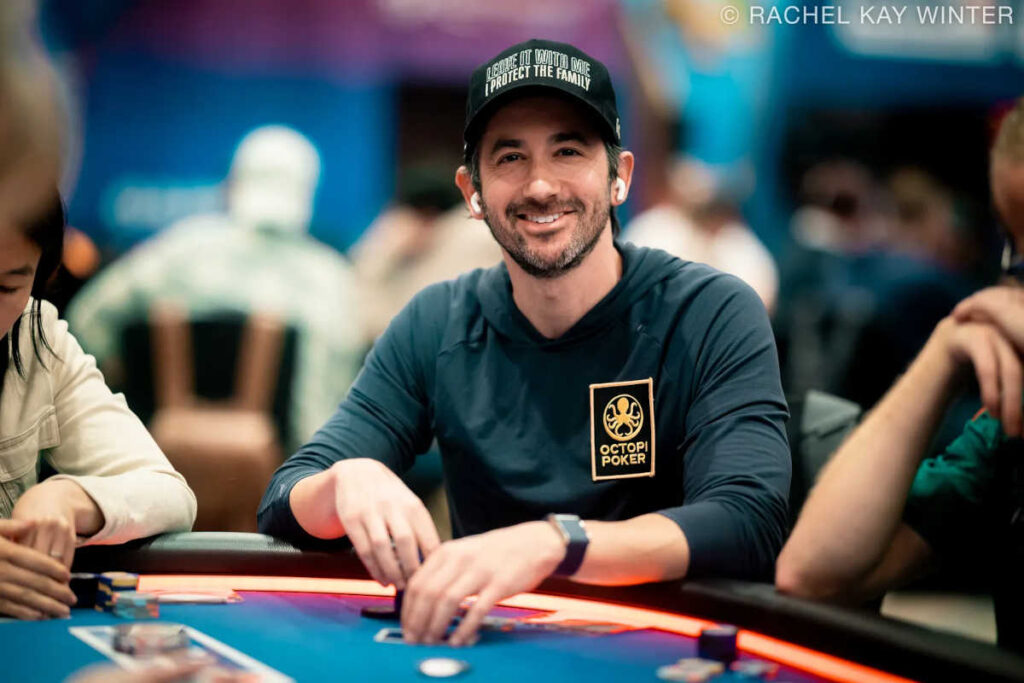
I ask Jeff next about the Celebrity Poker Tour, which many poker fans might think is at the other end of the spectrum in terms of seriousness. The CPT has a completely different audience, but as Jeff explains, while the content is of a different tone, the attention to detail is just as precise.
Your commentary is different, as well as the sideline reporting. You have two different approaches, but we’re catering the experience for the viewers, and we have to be as locked in. We’re not so serious, and we take a more entertaining route – that’s where our balance is. But we don’t shift as far as devotion to the work goes. Every gig means a lot.
Celebrity Poker Tour has brought a lot to the table. You’re seeing athletes, comedians, actors, influencers, and musicians, and how much they love the competition. Sure, it’s nice to win $20,000, but most of those players don’t need $20,000. What the CPT has done is bring these people to the table, say let’s play some cards and have an absolute blast.
As poker fans, getting to see sportspeople like Mackenzie Dern, Aljamain Sterling, and Colby Covington have a blast while utilising their natural competitive spirits is a unique fan experience too.
They’ve grown up in the Mixed Martial Arts world. Their drive is there, their competitive nature is there, and we see that transferred to the felt. They care so much. Michael Phelps played, he busted, and then stayed to watch! It’s so good for poker. CPT is bringing so many new players to the game.
Typically, CPT events bring between 50 and 60 players to the PokerGO Studio in Las Vegas. But each one of those celebrities has vast numbers of followers, and this is the impact that Jeff thinks many don’t see.
If they can bring 1% of their followers into the game, think about how big that is for poker, he says. Brent and Brock have done an outstanding job so far, and I’m really looking forward to seeing what they create in the future. The World Series of Poker will embrace building a rail in the future because it’s very important.
Global Poker Awards
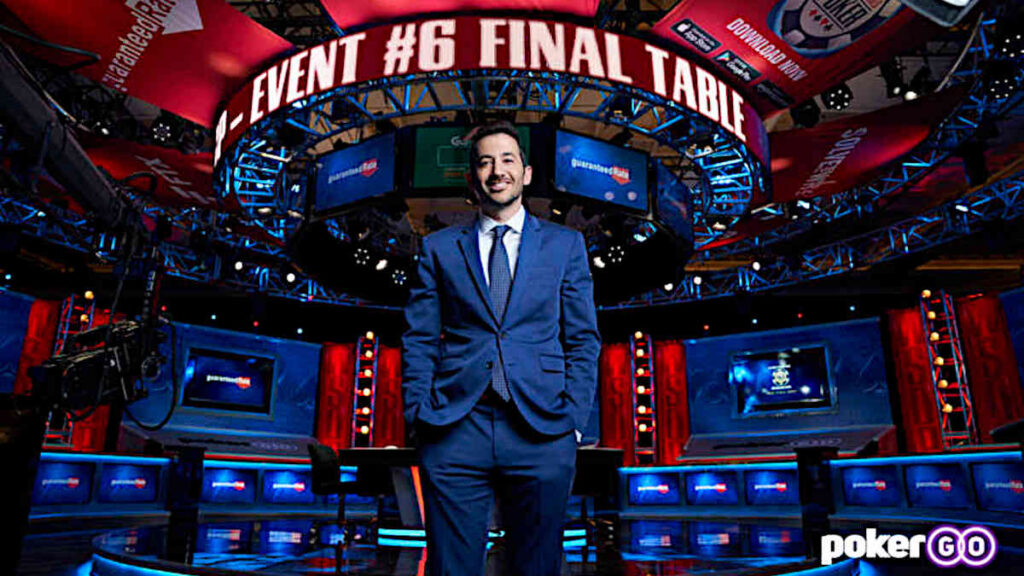
When I ask Jeff about his involvement with the Global Poker Awards, it’s a rueful smile that crosses his features. Part of that will be because this year, there won’t be a GPA awards ceremony for the first time in years, after it was announced there wouldn’t be a show in 2026. The origins of poker’s best-ever awards show are very interesting.
I had this idea, and Eric Danis was so great at discussing it with me and Pat, our producer. We wanted to make it entertaining for everybody.
Me and you, sure, we’re going to enjoy it, because it’s inside the industry and see people get shouted out who don’t usually get celebrated, but I wanted the poker community to see an awards show and enjoy it like the Golden Globes. I can’t put into words how much I enjoyed working as a host for the GPA over the years.
The construction of the show took time to perfect, although Jeff is quick to credit Drea Renee with her part in that – ‘She’s fantastic with her interviews out in the field’.
The GPAs filled a hole in the poker calendar that, before it existed, people weren’t aware of. I press Jeff on the opening monologue, which, just like at the Oscars or other award shows, comes before the tempo has been set and presents challenges.
It was so different being out there in front of all these people doing a monologue, he laughs. That was super challenging for me. In the room, the drinks aren’t quite flowing yet, maybe a joke doesn’t land, all these challenges that I loved.
As far as the future of it goes, I wish it would run every year. I don’t think award shows are dead in poker. If there is one, I would love, love, love to host it.
Swapping the Camera Lens for the Felt
Over many years, Jeff has been a consistent winner in tournament poker, coming close to WSOP glory himself. As I discussed in a recent interview with Joe ‘Stapes’ Stapleton, star-struck players can sometimes play differently against a well-known figure at the felt. So do players love to play with Jeff… or are they desperate to bust him?
First off, if I were as bad as Stapes at poker, then I’d never play, so I’d never even be entering this conversation, Jeff jokes. I don’t think anyone is ever out there to bust me, but I’ll get someone to say, ‘Oh, cool, I’m gonna tell my friends I played with you, and I knocked you out!’
If I’m fortunate enough to play with someone who’s watched our content or seen our shows, and I’m lucky enough to get compliments, that’s something I enjoy about poker.
Jeff says that there never seems to be any ill will towards him at the poker felt, and that’s a testament to how he carries himself in the game. What he loves is seeing just how far the shows he’s a part of can reach.
I love seeing how so many people love watching our content. I can be in Sacramento, Houston, or Florida, and that’s what always stands out to me – just how many people are aware of what we do.
For Jeff, balancing his poker career at the felt with time in front of the camera is a unique juggling act, but again, it’s one he feels grateful for having.
Every day, I’m going to either talk about poker or play poker, and this is a game that I love, that we’re all so passionate about. To be in that position takes the stress away.
I could easily look at my schedule sometimes and think, ‘Oh my God, I’ve gotta work these next five long days and then play for a while and back and forth’. But I see it as a gift that’s been handed to me. I get to play the game that I love, talk about it with other people, and it’s incredible.
Jeff does admit that he has to put goals in place to study poker more, as that can fall through the gaps. Managing his time is difficult, but he’s always had a superb support system around him, one that he claims is the key to being successful in poker.
That support system goes back to my parents and my sister. No matter how old you are, it’s weird to tell your family who aren’t familiar with the poker world that you’re going into poker.
I’ve been able to build up an incredible support system within the game too, with Brent Hanks, Tana Karn, Ben Ludlow, Joe Stapleton, and everybody who works behind the scenes.
Far from those friends and family around him being an added bonus, Jeff really believes they are pivotal to his enjoyment of the game and his success within it.
Having a support system at home is crucial, he tells us. I’ve seen players without that support system crash, and that’s where stress and anxiety come in. It’s too hard, in my opinion. To have a successful career away from home, it’s important to have that support system in place at home.
The Future of Broadcasting
To date, PokerGO has had what Jeff calls ‘an amazing impact’ on the game. Covering huge festivals like the World Series of Poker as well as more intimate shows like High Stakes Poker, No Gamble No Future, and Celebrity Poker Tour has clearly meant so much to Jeff personally and professionally. Where many operators can be out for themselves, he sees PokerGO as always thinking of the customer.
PokerGO is creating content with the poker fan in mind. You could say they’re non-controversial and stay down the middle, but they’re not an opinion-based site. They’re putting on the shows for you to watch and the tournaments you enjoy.
They don’t need to post something outlandish on social media just to get you to watch – you’re either going to watch, or you’re not. There’s no trying to force clicks on the product.
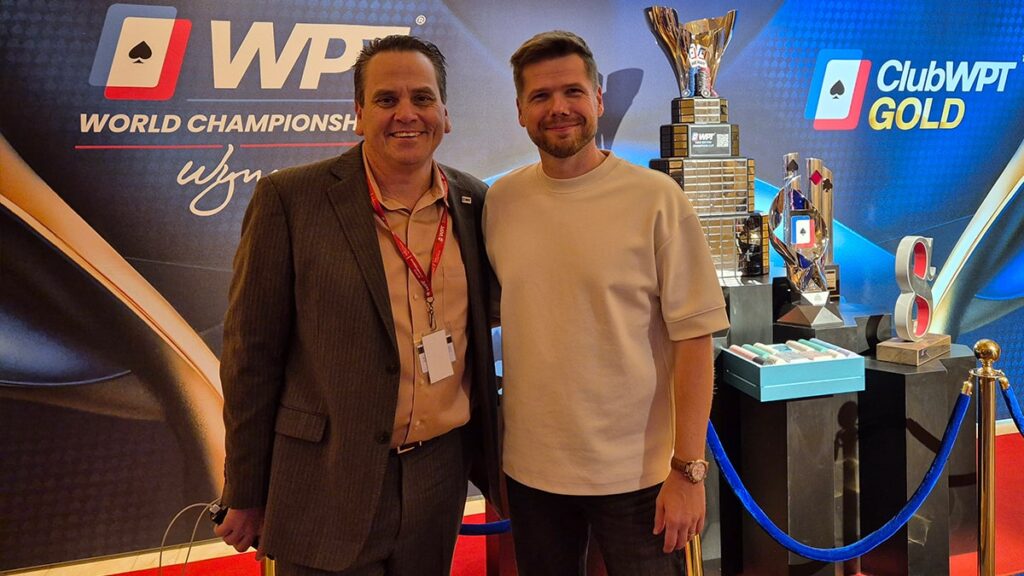
Sure, PokerGO will put Daniel Negreanu on the feature table because more people will watch, but as Jeff sees it, that’s just good business sense, and good producing. They’re not going to be turning into ClubWPT Gold any time soon.
PokerGO has never felt the need to stray into the social media discourse that can sometimes be very strange. I’d make a quick note on Brent Hanks. He’s had a huge impact on PokerGO. He’s the CEO; he’s worked his way up in the company.
A lot of people don’t know that; they turn on PokerGO, sometimes he’s sitting there next to me to provide great analysis and commentary, but this guy is so passionate about the game, and he’s been able to apply that passion in the business world – it has just been so beneficial for the entire poker world.
While Brent often works behind the scenes, working with Mori Eskandani and Cary Katz day in, day out, putting in the hours on the business side, Jeff admits that there’s another arena he’d love to emulate his co-presenter in.
Ever since I met Brent, I wanted to get one bracelet to match him, he laughs. It’s driven me crazy over the years that he has one WSOP bracelet and I don’t. I want to keep this balance up of broadcasting and playing and working with the poker community on how we can make these shows more appealing to viewers and how we bring new viewers in, and in the months and years ahead, I’ll be thinking about that more and more.
We leave Jeff to the next preparation. This week, the PokerGO Kickoff festival will begin the sixth year of the company’s year-long leaderboard race, which, along with Brent Hanks, Jeff brings to life.
Over the coming years, Jeff Platt will grow and grow in poker. Our prediction is not only that he wins that elusive gold bracelet, but that he inspires many millions more across America and around the world to try to grab one for themselves.