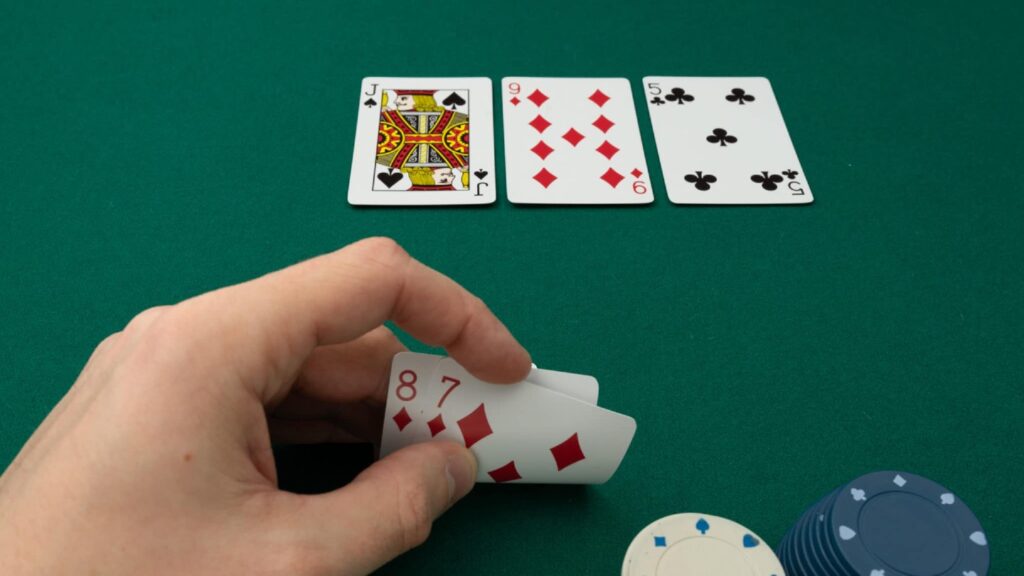
Poker is a game of incomplete information, probabilities, psychology, and long-term expectation. Most players quickly learn about pot odds, the immediate mathematical price they’re being offered on a call. But the players who consistently win understand a deeper and more nuanced concept of implied odds.
Implied odds help you justify calls that are not immediately profitable based on the current pot alone. They allow you to think beyond the present moment and project how the hand might develop across future streets. This concept is central to long-term profitability in games like Texas Hold’em and Pot Limit Omaha, especially in deep-stacked cash environments.
In this guide, we’ll explore implied odds in depth, clarify how they differ from pot odds, examine the strategic factors that influence them, and explain how to apply them in real-world situations.
What Are Implied Odds?
Implied odds represent the additional money you expect to win on later betting rounds if you complete your drawing hand. Unlike pot odds, which only consider the current size of the pot relative to the cost of calling, implied odds take into account the future potential of the hand.
When you call a bet with a draw, you are not just evaluating whether the current pot justifies the call. You are asking a broader question: if I improve to the best hand, how much more money can I realistically extract from my opponent?
This forward-looking approach changes how certain hands are valued. A hand that may be slightly unprofitable based solely on current pot odds can become profitable when projected future bets are considered. In essence, implied odds extend the calculation from a single decision point into the full trajectory of the hand.
Importantly, implied odds are not exact. They cannot be calculated with complete precision because they depend on human behavior and the way your opponent will respond once the board changes. This uncertainty is what makes implied odds both powerful and complex.

Pot Odds vs. Implied Odds
Pot odds are purely mathematical and immediate. You compare the size of the pot to the size of the bet you must call and determine whether your poker equity justifies the call. If the pot is laying you a better price than your chances of winning, the call is profitable in the long run.
Implied odds, on the other hand, extend beyond that immediate calculation. They account for future betting rounds and stack depth. When you consider implied odds, you are effectively estimating how much additional money can enter the pot if your draw completes.
The key difference is timing. Pot odds focus on what exists now. Implied odds focus on what could exist later.
This distinction is critical in deep-stacked poker, where the money behind often exceeds the money currently in the pot. In shallow-stacked situations, implied odds shrink dramatically because there is simply less money available to win.
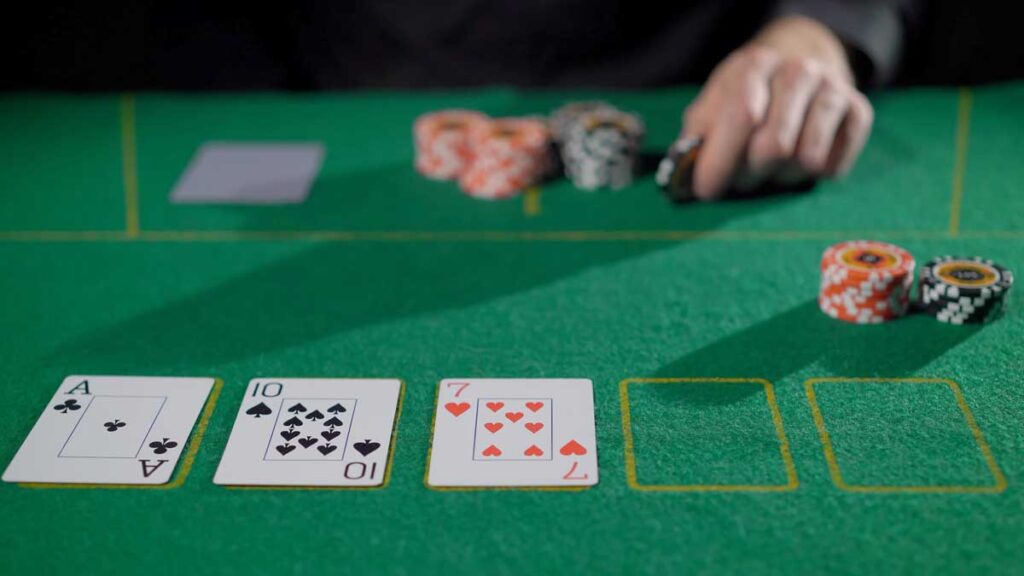
A Practical Example of Implied Odds Thinking
Imagine a $1/$2 cash game in Texas Hold’em with $500 effective stacks. You hold 7♠8♠ on the button. The flop comes K♠2♦J♠, giving you a flush draw. The pot is $100, and your opponent bets $80.
After the bet, the pot is $180, and it costs you $80 to call. If you call, the total pot becomes $260. That means you’re getting about 3.25:1 on your money, requiring roughly 24% equity to break even.
However, you only have about a 19% chance of hitting your flush on the turn. Based strictly on pot odds, this is not a profitable call.
Now consider the stacks. Your opponent still has over $400 behind and likely holds a strong hand like top pair. If a spade hits on the turn, you can expect to win not just the current pot, but potentially another $150–$250 in additional bets.
That extra money changes everything. Instead of calling $80 to win $180, you’re realistically calling $80 to win closer to $350 or more. Once you factor in that future value, the call becomes profitable.

Estimating Implied Odds in Practice
There is no perfect formula for implied odds because they rely on projections rather than certainties. Still, strong players mentally approximate them by considering how much more money must go into the pot to make a borderline call profitable.
If your immediate pot odds leave you slightly short of profitability, you estimate how much additional value you need to extract on future streets to bridge the gap. Then you evaluate whether that amount is realistically obtainable.
This mental process becomes intuitive over time. Experienced players quickly assess stack-to-pot ratios, opponent tendencies, and board texture to determine whether implied odds are sufficient.
The deeper the effective stacks, the easier it is for implied odds to compensate for imperfect pot odds. Conversely, when stacks are short, there simply may not be enough money left to justify speculative calls.
Stack Depth and Its Impact on Implied Odds
Stack depth is the engine that drives implied odds. The more money remaining behind, the greater the potential reward when you complete a strong hand.
In deep cash games, drawing hands like suited connectors and small pocket pairs increase in value precisely because they have the ability to win large pots when they connect strongly with the board. These hands are rarely strong immediately, but they can become disguised monsters.
In contrast, when effective stacks are shallow, implied odds are drastically reduced. If only a small amount of money remains behind, even hitting your draw may not generate enough profit to compensate for the times you miss.
Deep stacks create room for multi-street betting. Multi-street betting creates large pots. Large pots are what implied odds rely on.
Opponent Type and Behavioral Factors
Implied odds are not just mathematical; they are also psychological.
Against loose or passive opponents who struggle to fold strong one-pair hands, implied odds increase. These players are more likely to pay off large bets when you complete your draw. In effect, their tendency to overcommit becomes a resource you can exploit.
Against disciplined or highly skilled opponents, implied odds decrease. Strong players are capable of recognizing dangerous board developments and controlling pot size when appropriate. If your opponent can fold top pair when obvious draws complete, your future earning potential shrinks.
The more predictable and sticky your opponent is, the more reliable your implied odds become.
Board Texture and Future Action
The texture of the board heavily influences how much action you can expect on later streets.
Coordinated boards with multiple draws tend to generate action because many hands improve or feel compelled to continue. If the board changes in a way that appears safe to your opponent but actually completes your draw, you are more likely to extract value.
Conversely, if a draw completes in an obvious way, your opponent may slow down. For example, when a third suited card hits the board, many players become cautious. In these cases, your implied odds decrease because the visual strength of the board discourages further betting.
Strong implied odds often exist when you can make a powerful but disguised hand, one that does not appear immediately threatening.
Reverse Implied Odds
While implied odds encourage you to think about future profits, reverse implied odds warn you about future losses.
Reverse implied odds occur when you make a strong second-best hand and lose a large pot as a result. This commonly happens when drawing to non-nut hands. A small flush, a weak straight, or a dominated top pair can lead to expensive mistakes.
For example, if you chase a flush draw that does not contain the highest card of that suit, you risk making a flush that is beaten by a higher one. In deep-stacked games, this danger becomes magnified because large amounts of money can go into the pot.
The key principle is simple: implied odds are strongest when drawing to the nuts or near-nuts. The farther your draw is from the best possible hand, the more cautious you must be about reverse implied odds.
Set Mining and Long-Term Profitability
Set mining is one of the clearest examples of implied odds in action. When you call a raise with a small pocket pair, you are relying almost entirely on implied odds to justify the decision.
You will only flop a set a small percentage of the time. However, when you do, your hand is well disguised and often far ahead of your opponent’s likely range. If stacks are deep and your opponent holds an overpair or strong top pair, substantial money can go into the pot.
The profitability of set mining comes not from frequent small wins, but from occasional large ones. This is the core principle behind implied odds: small investments can yield large returns when conditions are right.

Implied Odds in Cash Games vs. Tournaments
Implied odds thrive in cash games instead of tournaments, because stack sizes are often deep and stable. Players can rebuy, which reduces risk aversion and increases the likelihood of large pots.
In tournaments, implied odds are more limited. Stack sizes shrink as blinds increase, and survival becomes a factor. Players are often less willing to risk their tournament life without very strong hands.
As a result, speculative hands that rely heavily on implied odds tend to perform better in deep cash environments than in late-stage tournaments with shallow stacks.
Win More with Implied Odds
Implied odds transform how you evaluate poker decisions. They encourage you to think beyond the immediate pot and consider the full arc of the hand. By factoring in stack depth, opponent tendencies, board texture, and reverse implied odds, you can make more accurate and profitable decisions.
Mastering implied odds requires discipline and experience. You must avoid overestimating future action while remaining aware of opportunities to extract maximum value when conditions align.
In the long run, players who properly understand implied odds are able to profit from speculative hands, navigate deep-stack situations more effectively, and capitalize on opponents who overcommit with marginal holdings.