
Images courtesy of PokerGO Tour
There has never been more poker content available than there is today.
Courses, solvers, videos, hand breakdowns, live streams. Every concept is explained, every spot is analyzed, and every strategy is accessible within a few clicks.
And yet, most players do not improve.
“There’s so much information now. It’s easy to get overwhelmed,” Wilson said.
That overload creates the illusion of progress. Players move from topic to topic, picking up fragments of strategy without ever fully integrating them. They watch a video on preflop ranges, then jump to river play, then review a solver output, all without building a clear connection between those ideas.
The result is familiar. More knowledge, but the same decisions. That gap is where most players stay stuck.

Why Study Doesn’t Translate Into Results
“You don’t need to learn everything in a day,” Wilson explained.
Trying to absorb too much at once does not accelerate improvement. It slows it down. Concepts blur together, confidence drops, and when real decisions come up, players hesitate or fall back on instinct.
The problem is not effort. It is direction.
Even at higher levels, Wilson believes players overestimate how disciplined the field actually is. “I don’t think everyone studies as hard as people think,” he said.
But even among those who do, the same pattern shows up. Study happens in bursts, not consistently. Players jump between concepts without mastering any of them. And without repetition or tracking, there is no clear sense of whether anything is actually improving.
That is where most players get stuck.
How Players Actually Improve
For Wilson, improvement is not about doing more. It is about doing the right things repeatedly.
“Doing the same spot over and over again, becoming really good at it, and then moving on is a really great way to learn and improve,” he said.
It sounds simple, but it runs against how most people study. Instead of mastering one situation, they move on too quickly, assuming that understanding a concept once is enough.
Execution is what matters, and it only comes from repetition. “Doing a couple of drills per day is really important,” Wilson added.
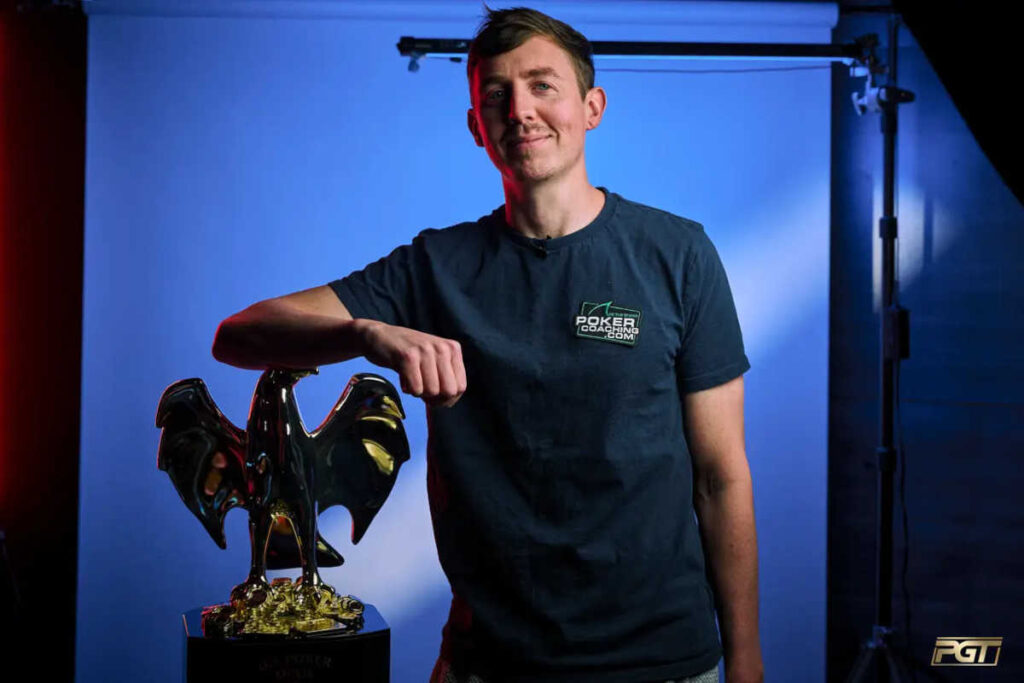
Working through the same spots again and again builds familiarity. Over time, decisions that once required conscious thought become automatic.
But this is also where the gap between players becomes clear.
The difference is not knowledge. It is application.
“Sometimes you see something in a solver and it doesn’t feel natural. But when you push yourself to do it, you realize it works,” Wilson said.
Closing that gap requires intention. It requires deliberately applying ideas that feel uncomfortable until they become part of your game.
At the same time, improvement does not mean copying everything. “You have to play a style that’s comfortable for you,” Wilson said.
That does not mean ignoring strong strategy. It means understanding it well enough to adapt it for different situations and players.
Why Structure and Feedback Matter
Wilson’s experience working with players on PokerCoaching.com highlights a key issue.
Most players do not lack information. They lack structure. “You have to hold yourself accountable to really understand what you’re saying,” he said.
Explaining concepts forces clarity. It exposes gaps in understanding that are easy to miss when studying alone. “Sometimes you think you understand something, then you say it out loud and realize you don’t,” Wilson added.
That feedback loop is what turns study into improvement. It is also why structured systems matter.
Not just learning new ideas, but revisiting them, testing them, and tracking progress over time. “Seeing your scores change over time in tools like PeakGTO is a huge way to learn and improve,” Wilson said.
That kind of feedback creates accountability. It turns improvement into something measurable instead of something you hope is happening. And over time, that compounds.
The Real Reason Players Stay Stuck
The players who improve fastest are not the ones who know the most. They are the ones who focus on fewer things, practice them consistently, and apply them under pressure.
They build habits instead of chasing insights.
Poker is not getting easier. The level of play continues to rise, but the fundamentals of improvement remain unchanged.
You do not need more content, but you need better systems and execution.
In the end, that gap between knowing and doing is where most players stay stuck, and that’s exactly the gap players like Brock Wilson have closed.