Images courtesy of Triton Poker Series
Over the course of poker’s rollercoaster modern history, players have found more and more unique ways of bringing their stories to poker fans and fellow players. From internet blogs to YouTube channels, poker’s content creation has evolved from long-form written articles to short-form videos.
In the past year, however, one poker player has rejected modern conventions of video blogs and YouTube to attract thousands of subscribers to his daily musings on poker. Sam Greenwood has won over $39 million at the tournament poker felt over the years, but a year ago, chose the long-form self-publishing site Substack for his work.
We caught up with Sam to find out why he made that call and how the past 12 months have worked out.
Choosing Substack Over YouTube
Usually chosen as a site for writers more than poker players, the growth of sites such as Substack has brought writers in the technology, political, and sports sectors closer to readers, with writers on the site gaining free and paid subscribers. Sam has seen his readership grow to thousands of poker fans and players who follow his daily hand breakdowns on the game we all love.
I’d subscribed to some Substacks as a reader, not in poker, as there wasn’t really much poker content there, says Sam. I was fascinated that instead of working for the New York Times or The New Yorker, people would sell direct to the consumer. I thought there was a space [for me].
Sam had learned poker on 2+2 before training sites existed. The popular poker forum was a book publishing company itself, so the idea of filling the void of poker content on Substack appealed to the Canadian. Despite previously filming training videos for Run It Once, the thought of being a YouTuber didn’t have the same pull.
I wasn’t in the position where I wanted to learn about the capriciousness and vagaries of the YouTube algorithm; I just wanted to write. Even for monetising purposes. On YouTube, you have to get subscribers and earn ad revenue. You can maybe funnel them to other products where they spend money. I liked the economics of Substack. I write something, and you pay to read it.
As Sam describes, Substack is remarkably simple for subscribers, who can pay in two or three clicks. With little poker content on the site, Sam has enjoyed the practice of writing way more than he believes he would have making videos. Even though Substack is the biggest platform for online newsletters out there, poker fans are late to the party, and many still ask Sam what the site is
It was easy to set up and monetise. A lot of the political, tech, or sports content on Substack falls under an intellectual umbrella of analysing your mistakes and being critical-minded, so in that sense, I felt it was a good fit. My writing is a lot more technical, but it fits the ethos of Substack very well.
While YouTube grabs viewers quickly, Sam thinks that his column attracts people with a slightly longer attention span.
There’s so much content right now that’s hyperactive and doesn’t command your full attention. I’m like, ‘Hey! For eight minutes, you can lock-in.’
Finding His Audience
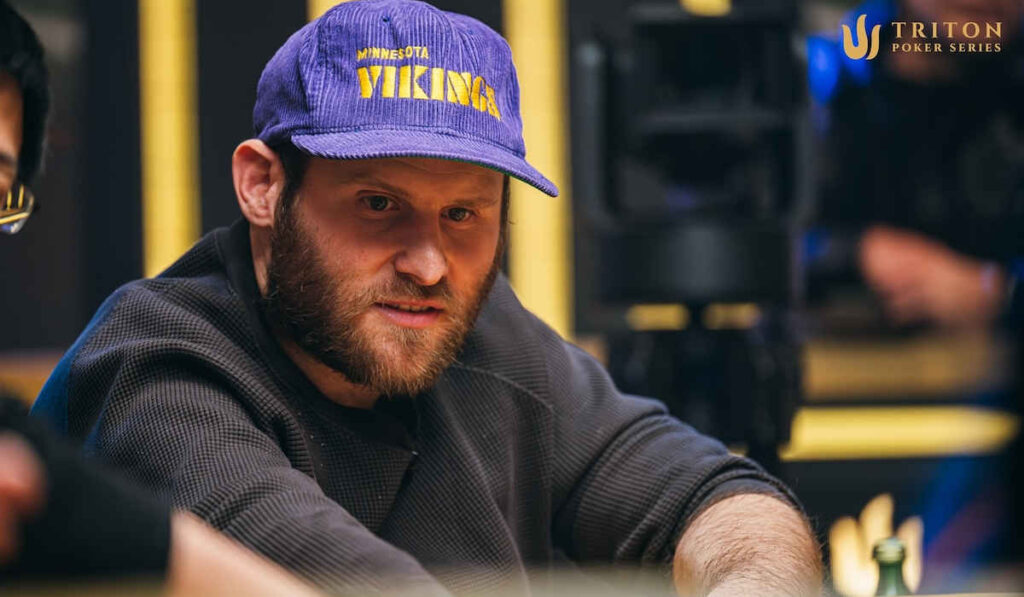
When appealing to poker fans, Sam was under the impression that he might be most well-liked by those poker players who are hunting for a successful pro to help them make the leap to their level. As he describes, however, that’s not how he has grown a loyal and passionate audience.
The way a lot of poker content is framed is ‘Hey, I’m an expert, I’m going to teach you these tricks, and you’re going to make money from them.’ says Sam.
I thought because of my success and reputation, they would be a lot of my audience. It turns out a lot of my audience were people who had gravitated towards my writing personality and style. Which is scary in some ways because people who don’t like it, to some degree, they don’t like me!
Those are few and far between. With thousands of dedicated subscribers, several of Sam’s readership regularly contact him after his latest post, but the vast majority of his fans are a silent but happy bunch.
I saw on Twitter that Doug Polk had an ‘ask me anything’ about poker content, and one of the things he’d said was that the loudest voices aren’t necessarily the most representative part of your audience.
I have several people who comment on the blog every day, and who are active in the Discord and DM me or email me direct questions. The average reader, though? That’s tricky. What I was aiming for was like a chess puzzle. You wake up in the morning, you have your coffee, you read about a poker hand.
As it turns out, that’s exactly how Sam’s poker column has developed, with a huge average readership of 40% for every one of his blogs, a number around 15% higher than successful blogs on the site.
A lot of my subscribers can’t play a lot of poker because of life, or their job. They’re hobbyists, and they like to read about a poker hand and feel like they’re playing to some degree, which they couldn’t do before.
It’s the same benefit as Twitch streams; you might not be able to sit down and play poker for three hours, but you can watch a Twitch stream for half an hour.
Sam expected his audience to recognise top-tier poker content and sign up for that. It turns out there are a lot more poker hobbyists who find his writing entertaining, and his style has a fanbase all of its own, a huge compliment to Sam’s work in the space.
I assumed my audience were all MTT grinders, and then some 55-year-old doctor came up to me and said, ‘I watch all your videos.’ I have a group of very loyal readers. Of 1,000-1,500 people, I have 5 or 10 who give me feedback every day.
Hitting Up Phil Galfond
When he was a young poker player on the rise, Sam contacted Phil Galfond about his own play, and while it might seem crazy, Galfond replied. It was this formative exchange that partly inspired Sam’s dedication to replying to his fanbase today.
When I was starting out in poker, I would message Phil Galfond hands about $22 SNGs, and he was playing $300/$600 – he would get back to me. There are people who are cagey and won’t respond, but generally I’ve found in life that if you ask questions, you’ll be surprised how often you get an answer.
Sam has a survey for his readers, so if you are a reader of Punt of the Day or one of Sam’s subscribers, you should get in touch with him.
You’d be surprised how little prodding I need to make a change, he says. Somebody said I should post stack sizes and big blinds in addition to chips, so starting today, that’s happening. If you’re one of the shy readers, I don’t bite – reach out.
Sam tells us that during his poker coaching, he has encountered a kind of reverse shyness that has prevented some students from getting the most out of their work. He believes the situation might be more common than some think.
What occasionally happens in one-on-one coaching sessions is that I’ll give some piece of advice and they’ll say, ‘Oh, I know that.’ I’m like… It’s OK, poker is hard. I make mistakes too.
Sometimes, when I’m talking to people who are less accomplished at poker, instead of maximising the information I’m communicating, they’re more concerned with impressing me. I don’t care; I’m just happy if someone gets better, because of something they read or I told them.
While some might assume that Sam would never have the time to deal with their questions, the opposite is true. He himself reached out to Substack user Nate Silver, and ‘Barstool Nate’ was more than happy to help.
The Brutal Brilliance of Coinflips
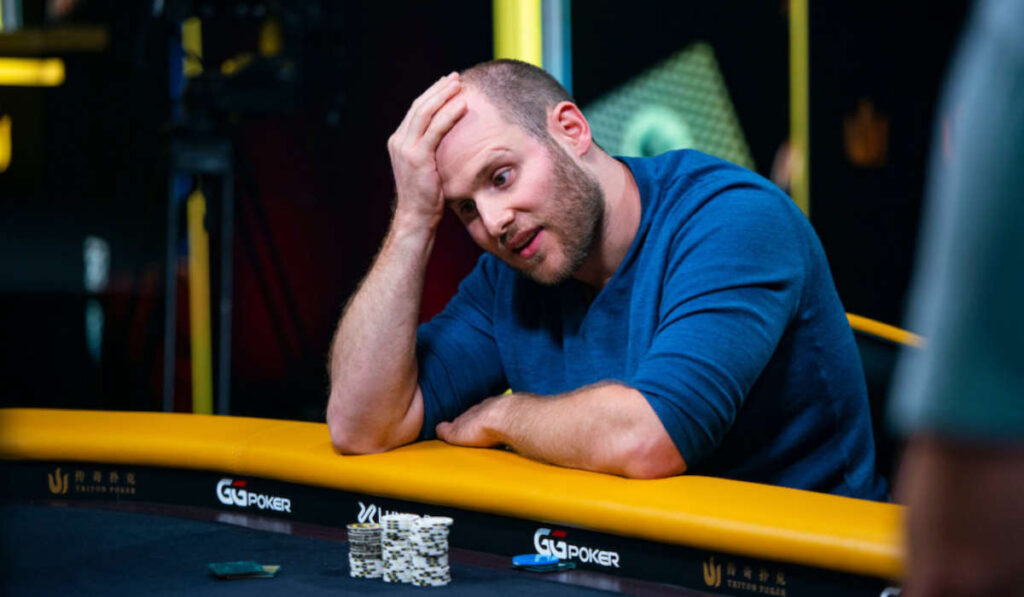
One of our favorite aspects of Sam’s writing is how dry and witty he can be over a subject such as coinflips. I asked Sam what built his acerbic wit, and he put some of it down to an unfiltered youth where his permissive parents allowed him to watch a wide range of TV and movies.
Shows like The Simpsons and films like Pulp Fiction grappled for Sam’s attention as he explored a “trial and error” approach to transforming his love of comedy into his own words that others would find funny.
People can be so afraid of getting it all-in [with coinflips]. Look at the person who won the tournament. They got it all in 12 times; that’s kind of what you need to do to some degree.
Losing flips stays with us way longer than winning them, due to human nature. Sam vividly remembers coming ninth in the EPT Main Event in Monaco in 2019.
I lost with pocket kings to Ryan Riess’ ace-queen. A couple of years later, someone came up to me and asked me if I remembered a big flip that busted them on Day 4. I had no memory of it. All I could remember was the hand I lost when my kings got cracked.
You win five flips in a row, and it feels like the most natural thing in the world, and you forget about it. You lose one flip, and you’re like ‘This is unbelievable, how did this happen?’
Sam references the different era of poker we live in compared to the post-boom generation of 2006 or so.
They’re the kind who might read Punt of the Day, still in the 2006 mindset of not getting it all-in with queens to ace-king because the guy to their left might get it all-in with six-five suited for 100 big blinds.
Those types of players don’t really exist anymore, but the types of players who are folding queens vs. ace-king to wait for a better spot still exist in a large number.
The Lure of Live Poker
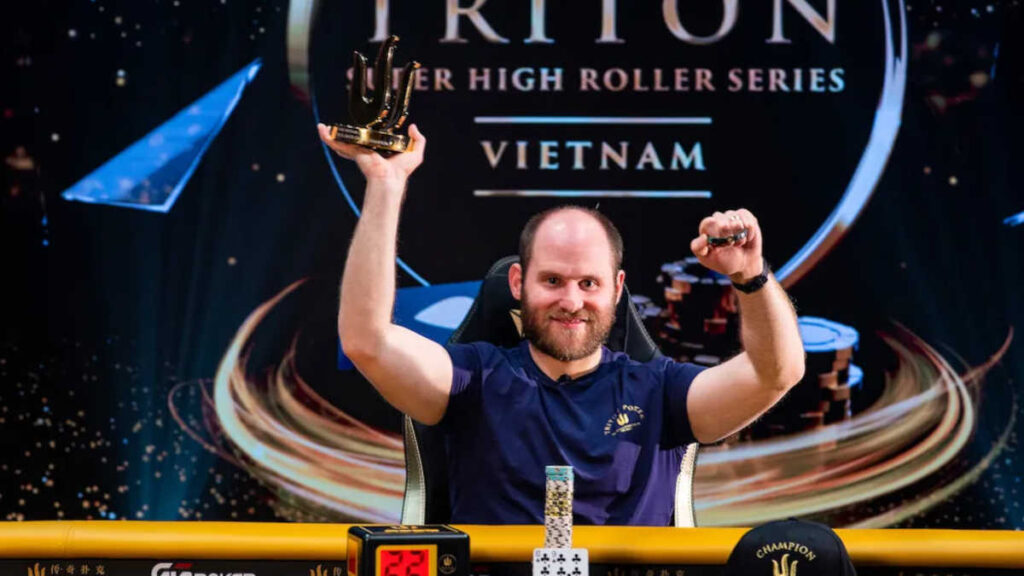
When I ask Sam if he misses live poker, the answer is twofold. Sam’s a dad now, and an expectant second-time father, with his wife expecting their second child in May. Life is different now, which partly inspired Sam’s switch to Substack for a time. He still misses playing in huge live poker tournaments all over the world.
In poker, not having a boss, if I wanted to stay up until three in the morning, then stay in bed until 11, I could do that. Now I can’t. I could stay up until three, but I need to be up at seven to take my son to daycare.
With poker, there can be an element of ‘Hey, I just played for 12 hours and lost $50,000, why did I do this?’ It’s been nice to do something where no matter what happens, if someone asks me what I did that day, I can go, ‘I created this – it did not exist before, it exists now.’
Pressure is a privilege in poker, and Sam more than appreciates this fact. As he says, most people have stopped competing in things in a structured, serious way by the time they’re 18. Poker fulfils that gap in a major way, and Sam misses it.
The travel and camaraderie are fun, but so is the stress of trying to battle with the best, says Sam. Even though things like Substack are gamified – you check the numbers and try to go higher up the leaderboard – it’s not the same as correctly bluffing someone or bluff-catching on the river where you get immediate feedback.
At some point, Sam will find a way to balance having a home life and travelling all the time, especially with no guarantee he’ll make money. He says he misses poker “quite a bit” and can’t wait to get back to poker, but admits it doesn’t fit right now.
Were my wife not pregnant right now, my kid would be in daycare. He’s sleeping through the night, so I could go away for a couple of weeks. I’d miss him, I’d miss my wife, I’d miss it all back home, but with a newborn coming, we’re ready to start all over again. It’s going to be crazy and chaotic.
Balancing the Books
While other players like Jeremy Ausmus and Darren Elias are long-term travelling poker dads, Sam says that he needs to find the right balance to return and that, for the past year, his switch to Substack and writing for a living has taught him a lot.
Part of the reason for Substack is that if I had a year where I lost $300,000, I’d be like ‘OK, whatever, I can adjust and modulate my lifestyle.’
The idea of taking things away from my family because I lose money is a lot of stress and pressure. Jeremy and Darren are both in good form recently and doing well, and I can’t imagine how good a feeling it is to win money for your kids. The stakes go up quite a bit.
A Negative Influence?
We end our conversation discussing the polarising subject of poker influencers, a growing part of the game focusing more on content creation than becoming a better player, or at least balancing those twin ambitions. Influencers have drawn Sam’s ire in some of his writing, and he has described himself as rejecting their influence in the moment, to some extent going against the potential long-term gains they offer poker. We asked Sam to explain his stance.
I’ve never liked it when there’s been a two-tier system in poker, Sam says. At the WSOP, people like Daniel [Negreanu] and Antonio [Esfandiari] would get preferential treatment in terms of late registration. It’s a competition, and everyone should be on the same level.
But I’ve been the recipient of this at times. Floors and dealers at EPTs and Tritons. I’m not consciously befriending them to get an edge, but if there is a dispute within a tournament, there have been times I’ve got the benefit of the doubt.
Sam says he’s never been the kind of player to play really badly so that some VIPs notice and he gets an invite to a private game, preferring to play his best in the moment to win money. While Sam says that such players might have made more money than him, just like some influencers who don’t care about others in the moment, the ethics are flawed.
There are paying customers who paid entry and rake to enter a tournament. In the middle of the hand, [influencers] they film it so that they can make money, not others. They might say, ‘Well, my YouTube channel will get people to subscribe to this site, play online, and they‘ll eventually come and play live poker, and they’ll donate money.’ It just feels like a reach to me and to paying customers.
Sam gives another example of how he feels, comparing his experience at the poker table where an influencer takes over to being similar to sitting in a restaurant waiting for your food while an Uber Eats driver picks up a meal to go and takes it to someone sitting at home on their sofa.
I concede it’s the most line-crossing people I have the biggest gripe with. There are people I respect who don’t cross those lines, who are actually growing the game. I wouldn’t throw them all out.
I understand they’re important and they do draw a lot of traffic, but if you’re an influencer trying to make money and have that privilege, you should be polite and understand that some people at your table might not want to get filmed. Some people don’t want the game slowed down so you can do your antics.
Sam says that sometimes, an influencer can arrive at a quiet, happy poker table and ask: ‘Why isn’t anyone having any fun here?’ It might not have been as boisterous or manic as the content creator would prefer for views, but it was still fun for those seven or eight players nonetheless.
That’s what irks me, when instead of it being an altruistic thing about growing the game, it purely becomes about this person promoting themselves. Most of the time I play, it’s being live-streamed, so it’s understood you might play on TV.
I sign the waiver for my image to be used, but there are people in a $1k WSOP event who didn’t consent to getting put on someone’s YouTube channel.
In an era where the multimedia generation are mushrooming in popularity, there is something innately pleasing about the long-form thoughts of a poker legend gaining a cult audience on Substack. The future in poker is still a multi-faceted one, and there’s room for everyone within that.
But hey, if you’re one of Sam Greenwood’s many thousands of subscribers, you’ll already know that.